The dawn of 2026 brings with it a critical juncture for the world of sports, where off-field management and on-field performance face intense scrutiny. From the fundamental need to respect fans to the complex geopolitics surrounding global tournaments, the year ahead is poised to test the very foundations of how sport is administered and consumed.
The Unforgivable Disregard for the Fan
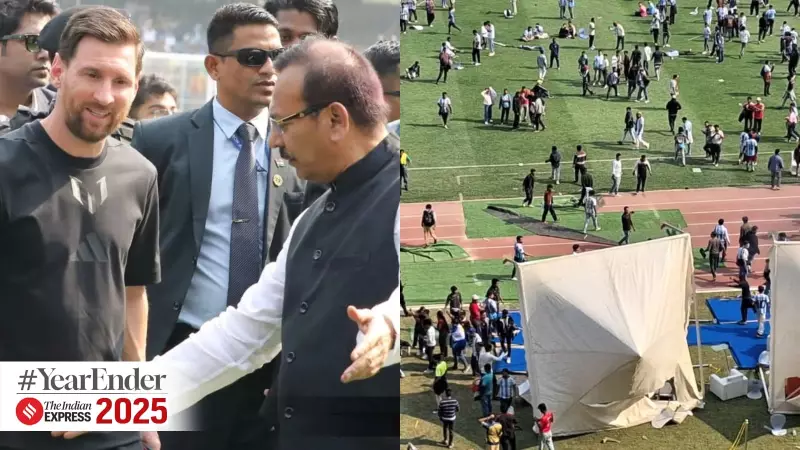
The year 2025 served as a tragic reminder of how spectators have been deprioritized. Two catastrophic incidents—a deadly stampede in Bengaluru and subsequent chaos in Kolkata—highlighted severe lapses in crowd management and safety protocols. These were not isolated episodes but part of a disturbing pattern of neglect.
In Ahmedabad, fans attending a high-profile India-South Africa T20 match were left scrambling for basic drinking water. In Delhi, police resorted to a lathi-charge against supporters eager to catch a glimpse of Virat Kohli. Even at the India Open badminton tournament, spectators were subjected to broken and filthy seating. Sport thrives because of the passion of its followers, who invest their time, money, and emotion. The bare minimum they deserve—safe environments, clean facilities, and dignified treatment—remains an unfulfilled promise in many Indian venues.

India's Mega-Event Ambitions and Persistent Fiascos
India is aggressively positioning itself as a global sporting hub, having secured the hosting rights for the 2030 Commonwealth Games and actively bidding for the 2036 Olympics. However, the shadow of past organizational failures looms large. The 2010 Commonwealth Games are remembered more for corruption and mismanagement than athletic glory.
Recent embarrassments, like coaches being bitten by a stray dog at the World Para Athletics Championships in New Delhi or the disastrous 'Messi GOAT Tour' in Kolkata, expose persistent gaps in planning and execution. The upcoming Badminton World Championships in New Delhi in August 2026 present a crucial test. A smooth, professionally run event is imperative to rebuild confidence in India's ability to host world-class tournaments.
Global Sport in a Divided World: The 2026 FIFA World Cup
The 2026 FIFA World Cup, set to be the largest ever with 48 teams, faces unprecedented political hurdles. Co-hosted by the United States, Canada, and Mexico, the tournament's inclusivity is under threat due to travel restrictions imposed by the Donald Trump administration. Citizens from qualified nations like Iran and Haiti are currently banned from entering the US, while others face additional hurdles.
This creates significant uncertainty for fans, officials, and even players. How the three host nations, particularly the US federal government and its individual host cities, navigate these diplomatic tensions to welcome the global football community will be a story watched as closely as the action on the pitch.
India's Test Cricket Crisis: The No. 3 Void and Home Dominance Eroded
India's proud legacy in Test cricket is facing a twin crisis. Firstly, the team's once-formidable home fortress has been breached. After going unbeaten at home since 2012, India suffered two crushing whitewashes in two years: 3-0 to New Zealand in 2024 and 2-0 to South Africa in 2025. This, coupled with a failure to reach the last World Test Championship (WTC) final and a current sixth-place ranking, points to deep-rooted issues.
Secondly, and perhaps more worryingly, is the gaping hole at the crucial No. 3 batting position. For 27 years, the role was seamlessly held by legends Rahul Dravid and Cheteshwar Pujara—products of a robust domestic system. That system is now faltering. India has tried four different batsmen at No. 3 in their last nine Tests without finding a solution. With a relatively light schedule ahead, the team management has time to identify and groom a long-term candidate, but the question remains whether the Ranji Trophy can produce one.

Side Stories: Commentary Gimmicks and Political Spectacle
Beyond the major themes, 2026 will also see other intriguing subplots. There is a growing demand for cricket commentary in all languages—English, Hindi, and regional—to evolve beyond parochialism and cliches, offering genuine insight alongside entertainment. The example of Pakistan's A Sports channel, led by Wasim Akram and Waqar Younis, is often cited as a model to emulate.
In a blend of sport and political theatre, the Ultimate Fighting Championship (UFC), led by Donald Trump supporter Dana White, plans to hold a fight event on the White House lawn. In a year packed with the FIFA World Cup, T20 World Cup, Commonwealth Games, and Asian Games, this spectacle will represent a stark, and for some amusing, convergence of combat sport and political power.
Ultimately, 2026 shapes up as a year of reckoning. It will challenge India to uphold the dignity of its sports fans and prove its organizational mettle. It will test the global sporting community's ability to transcend borders. And for Indian cricket, it will be a pivotal period to reclaim its Test cricket identity and find a new pillar at No. 3.