Teen Sensation Tanvi Sharma Stuns with Gritty Performance at India Open
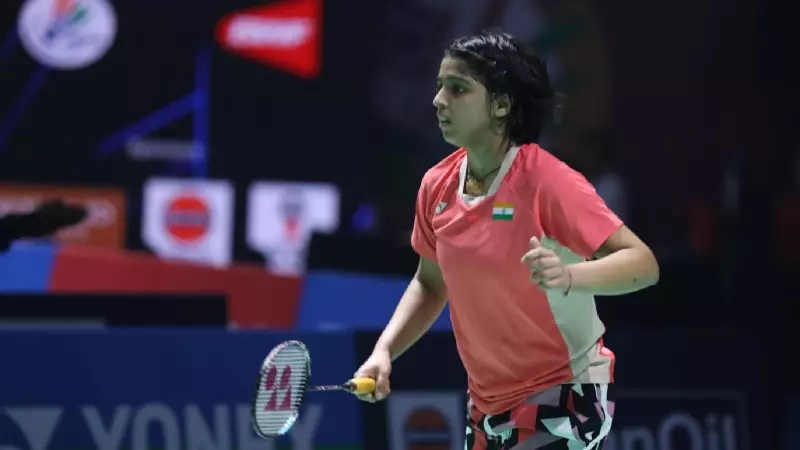
On a Wednesday afternoon at the Indira Gandhi Sports Complex, a remarkable scene unfolded. Two Indian shuttlers battled on adjacent courts, capturing the essence of a sport in flux. PV Sindhu, the seasoned legend, faced off against Thuy Linh Nguyen. Meanwhile, 17-year-old Tanvi Sharma took on World No.2 Wang Zhiyi in a match that lasted over an hour.
A Tale of Two Matches on Parallel Courts
The atmosphere buzzed with anticipation as both players engaged in intense rallies. At one crucial moment, both Sindhu and Sharma bent double in frustration. Sindhu had just dropped a point to trail 9-10 in her decider. Sharma missed a game point at 20-19 against Wang in her opening game.
A sparse home crowd watched with bated breath. They cheered Sindhu to fight on while applauding the sheer quality of Sharma's gameplay. For those few minutes, it felt like witnessing a transition in real time. The future of Indian women's singles badminton seemed to be taking shape right before their eyes.

Sindhu's Struggle and Sharma's Spark
Sindhu eventually fell to Nguyen in a hard-fought match that lasted 68 minutes. The final score read 22-20, 12-21, 15-21. This marked her third consecutive loss to the Vietnamese player. Shortly after, Sharma bowed out to Wang Zhiyi with a score of 20-22, 21-18, 13-21 in a match that stretched just a minute longer.
Despite similar scorelines, the narratives diverged sharply. Sindhu reflected on her defeat with visible frustration. In contrast, Sharma spoke with a giddy excitement after pushing the World No.2 to her limits. The teenager acknowledged her need to improve endurance, which ultimately cost her in the opener and decider.
Sharma's Confident Display Against a Top Opponent
"I played very well," Sharma told reporters with a satisfied smile. She had only secured her main draw entry on Monday, making her performance even more impressive. When asked if she believed she could have won had she taken the first game, her response was unequivocal.
"Yes, I think if I won the first game, I could have won the second too," the Hoshiarpur native stated. This confidence wasn't baseless. It stemmed from the high quality of her play, which often had Wang scrambling across the court.
Sharma attacked the mid-court with fearless aggression. She executed hold-and-flicks and cross-court half-smashes with ease. Two lengthy rallies from 17-17 showcased her skill, though they also drained her energy visibly. The umpire even urged her to speed up the game.
The Turning Points and Physical Toll
Wang leveled the score at 19-19, but Sharma had a chance to seal the game. A forehand smash went just wide, leaving her bent double in a mix of frustration and exhaustion. She bounced back strongly in the second game, opening a 5-1 lead with clever forehand variations that caught Wang off guard.
This resurgence forced a decider, but Wang's superior physicality eventually prevailed. Once the Chinese shuttler led 11-7 before the final change of ends, Sharma ran out of steam. "This match gave me confidence that I can do it," Sharma said later. "I know I have to improve a few more things, like my endurance."
Sharing the Spotlight with an Idol
Throughout her match, Sharma remained aware of sharing the court next to her idol. "I didn't watch her match, but yeah, it was special to me playing on the side court to Sindhu didi at the India Open," she remarked. For Sindhu, the defeat brought frustration, especially after a semifinal run in Malaysia.
"I don't think it was my day," Sindhu admitted. "She has good strokes; I had to keep the tempo and keep the shuttle in play. Small mistakes in those moments become decisive. I definitely need to be more consistent."
The India Open thus painted a vivid picture of Indian badminton's present and future. While Sindhu seeks to regain her consistency, Sharma's fearless performance signals the rise of a new generation ready to take on the world's best.