From Gaming Console to Badminton Court: Lin Chun Yi's Unusual Path to Victory
At first glance, it seems completely contradictory. A professional badminton player actually improves his competitive skills not just through court practice, but by spending hours with a gaming controller. He engages in virtual combat through popular games like PUBG and Counter-Strike. For Lin Chun Yi, however, the connection makes perfect sense.
The Parallel Worlds of Competition
Lin sees clear parallels between elite badminton and competitive gaming. Both involve two opposing sides. Both demand handling constant pressure. They require rapid cycles of attack and defense. Most importantly, both test your ability to stay calm when chaos erupts around you.
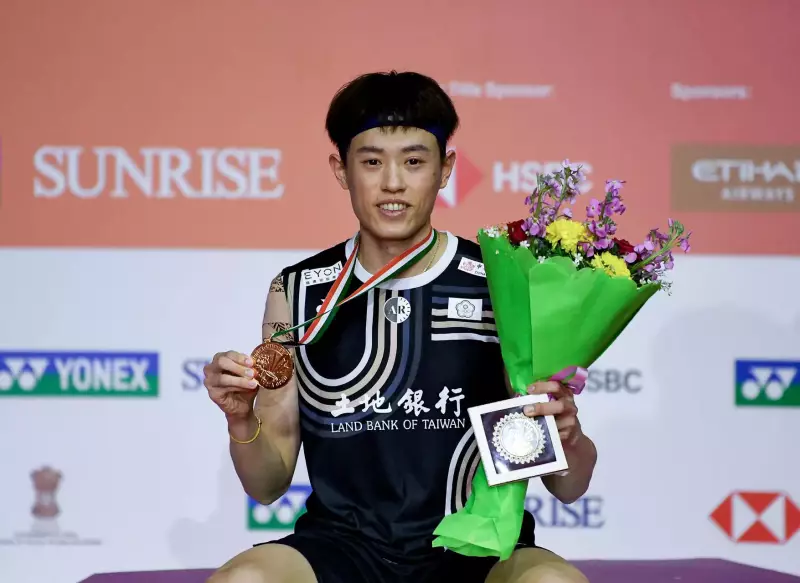
In high-level sports, just like in serious gaming, decision-making under extreme stress becomes everything. This mental training might explain why Lin appeared so composed while dismantling Indonesia's Jonatan Christie. He claimed the men's singles title at the India Open Super 750 tournament this Sunday.

An Unexpected Champion Emerges
The 26-year-old athlete from Chinese Taipei did not arrive in Delhi as the main attraction. Ranked 12th globally, he came nursing a muscle strain picked up during the Malaysia Open Super 1000 last week. The injury had initially made even walking difficult for him.
Many players in his situation would have chosen caution. Lin instead chose opportunity and transformed it into a significant breakthrough. "I'm very happy to have won my first Super 750 title," Lin said with a visible smile. "It shows that I can stand on my own feet."
He added, "My goal is to be in the top 10 in the world this year. Perseverance is the key, whether I win or lose." For an athlete whose career has been built on patience rather than media hype, these words carry genuine weight.
A Career Built on Steady Progress
When Lin first entered the international badminton circuit, he carried no aura of being a prodigy. He did not dominate junior tournaments at the world level. He arrived without viral highlight reels or instant stardom. Instead, his journey has been shaped by slow, methodical persistence.
Coaches in Chinese Taipei identify his strengths in exceptional rally tolerance. He remains comfortable playing exchanges of 30 or 40 shots without forcing errors. His technique stays compact and repeatable, particularly in backhand defense and flat exchanges.
His court coverage remains balanced and efficient. He rarely appears rushed. Above all, he demonstrates high tactical obedience. He executes match plans with discipline even against higher-ranked opponents. In slow halls with drifting conditions, such qualities become particularly lethal.
The Gaming Connection
Off the court, however, his release comes in a completely different arena. "I like games where there are two sides attacking and defending each other, like PUBG or Counter-Strike," Lin explained. The attraction proves revealing.
Competitive gaming mirrors the tactical rhythm of badminton perfectly. Both require reading patterns, anticipating moves, and staying composed when momentum suddenly swings. It becomes mental training cleverly disguised as recreation.
Perhaps this explains why this championship feels different to him. "I can't quite express it, but it's a very different feeling for me this time," Lin reflected. "Perhaps that feeling is awakening in me, and I am looking forward to winning a lot more matches in the future."
Humble Beginnings to Delhi Triumph
Born in Fangliao in Pingtung County in southern Taiwan, Lin comes from a farming family background. His journey has been anything but glamorous. Yet in Delhi, through perseverance rather than flashy pyrotechnics, he announced himself on the big stage.
His victory demonstrates how unconventional training methods can complement traditional sports preparation. It shows that mental sharpness, developed through various competitive environments, can translate directly into athletic success.