BWF's Tournament Reduction Sparks Debate on India's Badminton Standing
HYDERABAD: The Badminton World Federation's recent decision to allocate a significantly reduced number of annual tournaments to India has ignited widespread concern regarding the nation's badminton infrastructure and future prospects. In a revamped schedule for the 2027-30 cycle, India will host only two events per year, a sharp decline from its current lineup.
Current vs. Future Tournament Landscape
Presently, India organizes four prestigious tournaments: the Odisha Open and Guwahati Open, both Super-100 events, alongside the India Open Super-750 and the Syed Modi International Super-300. However, from 2027 onward, this portfolio will shrink dramatically. India will retain only the India Open Super-750, while the Syed Modi event will be downgraded from a Super-300 to a Super-100 tournament. This restructuring effectively eliminates two tournaments from the Indian calendar.
Potential Reasons Behind the Downgrade
Speculation abounds regarding the factors driving this decision. One prominent theory points to the global backlash following the poorly managed India Open Super-750 in New Delhi. Issues such as bird droppings on courts, subpar air quality in the capital, and subsequent player withdrawals created significant embarrassment for the organizers.

Additionally, many observers attribute the downgrade to India's perceived lack of influence within the BWF council. This perspective gains traction when comparing allocations to other nations. For instance, France, which lacks a robust player base or fan following, has been granted both a Super-750 and a Super-300 event. Meanwhile, traditional badminton powerhouses continue to receive favorable treatment:
- China: Allotted a Super-1000, Super-750, and Super-100, with Hong Kong and Macau also receiving Super-750 and Super-300 tournaments.
- Malaysia: Granted a Super-1000, Super-500, and Super-100.
- Indonesia: Receives a similar favorable allocation.
In contrast, India, which has consistently challenged these nations over the past fifteen years, appears to have been dealt a harsh blow.
Official Response and Counterarguments
Badminton Association of India secretary Sanjay Mishra has contested this narrative. He revealed that India was actually offered a Super-1000 event but declined due to logistical and financial constraints. "We were offered a Super-1000, but since the tournament spans eleven days and requires higher prize money, we had to decline," Mishra explained.
He further noted that all countries received fewer tournaments in the new cycle, with China itself limited to just three events. "Since we are getting one Super-100, we thought it better to host it in Lucknow, as the Syed Modi is one of our oldest events," he added. Mishra also mentioned India's plans to bid for the prestigious Sudirman Cup and highlighted the upcoming World Championships hosted by India this year.
Direct Impact on Indian Shuttlers
Despite official reassurances, the reduction from four to two tournaments—and the absence of a Super-300 event—will have a profound trickle-down effect on Indian players. The primary consequence is increased financial and logistical burdens. Players will now need to travel abroad more frequently to earn crucial ranking points, incurring substantial costs.
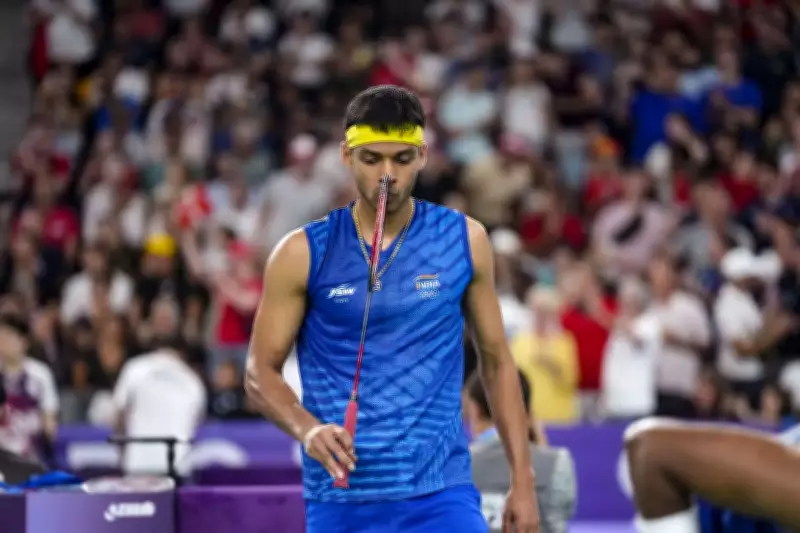
Chirag Shetty, part of the renowned Sat-Chi doubles pairing, emphasized the setback for emerging talent. "There will be far fewer tournaments for budding youngsters. Previously, December offered almost four tournaments in India alone, saving players significant money. With two events scrapped, this opportunity vanishes," he stated.
The financial implications are stark. Participating in a South Asian tournament typically costs between Rs 70,000 and Rs 120,000, while European events, such as those in Denmark or France, can exceed Rs 2 lakh. These expenses are particularly burdensome for players ranked outside the top-40, who rely on lower-tier tournaments to gain entry into main draws and secure sponsorship.

Sponsorship and Career Challenges
Ramakrishna, father of Al Ain Masters champion Shreyanshi Valishetty, highlighted the critical link between tournament access and sponsorship. "With two tournaments scrapped, earning ranking points becomes extremely difficult. Upcoming players need these points to enter tournaments. Only by reaching the main draw can they attract sponsorship, making international participation feasible," he explained.
Currently, Indian shuttlers under the TOPs scheme receive sponsorship if they directly qualify for main draws. Additionally, Kotak Mahindra sponsors two International Series tournaments annually for select players. However, the BWF's revamped schedule, which marginalizes India, creates an uphill battle for the nation's aspiring badminton stars, threatening to stifle talent development and competitive growth.