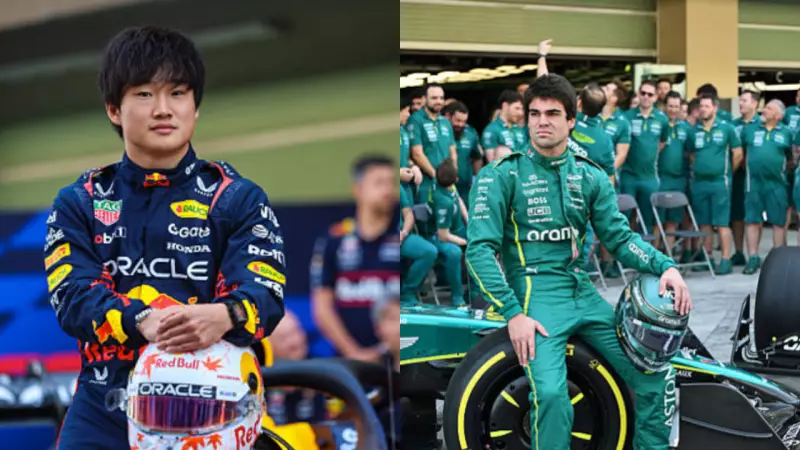
The world of Formula 1 is a showcase of speed, strategy, and engineering, but it also highlights fascinating human contrasts. A prime example is the significant height difference between two of its prominent racers: Japan's Yuki Tsunoda and Canada's Lance Stroll. This physical disparity shapes their driving experience, cockpit comfort, and interaction with their machines in remarkably different ways.
The Advantage of a Compact Frame: Yuki Tsunoda
Driving for the Red Bull sister team, RB, Yuki Tsunoda stands at approximately 159 centimetres. This stature makes him one of the shortest drivers on the current F1 grid. In the confined, tightly packaged cockpit of a modern Formula 1 car, Tsunoda's size is a distinct asset. He finds it easier to fit into the mandated seating position, with more room for adjustment and movement.
This flexibility is crucial during long, gruelling races where minute adjustments can impact driver fatigue and performance. His compact build also aligns well with the car's aerodynamics, allowing engineers more freedom in shaping the bodywork around a smaller cockpit opening. Furthermore, an ideal weight distribution, easier to achieve with a lighter frame, contributes to the car's overall balance and handling.
The Challenges of a Taller Stature: Lance Stroll
On the opposite end of the spectrum is Aston Martin's Lance Stroll, who measures around 182 centimetres. While his height is not extreme, it places him among the taller drivers in the paddock. For Stroll, the cockpit can feel more restrictive. The primary challenges involve limited legroom and a more constrained seating position, which can affect his ability to relax muscles during straight-line sections of a race.
Although F1 cars are meticulously designed to accommodate a range of driver sizes, taller drivers like Stroll often have less margin for personalised adjustment. The need to fit within the car's aerodynamic shell can sometimes lead to a less-than-optimal seating posture, which may impact comfort over a full race distance. Despite these hurdles, teams work extensively on custom moulded seats and pedal placements to maximise their driver's fit and comfort.
Performance Beyond Physical Dimensions
Ultimately, the story of Tsunoda and Stroll underscores that while physical attributes present unique engineering puzzles, they do not solely define a driver's capability. Both athletes have demonstrated dynamic skill and racecraft at the highest level of motorsport. Teams invest heavily in customising every aspect of the cockpit—from the seat and pedals to the steering wheel position—to ensure their driver, regardless of height, is integrated as a key component of the car's performance system.
The contrast between Tsunoda and Stroll highlights the diverse physiques that compete in Formula 1. It showcases the sport's incredible adaptability, where engineering excellence works in tandem with human talent to overcome inherent physical challenges, proving that speed comes in all sizes.