Virtual Marathon Boom: Thousands Run Tata Mumbai Marathon From Home Cities
This Sunday, as runners gather at the starting points for the Tata Mumbai Marathon, India's premier long-distance event, four individuals will join them from afar. Anchal Malhotra in Gurgaon, Sajan Lama in Darjeeling, Dipti Waghmare in Jalgaon, and Shovan Padhy in Hyderabad will all participate remotely. They represent nearly 5,000 virtual runners across the country, a significant segment of this year's marathon field.
The Rise of Virtual Running Events
Virtual marathons have become a serious parallel to traditional running events globally. In India, the trend continues to grow. The Tata Mumbai Marathon now features a strong virtual component, with remote runners making up 7% of participants this year. Last year, the figure stood at 8%. This steady presence signals the lasting appeal of virtual races.
India's other major running event, the Delhi Half Marathon, also embraced this model. Its October 2025 edition saw 1,000 people take part virtually. What began as a pandemic-era workaround has firmly established itself in the new normal. Concerts and races moved online during lockdowns, but virtual marathons did not fade away. Instead, they became a permanent feature of the hybrid event landscape.

Personal Stories of Virtual Runners
Anchal Malhotra, a 40-year-old homemaker from Gurgaon, discovered virtual marathons two years ago. She has since participated in four events. This Sunday marks her second virtual Mumbai Marathon. She will run in her housing society's park.
"After the birth of my second child, I felt lost and wanted to rediscover myself," Anchal explains. "That is when I started running and began to enjoy it. Virtual marathons give me a sense of accomplishment without compromising my family responsibilities."
In Jalgaon, Dipti Waghmare runs in front of her house. The 39-year-old engineer credits virtual runs for her progress as a long-distance runner. Over two years, she completed eight virtual runs, mostly 10km distances. In 2025, she ran her first real half-marathon.
"I was able to do that because of all the virtual runs that prepared me," Dipti says. "I now want to run more half-marathons virtually so I can attempt a full marathon next year. My goal is to become a full-fledged marathon runner."
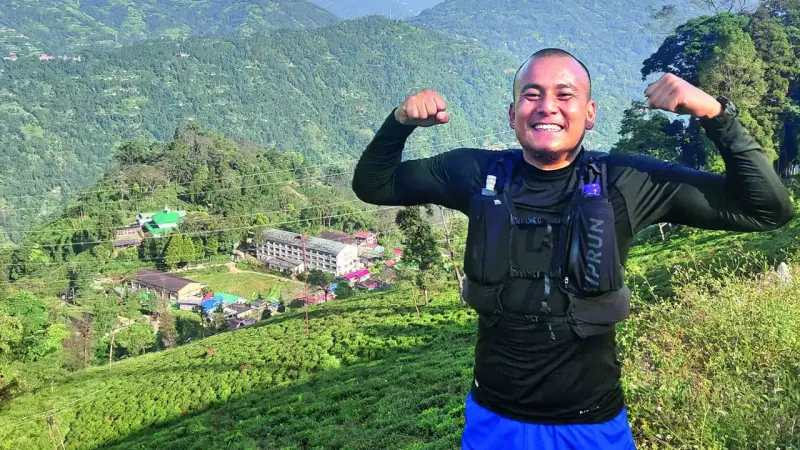
Sajan Lama, a 35-year-old from Darjeeling, has never visited Mumbai. Yet, Sunday will be his third virtual participation in the Mumbai Marathon. He runs on the tree-lined roads of his hill station.
"The idea of a virtual marathon is a boon for me," Sajan notes. "I run in familiar surroundings without the stress of traveling. Since I run a garment shop, I cannot travel easily, so virtual runs are perfect."
Shovan Padhy, a doctor from Hyderabad, joins local events in his city but opts for virtual mode for other marathons. He highlights the practical benefits.
"Traditional marathons start very early, often at 4 or 5 am," Padhy points out. "You lose sleep due to travel stress, which hurts performance. When I run virtually, I choose my own time. I can rest well the night before and give my best effort."
Understanding Virtual Marathons
A virtual marathon allows runners to participate in events like the classic marathon, 5km, or 10km runs from their own locations and at their preferred times. While on-site marathons impose time limits—seven hours for the Mumbai Marathon—virtual runners get 24 hours to complete their run from the event's start.
Remote runners do not compete directly with the on-site field. They must register, download a dedicated app, and link it to their smartwatch. The app tracks location and running data. Based on the final app score, organizers send medals and certificates.
Major event organizers use their own apps, but many virtual runs rely on platforms like Strava. Strava is a social fitness app that uses GPS to monitor activities such as running and cycling. It records workouts via connected devices like Garmin and Apple Watch. The app provides activity mapping, performance statistics like pace and heart rate, and location details.

Safety and Preparation Advice
Dr. Shovan Padhy offers a word of caution for virtual runners. He advises against "mindless participation for the sake of a medal or social media flex." Proper conditioning is essential.
"Even if someone is generally fit, that does not guarantee marathon readiness," Padhy warns. "There has been an increase in cardiac arrest deaths during long runs. People should consider getting a coronary angiogram before attempting a marathon."
Organizer Insights and Future Trends
The virtual edition of the Mumbai Marathon actually started before the pandemic, in 2019. Organizers aimed to involve more people. The concept gained momentum during Covid-19 and has persisted since. It has expanded to other events like the Delhi Half Marathon, Tata Steel Work 25K in Kolkata, and TCS World 10K in Bengaluru.
Neha Kandalgaonkar of Procam International, the event organizer, explains the rationale.
"Tata Mumbai Marathon is a sought-after event," she says. "Every runner in India wants to participate. We could not accommodate all requests due to space limits, so we launched a virtual edition. This year, we see strong responses for the half-marathon and full marathon in virtual mode. That confirms the popularity of virtual runs."
Total registrations for this edition of the Mumbai Marathon reach around 65,000. The virtual component continues to attract runners who seek flexibility and convenience without sacrificing the challenge and achievement of a major marathon.