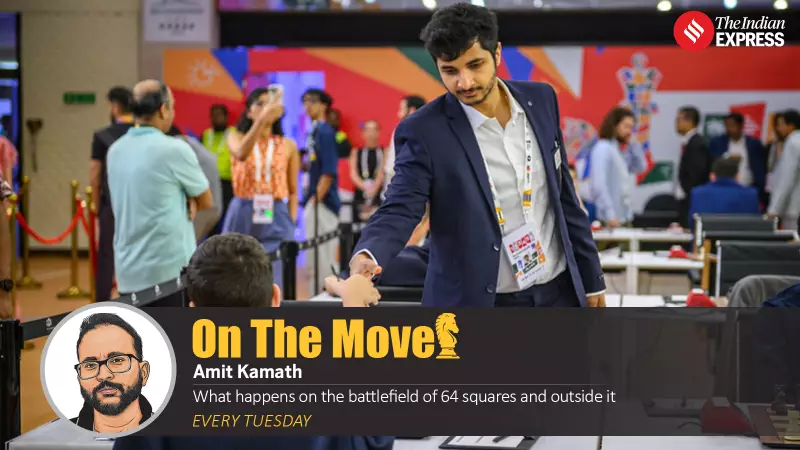
For approximately two weeks in November 2025, Indian chess Grandmaster Vidit Santosh Gujrathi experienced something rare in his international career - the comfort of competing at home. During the intense FIDE World Cup held in Goa, the 29-year-old chess star enjoyed a level of ease seldom available when playing tournaments abroad, from family support to familiar cuisine and simplified travel logistics.
The Family Factor: Rare Tournament Presence
Unlike most international competitions where he travels alone, Vidit had the unique advantage of having his entire family present during the high-stakes World Cup in Goa. The rare presence of his family members at the venue provided emotional support that significantly contributed to his comfort level throughout the knockout tournament.
"I don't know how many more World Cups I'm going to play. So it was nice that they could watch this live from the venue," Vidit expressed, highlighting the significance of this home advantage. Following his elimination from the World Cup, the Grandmaster is now preparing for another home event - the Global Chess League scheduled to be held in Mumbai.

The Food Struggle: A Chess Pro's Biggest Challenge
One of the most significant benefits of competing in India was the resolution of Vidit's primary concern during international travel - food. The vegetarian Grandmaster has faced numerous challenges finding proper meals during tournaments abroad, often being served just rice and grilled vegetables when requesting vegetarian options at hotels and restaurants.
His food struggles began early in his career. At just eight years old, during his first international trip to Iran for the Under-9 Asian championship in 2005, Vidit faced limited food options since his parents couldn't travel with him due to expense constraints. This early experience forced him to learn cooking skills unusually young.
"I ended up making instant noodles in my hotel room on days. After that, I came back and learnt cooking. So when I won the U14 World Championship in Vietnam's Vũng Tàu, I had actually cooked khichdi before the last round," Vidit recalled with a chuckle.
During his peak playing days, Vidit developed various strategies to manage his dietary needs abroad. His suitcase would typically contain an assorted mix of instant noodle packets and protein bars. As a young competitor, he even traveled with a rice cooker to international tournaments.
Global Food Challenges for Vegetarian Athletes
Vidit elaborated on the specific difficulties he's faced in various countries. Tournaments in Khanty-Mansiysk proved particularly challenging, where finding any vegetarian food was nearly impossible. He noted that while Western countries are gradually adopting vegan trends, these are largely concentrated in major cities, leaving tournament venues in smaller locations with limited options.
"In countries like Uzbekistan's Samarkand, where they only consume meat as part of their centuries-long culture, there's a struggle. For them to make vegetarian food is tough," he explained. The Grandmaster emphasized how crucial proper nutrition is for peak performance: "There's no substitute for cooked food. Not getting that affects me at a very deep level because food means energy and if I don't get proper nutrition I struggle with sleep. Chess is an exhausting game at the end of the day."
Travel and Visa Hurdles for Indian Chess Players
Competing in Goa also meant Vidit avoided the extensive travel complications that typically plague Indian chess professionals. While international players might complain about taking two connecting flights to reach India once every decade, Indian grandmasters face this reality monthly, sometimes requiring three connecting flights to reach tournament destinations.
"We can play as many as three tournaments a month," Vidit noted, highlighting the frequency of these travel ordeals. Visa issues present another significant challenge for Indian chess players competing internationally.

He shared a particularly stressful experience: "There are times when I've got my passport with the visa stamped only at the airport on the day of the flight." The process for obtaining a Canadian visa for last year's Candidates tournament exemplified these difficulties. "I applied in December for the event in March. Firstly, I had to give so many documents. And still, there was no certainty that we'll get it."
The contrast with European competitors was stark: "What was funny was that my second Daniele Vocaturo, who's from Italy, applied online while we were having a session and in about 10 minutes, he got his visa."
The home advantage provided by tournaments like the FIDE World Cup in Goa and the upcoming Global Chess League in Mumbai offers Indian players like Vidit Gujrathi not just competitive comfort but practical solutions to the logistical challenges that often accompany their pursuit of chess excellence on the global stage.