The Indian Air Force suffered a significant setback when its indigenously developed Tejas fighter jet crashed during a demonstration flight at the Dubai Airshow on Friday. The tragic incident resulted in the death of the pilot and sent shockwaves through the aviation community.
The Dubai Airshow Incident
Visual footage circulating on social media platforms captured the horrifying moment when the combat aircraft crashed mid-flight during its demonstration routine. Thick black smoke billowed over Al Maktoum International Airport at Dubai World Central as spectators watched in disbelief. Emergency sirens immediately sounded following the crash, prompting swift response from airshow safety teams.
The Tejas was performing as part of the aerial display when the accident occurred, marking a somber moment at one of the world's premier aviation events. The identity of the pilot who lost his life has not been officially released pending notification of family members.

Understanding the HAL Tejas Fighter Jet
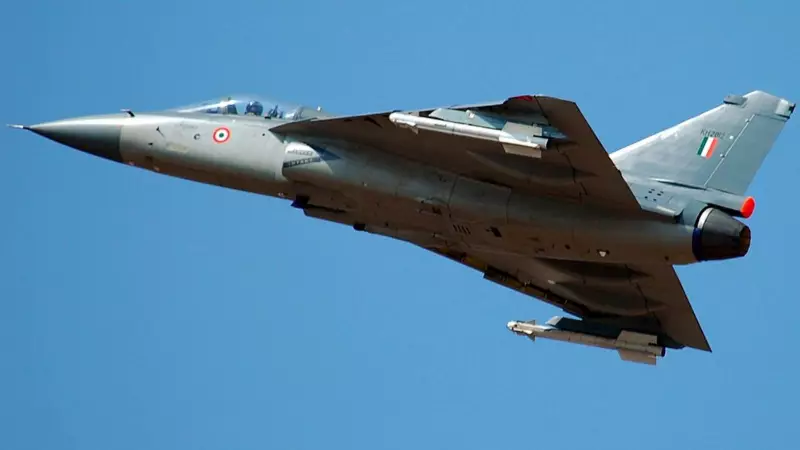
Tejas represents India's ambitious indigenous fighter program, manufactured by state-owned Hindustan Aeronautics Limited (HAL). Classified as a 4.5-generation fighter aircraft, the Tejas emerged from the Light Combat Aircraft programme initiated back in 1984. The primary objective was to develop a modern, homegrown fighter jet to replace India's ageing MiG-21 fleet.
The journey of Tejas has seen several milestones: the prototype conducted its maiden flight in 2001, and the first squadron, designated as No. 45 'Flying Daggers', was formally inducted into the Indian Air Force in 2016. This marked a significant achievement for India's aerospace capabilities.
Technical Specifications and Capabilities
The Tejas features a single-engine design with a canard delta wing configuration, making it a multirole combat aircraft capable of handling various mission profiles. According to HAL specifications, the jet is engineered for offensive air support, close combat engagements, and ground attack operations.
Notable features include:
- Single-engine, multirole combat capability
- Canard delta wing design for enhanced maneuverability
- Two-seat variant available primarily for pilot training
- Ongoing development of Mark II variant for advanced capabilities
The aircraft stands as a testament to India's growing technological prowess in defense manufacturing, though the program has faced its share of challenges and delays over the decades.
Global Context and Export Challenges
In the competitive landscape of 4.5-generation fighter aircraft, Tejas faces competition from several international counterparts. These include the JF-17 Block III from China, Sweden's Saab Gripen E, America's F-16V, along with other competitors like China's J-10C and South Korea's FA-50.
India has actively pursued export opportunities for the Tejas, though no international sales have materialized to date. The aircraft's export prospects faced a significant setback in 2023 when it lost to second-hand F-16s in an arms deal competition with the Argentinian Air Force. A primary concern among potential international buyers has been the jet's status as not yet combat-proven.
Future Prospects and Recent Developments
Despite the tragic crash at Dubai Airshow, the future of Tejas appears promising based on recent developments. In September of this year, the Ministry of Defence signed a massive Rs 62,370-crore agreement with HAL for the procurement of 97 additional Mk1A Light Combat Aircraft for the Indian Air Force.
This substantial order comprises 68 single-seat fighters and 29 twin-seater trainers, along with associated support equipment and infrastructure. The Ministry has outlined that delivery of these new aircraft will commence during the 2027-28 timeframe, with completion expected over a six-year period.
This significant investment demonstrates the Indian government's continued confidence in the Tejas program and its importance to national security and indigenous defense manufacturing capabilities. The recent accident, while tragic, is unlikely to derail the long-term plans for India's homegrown fighter jet program.