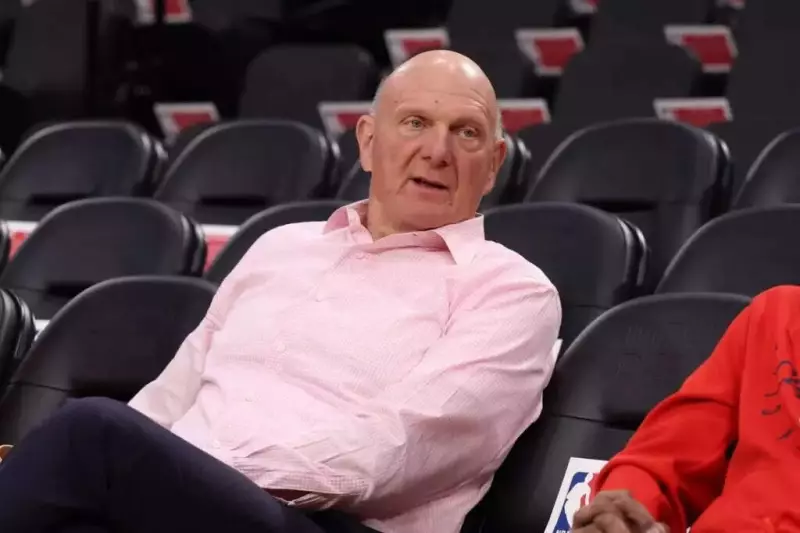
Steve Ballmer, the famously energetic former chief of Microsoft, has embarked on a high-stakes second act as the owner of the Los Angeles Clippers, blending immense passion with colossal investment and recent controversy. His journey from tech titan to NBA power player is a tale of identity-building, financial muscle, and legal challenges.
From Microsoft's Corner Office to the NBA Hardwood
Ballmer's story is deeply intertwined with Microsoft, where he started as employee number 30 in 1980 after leaving Stanford's MBA program. A friend of co-founder Bill Gates since their Harvard days, Ballmer eventually rose to CEO, steering the company from 2000 to 2014 through the dot-com bust and battles with rivals like Google and Apple. Upon retiring, he retained most of his 4% stake, remaining Microsoft's largest individual shareholder. His post-Microsoft life took a dramatic turn in 2014 when he purchased the NBA's Los Angeles Clippers for a record $2 billion, following the racist scandal involving the previous owner. Forbes now values the franchise at a staggering $5.5 billion.
Building a $2 Billion Identity: The Intuit Dome Era
Initially content to share the Staples Center with the Lakers and the NHL's Kings, Ballmer's vision quickly evolved. He realized the Clippers needed their own home to forge a distinct identity. In an interview with ESPN, he explained, "We needed to say, 'We're our own guys. We don't play in the same place as the other guys. We're going to have our own identity.'" This vision materialized as the Intuit Dome, a brand-new arena in Inglewood set to open for the 2024-2025 season. The project carries a price tag of over $2 billion—matching his initial purchase price for the team itself.

Concurrently, Ballmer opened his wallet to transform the team's roster, orchestrating high-profile acquisitions like stars James Harden and Kawhi Leonard. His hands-on approach and financial commitment have positioned the Clippers as perennial contenders, a far cry from their long-standing "little brother" status in Los Angeles.
Legal Shadows: The Kawhi Leonard Salary Cap Allegations
However, Ballmer's tenure has recently been clouded by a serious legal challenge. A lawsuit filed by investors of a company called Aspiration (now Catona) alleges that Ballmer used the firm "to secretly funnel millions of dollars" to Kawhi Leonard. The plaintiffs claim this was a scheme to induce Leonard to re-sign with the Clippers in 2019 while circumventing the NBA's strict salary cap rules, accusing Ballmer of being "complicit in and aided and abetted" the fraud.
Ballmer and the Clippers organization have vehemently denied these allegations. He maintains that the team did nothing wrong regarding Leonard's signing and has dismissed the claims, insisting the organization operates within league rules. This legal battle adds a complex layer to his otherwise transformative ownership, juxtaposing his philanthropic efforts—he and his wife have donated nearly $5.7 billion to charity since 2014—with accusations of financial impropriety in his sports venture.
Steve Ballmer's saga with the Los Angeles Clippers is a multifaceted drama of ambition, investment, and risk. He has successfully elevated the franchise's value and profile through sheer will and wealth, building a palatial new home to cement its legacy. Yet, the ongoing lawsuit poses a significant threat, challenging the integrity of one of his franchise's most pivotal player acquisitions. As the Intuit Dome rises, the question remains whether Ballmer's legacy will be defined by architectural and sporting triumph or marred by legal controversy.