Run Nation Championship: The Brutal Collision Sport Taking Stadiums by Storm
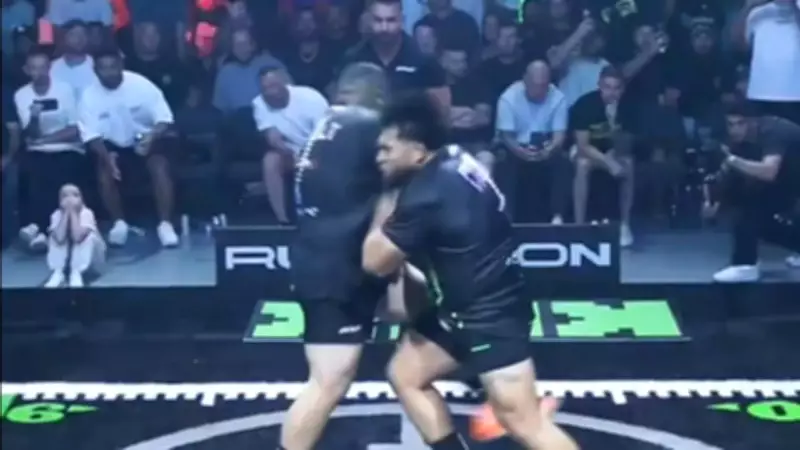
In a world where contact sports typically involve physical tussling as part of a larger objective—like scoring a goal or making a basket—the Run Nation Championship (RNC) stands apart with a startlingly simple premise. Two athletes charge toward each other at maximum velocity with the sole purpose of colliding. The winner is determined by who remains standing after the violent impact, while the one who falls loses the round.
From Social Media Trend to Mainstream Sport
This emerging sport traces its origins to the viral social media trend 'run it straight', where individuals would film themselves running into each other to garner attention and views. The spectacle of two people crashing together proved more captivating than conventional content like singing or dancing, and this raw appeal has been expertly capitalized upon. Much like how Dana White's UFC propelled mixed martial arts into the mainstream, the Run Nation Championship is formalizing a brutal, one-on-one tackle game that many, particularly in Australia and New Zealand, played informally during their youth.
Various iterations of the trend, including Run Nation and Run It Straight, have evolved into organized competitions with structured rules and professional participants. The sport's second edition recently sold out 5,500 seats at Sydney's Hordern Pavilion, demonstrating its growing fanbase and commercial viability.

How the Championship Operates
The gameplay is starkly straightforward, mirroring the violent encounters that proliferate on social media. Two muscular competitors, typically wearing only a mouthguard and no other visible protective gear, stand several meters apart. At the signal, they sprint directly at each other, culminating in a high-speed collision. The athlete who stays upright is declared the victor of that round.
An alternative version, the Run It Championship League, incorporates a ball held by participants, though the fundamental objective of collision remains unchanged. The recent super cruiserweight champion, Addison Demetriou, secured a decisive 120-113 victory in a main event, highlighting the competitive nature of these contests.
Participants and Safety Measures
Competitors in the Run Nation Championship generally have backgrounds in combat sports and are categorized into different weight classes. They undergo rigorous vetting, including blood tests and physical examinations, to ensure they are fit to compete. According to Tremaine Fernandez, co-founder and CEO of Run Nation, significant efforts have been made to enhance safety despite the sport's inherent violence.
"We've manufactured side-on contact, established numerous markers and rules on the field, and implemented strict rules of engagement. Additionally, the player vetting process has been extensive," Fernandez explained in an interview with ABC News Australia.
The organization maintains a comprehensive medical team on standby during events, including two doctors, NSW paramedics, neurologists, physiotherapists, and chiropractors, ready to intervene immediately if injuries occur.
Medical Concerns and Tragic Incidents
Despite these precautions, the risk of severe injuries, particularly concussions and brain trauma, remains a major point of contention. Sports neurologist Dr. Rowena Mobbs has been a vocal critic, advocating for the sport's prohibition due to the high likelihood of brain damage.
"Certainly, every time they run up and clash in that manner, there is likely to be at least a microscopic brain injury," Dr. Mobbs warned.
The dangers were tragically underscored last year when a teenage boy, Ryan Satterthwaite, died from head injuries after participating in a casual 'run it straight' game with friends in New Zealand. In response, official bodies such as Rugby Australia and New Zealand Rugby have issued warnings against participation, with the New Zealand Prime Minister condemning it as a "dumb thing to do."

Audience Reception and Economic Incentives
Controversy and health risks have not dampened the sport's popularity. Stadiums are filling up, and the championship is generating substantial revenue. High-profile attendees, including South Sydney Rabbitohs star Cody Walker and Australian UFC fighter Tai Tuivasa, have been spotted at events, lending further credibility and visibility.
Fans express enthusiastic support, with one attendee declaring it the "next biggest sport to hit the scene," while an online user praised the "unhinged testosterone battles" as a refreshing alternative to mundane content.
For participants, the financial rewards are a significant draw. Champion Betham, who won NZ$20,000 at a June 2025 Run It Championship League event, emphasized the practical benefits: "We got to pay off some debts and stock up the fridges and cupboards with food for our little ones, especially with the economy here in New Zealand. Nothing's cheap these days."
Ultimately, the Run Nation Championship offers viewers a unique and thrilling spectacle while providing competitors with monetary compensation. Despite ongoing warnings and the potential for serious injury, the sport continues to expand, supported by increasing prize money and investments that ensure its place in the public eye.