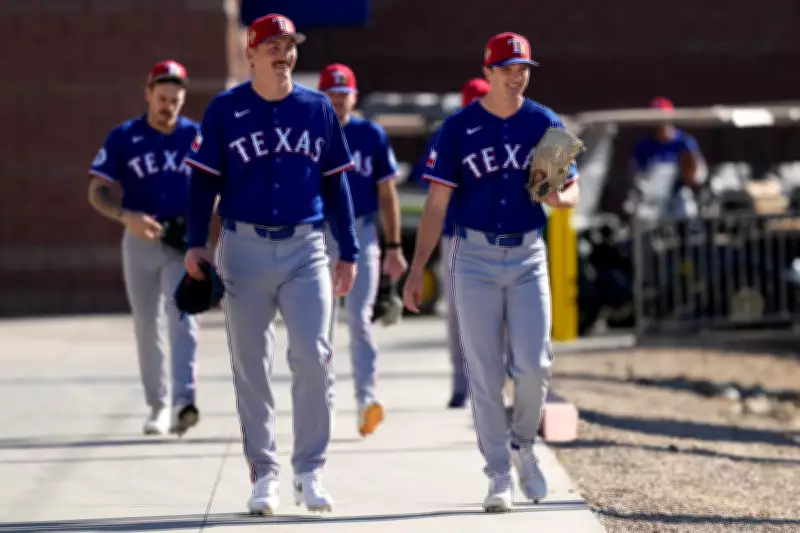
Texas Rangers Consider Blockbuster Move for Phillies Superstar Bryce Harper
Major League Baseball's offseason rumor mill is buzzing with a potentially seismic trade proposal involving the Texas Rangers and Philadelphia Phillies. According to emerging reports, the Rangers are being linked to a significant trade idea ahead of the 2026 season, with perennial All-Star Bryce Harper emerging as a primary target for the Texas franchise.
The speculative proposal suggests that Texas could attempt to acquire the Philadelphia Phillies superstar while sending third baseman Jake Burger to Philadelphia in return. While nothing is close to completion and discussions remain firmly in the hypothetical stage, the sheer scale of Harper's contract and his iconic status within the Phillies organization make this trade concept particularly noteworthy across the baseball landscape.
The Financial and Contractual Landscape
Bryce Harper is currently signed to a massive 13-year, $330 million contract that extends through the 2031 season, paying him approximately $25 million annually. This long-term commitment represents a significant financial consideration for any team contemplating acquiring the two-time MVP winner. Phillies president of baseball operations Dave Dombrowski has publicly pushed back against trade rumors involving Harper, though his recent comments describing Harper's 2025 campaign as "subpar" have inadvertently kept trade speculation circulating within baseball circles.

Potential Trade Structure and Mechanics
The basic framework of the proposed deal would have Texas receiving Bryce Harper, who possesses the versatility to play first base or outfield positions, while Philadelphia would acquire Jake Burger from the Rangers' active roster. Given that Harper carries substantially more long-term value and name recognition, Texas would likely need to include additional assets to balance the trade. This could involve adding a mid-level pitching prospect such as Emiliano Teodo or including cash considerations to offset some of Harper's remaining contract obligations.
Why Texas Might Pursue This Aggressive Move
For the Texas Rangers, acquiring Bryce Harper would provide a proven middle-order hitter with championship pedigree. Harper could potentially move into left field or serve as the designated hitter alongside emerging talents like Evan Carter and Brandon Nimmo. This offensive upgrade would significantly lengthen a lineup that already features established stars Corey Seager and Josh Jung, creating one of baseball's most formidable batting orders.
Financially, Texas is viewed as capable of absorbing the contract's average annual value, particularly after operating with an elevated payroll following their memorable 2023 World Series championship victory. The Rangers' ownership has demonstrated willingness to invest in premium talent when pursuing championship contention.
Philadelphia's Potential Motivation for Considering a Trade
From the Phillies' perspective, trading Bryce Harper would clear approximately $25 million in annual payroll commitments. This financial flexibility could be redirected toward bolstering pitching depth or supporting the development and promotion of top prospects like Andrew Painter or Justin Crawford. Jake Burger's right-handed power could complement existing infielders Alec Bohm and Bryson Stott while signaling a strategic shift toward building a younger roster core following another postseason disappointment.
Statistical Comparison and Player Profiles
Bryce Harper's 2025 Performance: The 33-year-old left-handed hitter stands 6-foot-3 and weighs 210 pounds. In 132 games during the 2025 season, Harper posted a .261 batting average with 27 home runs and 75 RBIs, compiling an .844 OPS and .361 wOBA. His disciplined approach resulted in a 12.1% walk rate against a 20.9% strikeout rate. Harper's career accolades include two MVP awards, eight All-Star selections, and consistent postseason production despite Philadelphia's recent playoff struggles.

Jake Burger's 2025 Performance: The 29-year-old right-handed hitter measures 6-foot and 230 pounds. In approximately 64 games during the 2025 campaign, Burger recorded a .236 batting average with 16 home runs and 53 RBIs, producing a .687 OPS and .295 wOBA. His approach yielded a 7.8% walk rate against a 28.1% strikeout rate. Burger brings legitimate power but has battled strikeout issues and spent time on the injured list during the 2025 season.
Trade Analysis: Pros and Cons for Each Franchise
Texas Rangers Potential Benefits
- Clear Offensive Upgrade: Harper's .844 OPS substantially exceeds Burger's .687 mark, suggesting 30-plus home run potential alongside emerging star Wyatt Langford.
- Veteran Leadership: Harper's championship experience could mentor younger players like pitchers Kumar Rocker and Jack Leiter during their development.
Texas Rangers Potential Drawbacks
- Long-Term Financial Commitment: Harper's salary obligations extend through 2031, creating payroll inflexibility.
- Aging Curve Considerations: Harper's sprint speed has declined to 27.0 feet per second, indicating potential defensive limitations.
Philadelphia Phillies Potential Benefits
- Power Without Long-Term Risk: Burger's 13.9% barrel rate provides legitimate power without Harper's extended contract commitment.
- Financial Flexibility: Saved resources could support a rotation led by Zack Wheeler and Aaron Nola or fund prospect development.
Philadelphia Phillies Potential Drawbacks
- Franchise Icon Departure: Moving a beloved franchise player could negatively impact fan engagement and the organization's public profile.
- On-Base Skills Reduction: Burger's 7.8% walk rate doesn't match Harper's elite ability to reach base consistently.
Potential Impact and Broader Implications
If completed as outlined, this trade would represent a franchise-altering move for both organizations. Texas would add the more established superstar and significantly strengthen their lineup for another championship pursuit. Philadelphia would gain valuable financial breathing room and roster flexibility but would need their younger players to accelerate development to offset the loss of Harper's production and star power.
The speculative nature of this proposal underscores the strategic calculations front offices must weigh when considering blockbuster transactions involving franchise cornerstones. As the 2026 season approaches, both organizations will continue evaluating their competitive windows, financial constraints, and roster construction philosophies that could make such a dramatic trade scenario either plausible or purely theoretical.