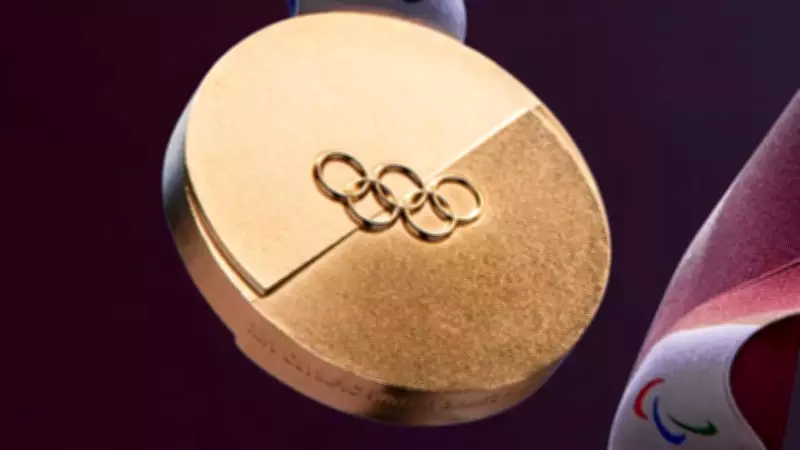
The Hidden Value of Olympic Medals: Metal Content vs. Historic Significance
When champions ascend the podium at the 2026 Winter Olympics in Milan, the medal draped around their neck could carry a higher intrinsic material value than those from many previous Games. This increase, however, stems not from a change in composition but from the dramatic surge in global precious metal markets.
A Century Without Solid Gold
Contrary to popular belief, Olympic gold medals have not been crafted from solid gold for over a hundred years. The final instance of athletes receiving pure gold medals occurred at the 1912 Summer Olympics in Stockholm. Since that historic event, considerations of cost, practicality, and enduring tradition have fundamentally transformed the manufacturing process of these iconic awards.
Today, the International Olympic Committee establishes the precise standards. According to IOC regulations, a gold medal must consist of a minimum of 92.5 percent silver. A typical modern Olympic gold medal is produced from approximately 500 grams of silver, which is then coated with a delicate outer layer containing about six grams of pure gold. Silver medals incorporate the same quantity of silver but lack the gold plating, while bronze medals are fashioned entirely from bronze alloy.

Calculating the "Melt Value"
Bobby Eaton, a respected Olympics memorabilia specialist at Boston-based RR Auction, explained to CBS News that the fundamental worth of these medals, based purely on their metallic content, is referred to as the "melt value." With prices for precious metals skyrocketing globally, this figure has experienced a sharp and significant increase.
As of recent market data, gold was trading at an impressive $5,054 per ounce. Given that six grams of gold equates to roughly 0.2 ounces, the gold component of an Olympic medal alone holds a value of approximately $1,011. Concurrently, silver, priced around $83 per ounce, contributes an additional $1,463 for the 500 grams utilized in the medal's structure. When combined, the total raw material value of an Olympic gold medal reaches about $2,474, hovering just below the $2,500 threshold.
Market Forces Driving Prices Higher
This valuation mirrors broader economic trends and market dynamics. Gold prices astonishingly surpassed $5,000 per ounce last month for the first time in recorded history. This surge is largely propelled by heightened investor demand amidst ongoing geopolitical instability and escalating global debt levels. For context, just a decade ago, gold was trading within the $1,200 to $1,300 range, illustrating a monumental shift.
The True Worth: History Over Metal
Despite these substantial material values, the genuine financial worth of an Olympic medal rarely resides in its metallic composition. "There is a significant discrepancy between the melt value and the actual collectible value," Eaton emphasized in his interview. Medals associated with legendary performances, iconic athletes, or pivotal moments in sports history can command auction prices that vastly exceed their base material worth.
This profound gap is vividly demonstrated in auction records. In 2013, one of the four gold medals earned by Jesse Owens at the 1936 Berlin Olympics was sold for a staggering $1.47 million, establishing a record for an Olympic medal, as reported by SCP Auctions. Owens' triumphs, achieved in Nazi Germany, carry immense historical and symbolic weight, which dramatically amplified the medal's market value.
Recent Sales and Personal Stories
More contemporary examples include the celebrated American diver Greg Louganis, who sold several of his Olympic medals. His gold medal from the 1988 Seoul Games for the 10-meter platform event fetched over $200,000 in 2025, according to RR Auction. His 1984 Los Angeles gold medal for 3-meter springboard diving sold for just under $200,000, while his 1976 Montreal silver medal realized more than $30,000.
These sales transcended mere profit motives. Eaton revealed that the proceeds enabled Louganis to relocate to Panama and reconstruct his life. "He stated that the money acquired from selling his medals allowed him to restart his life so he could pursue his desired path," Eaton recounted.

Other athletes have opted to part with their medals for altruistic reasons. In 2022, swimming superstar Ryan Lochte auctioned six of his Olympic medals—three silver and three bronze—to generate funds for a children's charity. Throughout four Olympic appearances, Lochte secured a total of twelve medals, including six gold.
"I am not particularly sentimental about medals," Lochte informed The Associated Press at the time. "My medals were merely accumulating dust in my closet. The cherished memories I hold are what truly matter most."
As the world anticipates the 2026 Winter Games, the medals awarded will embody both tangible material value and intangible historic potential, reminding us that their ultimate worth is often written not in metal, but in the stories they represent.