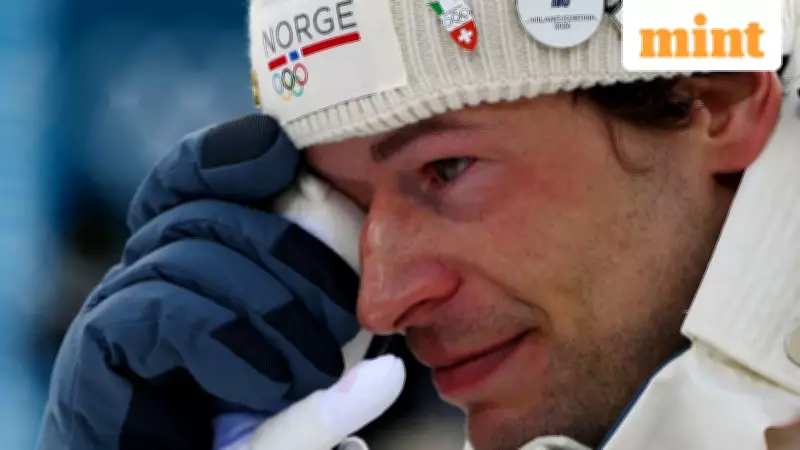
Winter Olympics 2026: Norway's Biathlete Delivers Raw Confession After Bronze Medal Win
Norwegian biathlete Sturla Holm Lægreid created an unforgettable Olympic moment that had little to do with skiing or shooting. After securing the bronze medal in the men's 20km biathlon at the Winter Olympics 2026, the 27-year-old athlete broke down during a live television interview, delivering a stunningly personal confession about his private life that left viewers across Norway and the world speechless.
From Podium Celebration to Personal Revelation
While Norway celebrated another podium finish in a sport the nation has long dominated, Lægreid's emotional interview with national broadcaster NRK reframed his athletic achievement as a deeply personal reckoning. Minutes after crossing the finish line, the accomplished athlete—who already boasts Olympic relay gold from Beijing 2022 and 14 world championship medals—turned what is typically a victory celebration into a moment of raw vulnerability.
"There is something I want to share with someone who may not be watching today," Lægreid began, his voice trembling. "Half a year ago I met the love of my life. The world's most beautiful and nicest person. Three months ago I made the mistake of my life and cheated on her, and I told her about that a week ago. This has been the worst week of my life."

A Striking Departure from Olympic Norms
In elite sports, victory interviews typically follow a predictable script—athletes thank coaches, celebrate national pride, and discuss their training regimen. Lægreid shattered this convention completely, using his platform to speak about regret, accountability, and the personal cost of betrayal.
When asked how he managed to finish third despite his emotional turmoil, Lægreid responded: "I try to be a good role model and I did something stupid. I got a nice video from the club at home and I used that as motivation today. As I said I want to be a good role model but I have to admit when I get something wrong. You have to admit when you do something you can't stand for and hurt someone you love so much."
The Race Results and Emotional Context
The biathlon competition itself saw Norwegian dominance continue with Johan-Olav Botn claiming gold and France's Éric Perrot taking silver. Lægreid's bronze added to his already impressive career achievements, but the aftermath revealed an athlete grappling with far more than athletic performance.
Botn's own victory carried profound emotional weight. After crossing the finish line, the gold medalist pointed to the sky and shouted "We did it Sivert!"—a tribute to teammate Sivert Guttorm Bakken, who was found dead in his hotel room in Italy just months before the Olympics.
"My thoughts felt OK all the way," Botn told NRK. "I went out on the last lap and had an incredible emotional rollercoaster. It was very special. When I crossed the line I broke down. I was thinking about him all the way through the last lap."
Continued Reflection After the Medal Ceremony
Following the medal ceremony, Lægreid returned to NRK for another interview, expressing concern about the impact of his disclosure while continuing to reflect on his personal situation.
"I do not want to say who it is," he stated regarding the woman involved. "She has had enough to deal with after last week but I hope that there is light at the end of the tunnel for us both. And that she can continue to love me."
The athlete also expressed worry that his confession might have overshadowed his teammate's achievement: "Of course, now I hope I didn't ruin Johan's day. Maybe it was really selfish of me to give that interview. So yeah, I don't know. I was, I'm a bit, I don't know … I'm not really here mentally. So yeah, we will see what happens."
A Rare Moment of Unfiltered Olympic Vulnerability
The juxtaposition of interviews created a striking Olympic tableau: one gold medalist speaking through grief for a lost teammate, and one bronze medalist speaking through shame for personal betrayal. For Norway—where biathlon athletes rank among the nation's most prominent sporting figures—these moments pierced through the typical Olympic narrative of uncomplicated triumph.

Lægreid's decision to speak so openly about his affair represents an almost unprecedented moment in Olympic broadcasting history. It arrives at a time when public figures across sports increasingly face expectations of moral clarity alongside athletic excellence.
For Sturla Holm Lægreid, the bronze medal wasn't framed as consolation or victory in the traditional sense. It was framed as survival—an athletic accomplishment achieved during what he described as the most difficult period of his life.
"I had the gold medal in life," he reflected poignantly, "and I am sure there are many people who will see things differently, but I only have eyes for her."