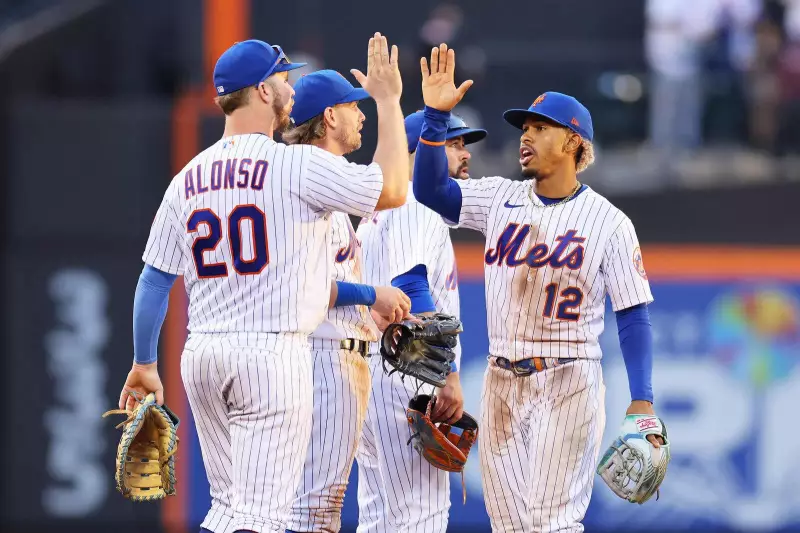
New York Mets Adjust Roster After Brandon Nimmo Trade
The New York Mets are making strategic changes following a significant trade. They recently parted ways with Brandon Nimmo, a player who spent nearly a decade with the organization. This move has prompted the front office to seek new outfield options.
Why the Mets Traded Nimmo to Texas
The Mets executed a one-for-one trade with the Texas Rangers. They sent Brandon Nimmo to Texas in exchange for second baseman Marcus Semien. Nimmo agreed to waive his full no-trade clause to complete this deal.
This trade ended Nimmo's eight-year tenure in New York, which was worth $162 million. During the 2025 season, Nimmo remained productive. He played in 143 games, batting .261 with 23 home runs and 82 RBIs.
Despite his performance, the Mets prioritized strengthening their infield and managing payroll. Marcus Semien now solidifies second base for the team. However, this trade created an opening in left field that needs filling.
Max Kepler Emerges as a Target for the Mets
The Mets are now focusing on Max Kepler as a potential solution. Kepler became a free agent after playing the 2025 season with the Philadelphia Phillies. He earned $10 million that year, but knee issues limited his playing time.
While Kepler's surface statistics declined, the Mets value his defensive skills and remaining power. In 2025, he ranked among the league's best outfield arms. His abilities fit well into a corner outfield role.
The Mets are considering a reported one-year deal worth $7.6 million for Kepler. This contract would provide reliable defense and left-handed power. More importantly, it preserves roster flexibility for the future.
How Kepler Fits the Mets' Broader Plans
A short-term agreement with Max Kepler aligns with the Mets' current strategy. The team aims to limit spending and avoid long-term commitments. This approach helps them manage the luxury tax effectively.
Prospect Carson Benge is expected to compete for a larger role soon. Signing Kepler would fill the immediate gap without blocking Benge's path to the majors. Additionally, Kepler's lower salary compared to Nimmo's deal leaves room to address pitching needs.
Evaluating the Potential Benefits and Risks
Max Kepler offers several advantages to the Mets. He provides steady corner defense and a strong throwing arm. His power against right-handed pitching comes at a much lower cost than retaining Nimmo would have.
Kepler's projected salary is far below Nimmo's annual average. This financial saving helps the Mets keep their luxury tax obligations in check. The team remains competitive while protecting their payroll.
However, some concerns exist about this potential signing. Kepler is in his mid-thirties and coming off a down year. Durability questions linger due to his recent knee issues.
Furthermore, Kepler does not solve the center-field situation long term. The Mets may need to rely on internal options for that position. Even with these risks, the move fits the team's current moment perfectly.
Key Statistics Comparison
Let's examine how the players stack up based on recent performance:
- Max Kepler (2025 with PHI): .216/.300/.391, 19 HR, 52 RBI, 127 games, 5th-best outfield arm
- Max Kepler (2023 with MIN): .260/.332/.484, 24 HR, 66 RBI, 130 games, elite outfield defense
- Brandon Nimmo (2025 with NYM): .261/.324/.436, 23 HR, 74–82 RBI, 143 games, declining center field defense
- Max Kepler (2026 Projection): .240–.252/.317–.325/.426, approximately 18 HR, ~70 RBI, 130+ games, strong corner defense
The New York Mets are navigating a transitional phase. They aim to stay competitive while managing financial constraints. Signing Max Kepler represents a calculated short-term move that addresses immediate needs without compromising future flexibility.