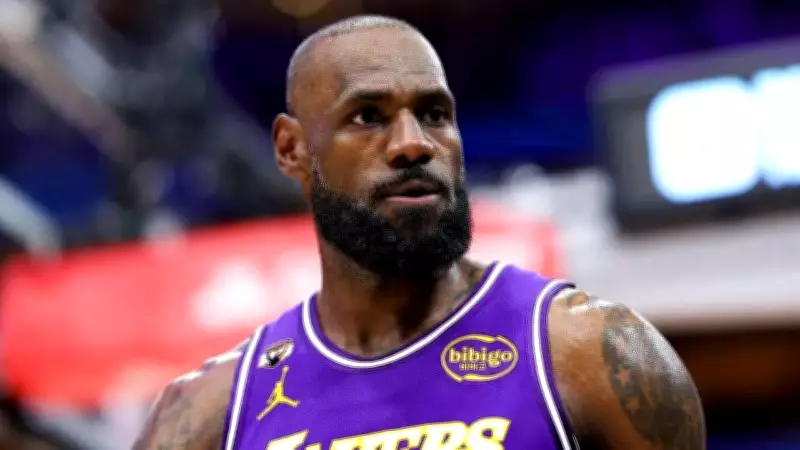
LeBron James opened the season still playing at an elite level for the Los Angeles Lakers. By the end of it, however, one of the NBA's longest-running personal milestones had quietly come to an end. The league announced its All-NBA teams on Sunday, and James was absent from the list for the first time in 21 seasons. The reason was simple but significant: he did not meet the NBA's 65-game minimum for award eligibility after appearing in only 60 games due to back sciatica issues that sidelined him early in the year.
Historic LeBron James All-NBA Streak Ends
The technicality ended a streak that began shortly after James entered the league in 2003. Since missing out during his rookie season, the Lakers forward had earned an All-NBA selection every year, building the longest streak in league history. Even now, at 41 years old and in his 23rd NBA season, the production itself never truly disappeared. James still averaged 20.9 points, 7.2 assists, and 6.1 rebounds while helping Los Angeles secure a fourth-place finish in the Western Conference.
The numbers behind LeBron James' All-NBA resume remain almost untouchable. Before this season, he had collected 21 consecutive selections, including 13 First Team honors, four Second Team appearances, and four Third Team nods. No player in league history has sustained that level of recognition for so long.

What makes this season unusual is that the conversation was never really about decline. Had James crossed the 65-game threshold, there is a strong chance he still would have received consideration for one of the three All-NBA teams. His all-around impact remained visible throughout the season, especially when injuries forced him into a heavier offensive role late in the year. During the playoffs, James became the Lakers' primary offensive engine when Luka Doncic and Austin Reaves battled injury problems. Even against younger and deeper teams, he continued controlling games with his passing, pace, and decision-making.
NBA's 65-Game Rule Changed the Outcome for LeBron James
The NBA introduced the 65-game eligibility rule to place greater emphasis on availability when voting for postseason honors. In James' case, that policy ultimately mattered more than reputation or production. He missed the cutoff by five games after dealing with lingering sciatica discomfort throughout the season. That absence opened the door for a younger wave of stars who combined elite numbers with heavier workloads. Around the league, many viewed this year's All-NBA results as symbolic of a changing era.
Still, James' omission does little to alter the larger picture. He remains the NBA's all-time leader in All-NBA selections and continues producing at a level most players never reach even in their prime years. Questions now shift toward what comes next. James holds an expiring $52.6 million contract, and uncertainty around his future continues to grow heading into the offseason. For the first time in two decades, the All-NBA list moved forward without his name attached to it. That alone says more about the length of his dominance than the ending of the streak itself.