Lance Armstrong's story is a dramatic saga of incredible athletic triumph, a devastating fall from grace, and an unexpected financial rescue. The former American cyclist, once the undisputed king of his sport, saw his world crumble after a massive doping scandal. Yet, today, his financial standing remains robust, estimated at a staggering $50 million. The surprising lifeline? An early, prescient investment in the ride-hailing giant, Uber.
The Uber Lifeline: A $100,000 Bet That Paid Off
At the peak of his public disgrace and financial turmoil, a single investment decision made years earlier became Armstrong's safety net. In 2009, amidst his cycling career's final chapters, Armstrong invested $100,000 into Uber. He made this move through venture capitalist Chris Sacca's fund.
This investment would later prove to be a masterstroke. According to a CNBC report, that initial sum ballooned to an estimated $20 to $30 million. Armstrong himself acknowledged its crucial role in a 2018 interview with CNBC, stating that the Uber investment financially "saved" his family during their most difficult years.

From Champion to Pariah: The Rise and Fall
Armstrong's journey began in Texas, where he was born on September 18, 1971. His rise was meteoric, turning professional in the early 1990s. A severe test in 1996 nearly ended everything: he was diagnosed with advanced testicular cancer that had spread to his lungs and brain.
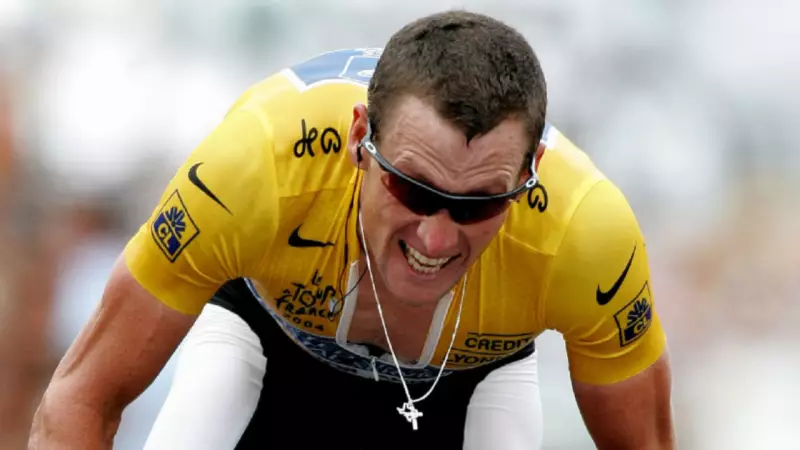
After a fierce battle and recovery, he returned to cycling in 1998. What followed was a period of unprecedented dominance. From 1999 to 2005, Lance Armstrong won the Tour de France a record seven consecutive times, becoming a global icon and symbol of cancer survival.
However, the foundation was built on lies. In 2012, the United States Anti-Doping Agency (USADA) presented overwhelming evidence of systematic doping. Armstrong received a lifetime ban and was stripped of all his titles from August 1998 onward. Major sponsors including Nike, Trek, and Oakley terminated their lucrative contracts immediately.
At his peak, Armstrong's total wealth exceeded $100 million. The scandal caused a precipitous fall. The loss of sponsorships, coupled with costly legal battles and settlements, decimated his fortune. His confession to using performance-enhancing drugs in a televised interview with Oprah Winfrey in 2013 was the final public admission of guilt.
Life After the Storm: Podcasts, Speaking, and Stability
Today, Lance Armstrong has largely retreated from the public eye, splitting his time between homes in Texas and Colorado. His income streams have diversified. He now earns through his popular podcast, paid public speaking engagements, and various business investments.
While he is no longer associated with the Livestrong Foundation, the charity he founded continues its work, having raised over $500 million for cancer support. In recent years, Armstrong has managed to avoid major new controversies. Reliable US media outlets report that his financial situation is stable, thanks in no small part to that timely Uber windfall.
His narrative remains one of the most compelling in modern sports history—a tale of phenomenal success, catastrophic failure, and a financial recovery hinging on one brilliant investment made away from the bicycle.