Indian Cyclists Prepare for Historic Race on Home Turf
Indian National Team cyclist Dinesh Kumar vividly remembers his first encounter with competitive cycling. "I was in school when I discovered cycling," he recalls. "One day, riding on the road in my hometown of Rourkela, Odisha, I saw a cyclist with all the gear - different bicycle, helmet, goggles. I thought, 'Who is this foreigner?'"
Dinesh continues his story with enthusiasm. "I was on a normal cycle but somehow managed to catch him. I asked where he was from, and he asked if I wanted to go cycling. When I said yes, he introduced me to a coach. That's how my journey began."
India's Cycling Milestone Arrives
This week marks a significant moment for Indian cycling. The country hosts its first-ever UCI 2.2 category multi-stage continental road race - the Pune Grand Tour. Scheduled from January 19 to 23, this five-day event places India firmly on the global professional cycling map.

For the first time, international teams will race through Indian cities, villages, ghats, and highways in a UCI-accredited tour. The event offers crucial ranking points that could eventually help cyclists qualify for the Olympics.
Unprecedented Scale and Participation
The race features an impressive lineup:
- 171 riders from 29 teams
- Representing 35 different countries
- Covering 437 kilometers of racing
The route traverses diverse landscapes across Maharashtra. It begins with a short 7.5 km prologue at Goodluck Chowk, then moves through village roads at Mulsi-Maval. Racers will climb through the Maratha Heritage Circuit, speed through the Western Ghats Gateway stage, and conclude with the technical Pune Pride Loop inside the city.
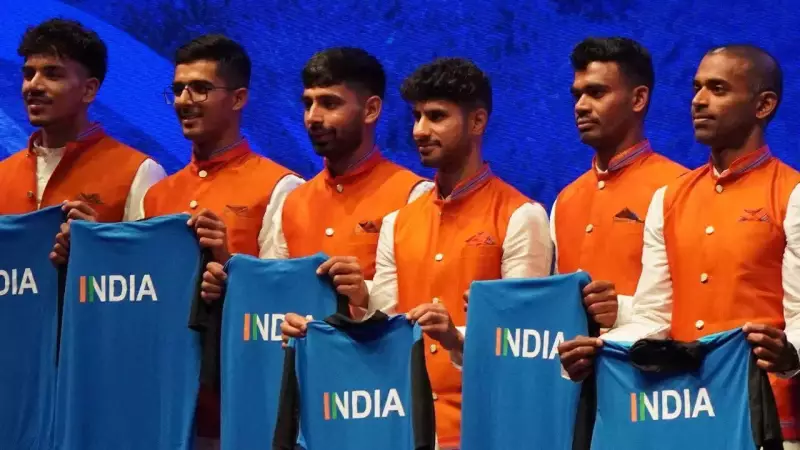
India will field 12 riders in this UCI road race, divided into two squads: the Indian National Team and the Indian Development Team. This represents the country's largest-ever presence at this competitive level.
Home Advantage and Emotional Significance
For Indian National Team member Surya Thathu of Maharashtra, racing at home carries special meaning. "This is very big for us because it's happening in Pune, in India, for the first time at this level," he explains. "We usually travel abroad for such competitions - to Belgium, Dubai, other countries. Having this event in India creates a very big stage for us."
Surya highlights the contrast with international racing environments. "In Belgium, races happen almost every week. When you race where no one worries about losing, you grow instantly. Here in India, we typically have only one major race like the National Championship, where everyone wants to win a medal."
The Pune Grand Tour aims to change this dynamic by bringing aggressive, international racing to Indian roads. The players fully support this initiative.
Family Traditions and New Challenges
For another team member, Vishavjeet Singh of Punjab, cycling represents a family legacy. "Cycling is my family game," he shares. "My father was a cyclist, my uncle was a cyclist, my big brother was a cyclist, my sister has done cycling. I am the third generation in my family doing cycling."
This tradition has brought success. "I got a bronze medal in the Asian Championship 2022," Vishavjeet adds proudly. "First time for India... first Indian endurance rider to bring a medal for India in Asian Championships."
However, road racing presents new challenges for the track specialist. "This is my first multi-day road race of this kind," he admits. "I will go for a good ranking, but also for my team. I will help as much as I can."
The Financial Realities of Competitive Cycling
Behind the excitement of the peloton lies a financial reality that few outside the sport fully understand. "It is true that cycling is very expensive," says Dinesh Kumar. "There are cycles for Rs 8 lakhs, 10 lakhs, 12 lakhs. The price of the cycle that I am going to use here is around Rs 10 lakhs. The international players will also be using the same kind of cycles. The equipment is the same."

Surya acknowledges the sacrifices made by his family. "It's all our family's support. My brother stopped playing. He was a footballer. He decided to stop and start working because both brothers can't do sport. He sacrificed that stuff for me."
Coaching Perspective and Team Preparation
For the Indian Development Team, the Pune Grand Tour focuses less on podiums and more on process. Coach Amit Jangra, who has represented India in the Commonwealth Games, sees this as a milestone event.
"It's not about the pressure, it's about the exposure," Jangra explains. "This will be a milestone for their future."
Both teams have undergone thorough preparation with camps in Patiala. They've adapted from near-freezing temperatures a few weeks back to Pune's mild winter conditions. The coach believes the players are now in good shape to showcase their abilities.
"We focus on the training process," Jangra adds. "If we follow the process quietly and consistently with discipline, definitely the results will come."
Dinesh echoes this sentiment about the event's importance. "The aim is to finish well and give our best so that this tour continues, and we get chances to play events in the future."
A Full Circle Moment for Indian Cycling
As the peloton rolls out of Goodluck Chowk, children in villages and city streets will watch riders on machines worth more than many cars. This represents a significant shift for Indian cycling.
Years ago, a schoolboy in Rourkela thought a properly equipped cyclist looked like a foreigner. This week, foreign riders will look at Indian cyclists as equals on the same competitive stage. The Pune Grand Tour symbolizes both progress and possibility for India's cycling community.