FM Prasenjit Dutta's Inspiring Path from Agartala to Delhi Chess Academy
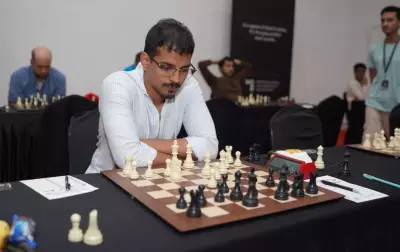
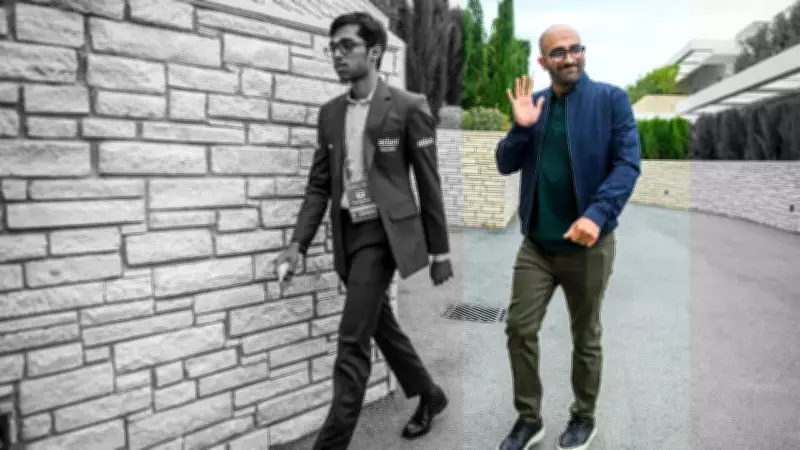
In the bustling heart of New Delhi, FIDE Master Prasenjit Dutta operates a prestigious chess academy, a testament to a life marked by strategic gambles and remarkable comebacks. For many years, Dutta maintained a cherished tradition: whenever an exceptionally talented student entered his academy, he would immediately contact his former protégé, Grandmaster Vaibhav Suri, India's 27th Grandmaster. He sought brief interventions or tips to hone young minds, and Suri consistently responded with a respectful "Sure, Sir." However, this ritual has now been paused, not due to any strain in their bond, which Dutta describes as more familial than professional, but because Suri has immersed himself in the high-stakes preparation for chess prodigy R Praggnanandhaa.
The 3,000 Rupee Setback That Shaped a Coach
To comprehend the architect behind Praggnanandhaa's recent successes, one must first understand Prasenjit Dutta's own formative years. His chess journey commenced in the remote setting of Agartala, Tripura, back in 1989. By 1995, he had achieved the title of National Sub-Junior Champion and earned recognition as India's youngest FIDE Master, poised for international competition in Brazil. Yet, a financial hurdle abruptly halted his progress. Dutta recalls, "Due to FIDE's final fee of 3,000 rupees, I couldn't pay. As a result, I stepped away from chess for nearly three years. I thought nothing would come of playing because I couldn't do anything due to financial reasons." This heartbreak forced a temporary retreat from the game, but Dutta's passion eventually reignited upon seeing his peers' achievements in newspapers.
Building a Legacy: From State Champion to Renowned Coach
Dutta made a resilient return, securing seven state championships and a university gold medal. Two decades ago, he gradually transitioned into coaching children. During a tournament in Kerala with three students, a local newspaper hailed him as "the youngest coach in India." It was there he encountered Aditya Vikram Ahuja from Delhi, whose father requested Dutta to coach his son. This led to occasional teaching sessions in Delhi, though Dutta's academy remained based in Tripura. A pivotal moment occurred at a state championship in Delhi when he met Nitin Suri, Vaibhav's father, who noticed Aditya's improvement and inquired about coaching.

The turning point arrived with Bharat Singh Chauhan, President of the Delhi Chess Association, who visited Dutta's small academy in Tripura and recognized his potential. Chauhan urged, "Prasanjit, come to Delhi. I will help you. We need more coaches, and your highest rating was 2317. I've known you for a long time. Come to Delhi. I will support you." This personal encouragement convinced Dutta to relocate, despite having two months left for his MA final exams. By August 2006, he was in Delhi, dedicating himself to training a nine-year-old Vaibhav Suri.
Molding a Grandmaster: The Vaibhav Suri Era
Dutta's training regimen with Vaibhav was intense, involving eight to nine hours daily. He marveled at the boy's unparalleled stamina, noting, "Even after seven hours of training, he still had the energy to learn. I haven't seen any student with that kind of energy in class." Suri's devotion was profound; he constantly carried his chessboard and pieces, even keeping them close while sleeping. In an era of digital distractions, Suri remained focused, with no television or idle time, often calling Dutta if he was even five minutes late for a class.
Their relationship evolved into a friendly competition, with Dutta, then in his twenties with a rating around 2300, racing against the pre-teen Suri to see who would first achieve the International Master title. Suri's early successes included a second-place finish in the Under-9 national tournament in Solapur and selections for Asian and World Championships. Dutta provided rigorous training, using complex positions from books to test Suri's calculation skills, often finding himself amazed by the depth of his student's understanding.

Suri's Rise and Role in Praggnanandhaa's Success
Vaibhav Suri became India's 27th Grandmaster in 2012, known for his cool, composed demeanor and exceptional positional play. Dutta highlights a memorable instance where Suri, facing a stronger opponent in a state championship, asked for advice. Dutta casually suggested the Pirc Defense without detailed preparation, and Suri won, showcasing immense confidence. These traits—minimal need for publicity and a refusal to show off—have made Suri an ideal second for R Praggnanandhaa. In modern chess, a second serves as sparring partner, data analyst, and psychological anchor, and Suri's total immersion and strategic acumen have significantly contributed to Praggnanandhaa's daring maneuvers on the international stage.
Dutta expresses pride in Suri's dedication, stating, "He never seeks publicity. Even on camera, he remains calm. I feel proud inside that he chose a good player in Praggnanandhaa and focused seriously." This shift underscores the evolving dynamics in Indian chess, where mentors like Dutta continue to inspire while their protégés, like Suri, drive the next generation of champions forward.