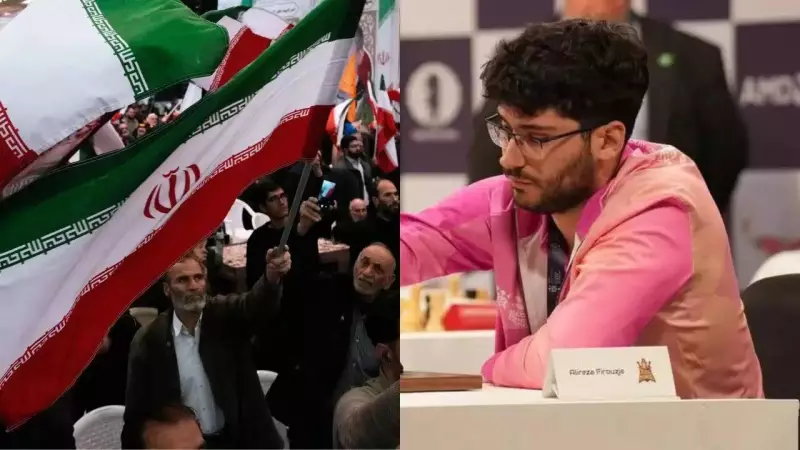
The world of chess and international politics intersected dramatically when French No. 1 chess grandmaster Alireza Firouzja posted a potent message of solidarity on social media platform X. His post, which simply stated "Long live Iran," quickly went viral, resonating deeply with a global audience against the backdrop of ongoing anti-government protests within the country.
A Symbolic Gesture Amidst Turmoil
The timing and content of Firouzja's post were highly significant. Iran has been witnessing widespread public demonstrations, with citizens demanding substantial political change. Human rights organizations have described the situation as a severe humanitarian crisis. In response, authorities have imposed internet blackouts and restricted phone services, effectively isolating millions from the global community. Reports indicate that dozens have lost their lives since the protests began. In this context, Firouzja accompanied his text with an image of the monarchial-era Iranian flag, a symbol widely adopted by the protest movement as an emblem of resistance and hope for a different future.
Firouzja's Journey: From Iranian Prodigy to French Champion
Alireza Firouzja's connection to Iran is deeply personal. He was born in Iran on June 18, 2003, and is celebrated as one of the most brilliant chess talents of his generation. His career milestones are extraordinary:

- He achieved the title of grandmaster at the remarkably young age of 14.
- He later broke a record held by the legendary Magnus Carlsen by becoming the youngest player ever to cross the coveted FIDE rating of 2800.
However, his path has not been without conflict. In 2019, Firouzja made the difficult decision to leave the Iranian Chess Federation. This move was a direct result of Iran's official policy that forbids its athletes from competing against players from Israel. For a time, he competed under the neutral flag of the International Chess Federation (FIDE) before formally acquiring French citizenship in 2021 and now representing France in international tournaments.
Global Reaction and Enduring Bonds
The online reaction to Firouzja's post was swift and widespread. Many fans and observers interpreted his message as a clear show of support for the ordinary people of Iran facing government crackdowns. The post underscored that, despite his change in nationality and federation, his emotional and cultural ties to his birthplace remain powerful and influential. This act of digital solidarity highlights how global sports figures are increasingly using their platforms to comment on socio-political issues, especially those connected to their heritage. Firouzja's stand serves as a poignant reminder of the complex identities many athletes navigate and the potent symbolism a simple message can carry during times of crisis.