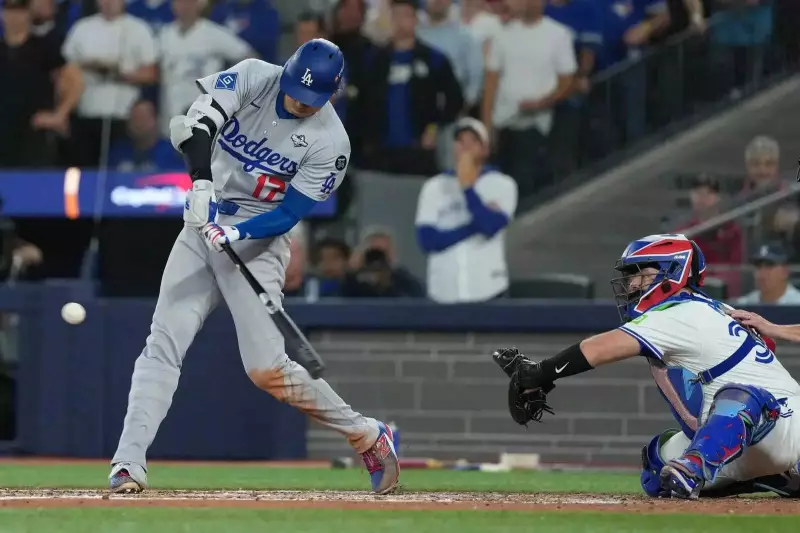
The Los Angeles Dodgers are contemplating a significant defensive overhaul as they remain strongly linked to Toronto Blue Jays superstar Bo Bichette, one of the most powerful hitters currently available on the free-agent market.
Defensive Concerns Spark Position Change
While Bichette's offensive capabilities easily position him as a nine-figure player, serious questions about his defensive metrics have emerged across Major League Baseball. His negative Defensive Runs Saved (DRS) and Outs Above Average (OAA) statistics have prompted multiple teams, including the Dodgers, to view him primarily as a second baseman rather than a shortstop.
If Los Angeles decides to pursue Bichette aggressively, they could shift the $186 million free-agent target to second base while moving current infielders Tommy Edman and Andy Pages into outfield positions. This strategic realignment would maximize the team's defensive stability, depth, and overall versatility.

Dodgers' Flexible Roster Advantage
The Los Angeles organization has built its current roster emphasizing flexibility, allowing them to conceal defensive weaknesses more effectively than most MLB teams. This advantage becomes particularly valuable when considering Bichette's situation. Despite his extensive major-league experience at shortstop, several teams increasingly see him as a better long-term fit at second base.
Mookie Betts perfectly demonstrated this flexibility last season. The Gold Glove outfielder transitioned to shortstop full-time in 2025 and became a Gold Glove finalist in his very first season at the position, proving the Dodgers' confidence in making significant positional adjustments.
Projected Defensive Realignment
The Dodgers could deploy a completely restructured defensive alignment if they successfully sign Bo Bichette:
- Second Base: Bo Bichette (shifted from shortstop due to defensive metrics)
- Shortstop: Mookie Betts (Gold Glove finalist in first full season at position)
- Center Field: Tommy Edman (extensive center-field experience)
- Corner Outfield: Andy Pages (better suited for corner outfield spots)
- Utility Role: Tommy Edman (if Miguel Rojas re-signs as expected)
This approach would not only accommodate Bichette's defensive profile but also position Edman and Pages in roles that better align with their individual strengths and capabilities.
League-Wide Perspective on Bichette
The idea of shifting Bichette to second base is gaining significant traction across Major League Baseball. According to Yahoo Sports analyst Jordan Schusterman, "Early reports indicate Bichette might not be viewed as a shortstop by all potential suitors" despite playing the position almost exclusively throughout his major-league career.
Schusterman added that while Bichette's age and elite hitting will undoubtedly anchor his market value, teams will exercise caution regarding his defensive capabilities when determining his optimal position.
On the Dodgers' side, OnSI's Aaron Coloma strongly believes the team's versatile roster can easily handle this adjustment. "By moving Bichette to second, the Dodgers could also plug the holes they have in the outfield" Coloma wrote, emphasizing that Tommy Edman possesses considerable experience in center field while Andy Pages could transition to a corner outfield spot where he's better suited defensively.
Impact on Current Players
Tommy Edman's statistics might not immediately jump off the page, but his remarkable versatility has always made him exceptionally valuable in competitive environments. If Miguel Rojas re-signs as anticipated, Edman could transition into a super-utility role that the Dodgers organization frequently prioritizes.
Meanwhile, Andy Pages is coming off a genuine breakout year and likely deserves an expanded role. Shifting him into a corner outfield spot would provide more consistent opportunities without exposing his defensive limitations in center field.

The proposed defensive realignment offers multiple benefits for the Dodgers organization, including maximizing defensive efficiency, utilizing Edman's versatility, expanding Pages' offensive role, protecting against Bichette's defensive concerns, and keeping Betts at a position where he has already demonstrated exceptional performance.
Across Major League Baseball, the perception of Bo Bichette is undergoing a significant shift. Despite playing almost exclusively at shortstop throughout his career, teams increasingly evaluate him as a second baseman. This revised assessment doesn't diminish his value; in fact, it might encourage more teams to pursue him, knowing he won't be required to anchor baseball's most demanding defensive position.
His age (turning 28 next March) and elite offensive production ensure he will secure a substantial long-term contract, but whichever team makes that investment must have the defensive infrastructure to support him. Few clubs are as well-equipped as the Los Angeles Dodgers to make this arrangement successful.
The Dodgers may not be the only franchise interested in Bo Bichette, but their exceptional depth, remarkable positional flexibility, and established star power provide them with a distinct advantage. Whether they ultimately secure his signature remains uncertain, but the blueprint for integrating him into their lineup is already clearly defined and may fundamentally reshape their defensive identity for the 2026 season.