In a powerful story of resilience, safety Damar Hamlin has re-signed with the Buffalo Bills on a one-year contract worth $2 million in March 2025. This move comes after the player navigated a challenging period marked by a severe cardiac arrest two years prior and a more recent pectoral injury.
A Setback on the Road to Recovery
Hamlin's journey back to the field hit another hurdle during practice, leading to a pectoral injury. As a result, the Bills placed him on injured reserve on October 11, 2025. However, hope was reignited on January 7, 2026, when the team officially opened his 21-day practice window, signaling a potential return to active play.
During this phase, Hamlin participated in practice on a limited basis. Buffalo Bills head coach Sean McDermott provided an update, noting via NFL Network's Sydney Ciano that the player "seems in good spirits" and that "medically, it’s obviously moving in the right direction."

The Terrifying Incident: Revisiting the Cardiac Arrest
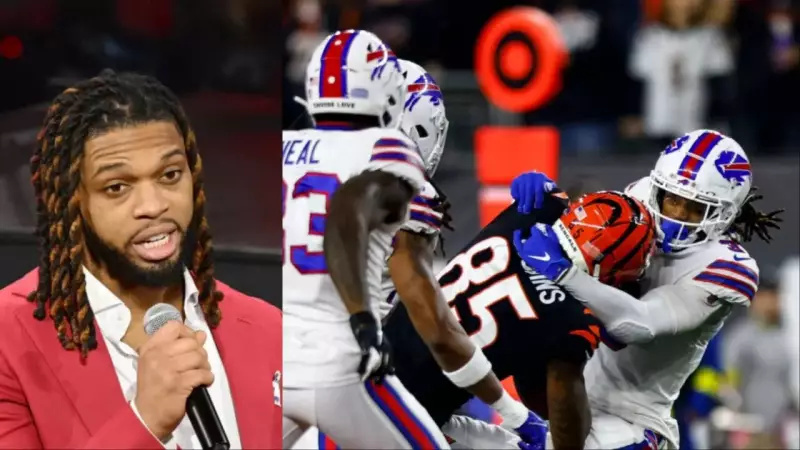
This latest chapter in Hamlin's career is shadowed by a life-threatening event that stunned the NFL world two years ago. During a January 2023 game against the Cincinnati Bengals, Hamlin collapsed on the field after making a tackle on receiver Tee Higgins.
Medical experts, including ER doctor Sam Ghali, later analyzed the play. Ghali explained that Higgins' legal hit delivered significant blunt force to Hamlin's chest just as his feet were not set. After standing up briefly, Hamlin suddenly collapsed, a sequence Ghali described as classic for a specific cardiac event.
The diagnosis was Commotio Cordis, a rare phenomenon where a blow to the chest at a precise moment in the heart's cycle triggers ventricular fibrillation (V-fib), a lethal heart rhythm. This stops blood flow to the brain almost immediately.
Immediate Action Saved His Life
The critical factor in Hamlin's survival was the swift medical response on the field. He received immediate CPR and early defibrillation with an AED (Automated External Defibrillator). This rapid intervention is credited with saving his life and, crucially, preserving his neurological function. Dr. Ghali emphasized the lesson from this ordeal: "Life is precious, please learn CPR."
Hamlin's story transcends sports. It is a profound narrative about human fragility, the importance of emergency medical preparedness, and an athlete's sheer determination to overcome immense physical and psychological challenges. His return to practice, even in a limited capacity, marks a significant victory beyond the scoreboard.