The Unconventional Toolkit of Professional Cyclists
While granola bars are standard pre-race fuel, the sight of a full-sugar Coca-Cola can or gel carbohydrates might raise eyebrows among casual observers. However, these items are just the tip of the iceberg when it comes to the peculiar paraphernalia that defines professional cycling teams. During events like the Bajaj Pune Grand Tour 2026, riders and their support staff employ a range of improvisational tools that seem more suited to a novelty shop than a high-stakes athletic competition.
Women's Stockings: The Ultimate Cooling Solution
"Hahahaha, we are all crossdressers, and like to stay cool," laughs a senior support staff member of a Spanish cycling team as he produces a bundle of women's stockings. These seemingly out-of-place items serve a critical purpose on sweltering race days. Massive plastic bags deliver ice cubes to each of the thirty team tents, where the ice is carefully placed into the stockings to create makeshift ice bags.
These improvised cooling devices are then tucked into the back of cyclists' jerseys, just below the neck, providing essential temperature regulation during intense competition. "It keeps the cyclists cool and women's stockings are best suited for their material because the ice stays intact but they are porous enough," explains the Spanish team member. Different teams have their variations: the highly regimented Chinese Team Li Ning Star prefers women's ballet socks for the same purpose, while Indian cyclists often simply chuck ice directly into their jersey backs.

Safety Pins: Securing More Than Just Numbers
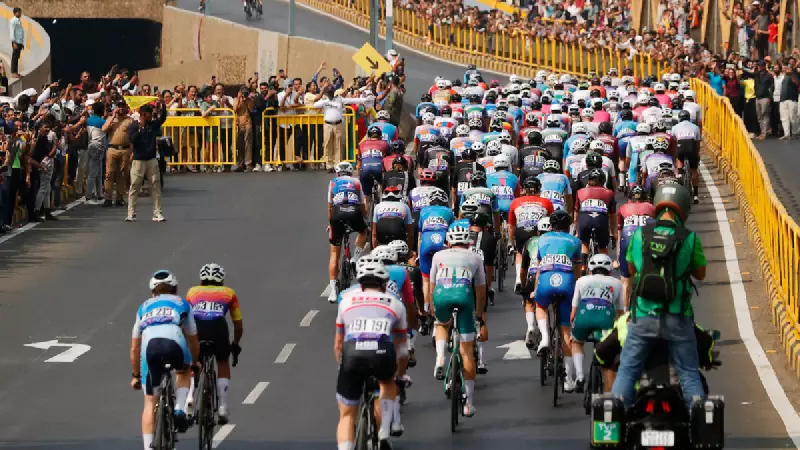
The first day of racing typically sees volunteers scrambling to distribute enough safety pins to all competing teams. This humble hardware plays a surprisingly vital role in professional cycling. When cyclists reach speeds of 70 kilometers per hour through open, windy terrain, their jersey number bibs can easily flutter away without proper securing. Each bib requires at least twenty safety pins to remain firmly in place during the race.
Beyond just holding numbers, these pins help secure the various items cyclists carry in their jersey pockets. Professional cycling jerseys feature two rear pockets that become mobile storage units during races, containing everything from energy bars and fluid replenishment to mobile phones and even motivational love letters in French or Flemish. Some riders opt for a simple banana for quick energy top-ups while on the move. The safety pins ensure all these essentials remain securely in place throughout the demanding race.
Kitchen Funnels and Nutritional Alchemy
Team physiotherapists demonstrate what can only be described as nutritional alchemy, combining bartender's mixology skills with chemist's precision and chef's gastronomic experimentation. Central to this process is the humble kitchen funnel, which becomes an essential tool for creating custom hydration mixtures. Through these funnels flow carefully measured combinations of fruit juice, water, and electrolytes that fill team water bottles.
Carbohydrates in gel form, resembling Pepsi Cola in plastic tubes, provide instant energy when sucked during races. Interestingly, while cyclists maintain strict body fat percentage monitoring during off-season, their race-day nutritional needs shift dramatically toward carbohydrate and sugar-intensive consumption. Once in racing mode, many riders actually prefer regular Colas for their potent combination of sugar and caffeine, with no Diet Coke alternatives to satisfy taste buds.
There's growing buzz around New Zealand military-researched chewing gums that help keep cyclists alert and fueled during competition. At least two European teams have hinted at using similar molecular power packets to maintain peak performance throughout grueling race stages.
Strategic Tags: Cycling's Secret Maps
Perhaps the most intriguing piece of cycling paraphernalia is the small sticker tag attached to handlebars, bearing assorted symbols and numbers. On challenging stages like Pune's Stage 2 with its steep ascents, these tags become crucial navigational and strategic tools. While cycle meters display the route covered, team directors use these tiny stickers to communicate critical strategy information.

The tags indicate when to attack in mountainous sections, how far peaks are located, and mark "feeding distances"—precise locations where cyclists can refuel. These distances are carefully synchronized with bike meters to ensure perfect timing for nutritional intake. The sticker essentially crunches complex race strategy into a compact 1-inch by 4-inch format that riders can reference at a glance during competition.
While the shiny, high-tech bicycles naturally draw attention, it's these assorted novelties and improvisations that truly complete a professional cyclist's race-day kit. From women's stockings transformed into cooling devices to kitchen funnels serving as precision nutrition tools, professional cycling demonstrates how innovation often emerges from the most unexpected sources. These practical hacks, born from necessity and refined through experience, highlight the sport's unique blend of cutting-edge technology and grassroots ingenuity that defines modern competitive cycling at events like the Pune Grand Tour.