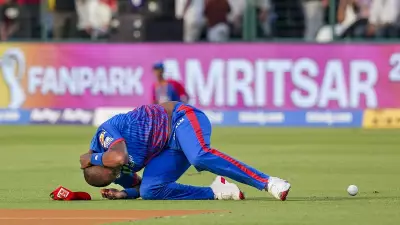
In a shocking revelation that highlights the extreme physical toll of professional sports, English cricketer Brydon Carse has disclosed that he once seriously contemplated amputating his own toe. The 30-year-old fast bowler's career was plagued by a severe and persistent injury to the second toe on his left foot, an ailment so painful it led him to consider drastic measures just to continue playing the game he loves.
The Agonising Injury: A Fast Bowler's Burden
The root of Brydon Carse's problem lay in the very nature of his craft. As a pace bowler, his delivery action involves forcefully driving his front foot – in his case, the left foot – into the ground. This repeated, high-impact landing over years of play placed immense pressure on the front part of his foot. The specific mechanics of his action caused the second toe to bear the brunt of this force.
The consequence was not just blisters or minor cuts, but deep, infected wounds that refused to heal. The constant trauma from bowling reopened the injuries, while the confined space within his cricket boots created a perfect environment for infection to thrive. Medical treatment, including antibiotics, struggled to keep pace with the damage being inflicted every time he bowled. The pain became a constant companion during both training sessions and competitive matches, flaring up relentlessly and hampering his performance.

"I Could Get Rid of My Second Toe": The Amputation Consideration
Frustrated by the unending cycle of pain and slow recovery, Carse's thoughts turned to a radical solution. He confessed to the BBC that there was a period where he would lie in bed thinking, "I think I could actually do this – I think I could get rid of my second toe." The idea of amputation presented itself as a potential shortcut to a pain-free bowling run-up.
However, medical professionals swiftly ruled out this extreme option. They explained the critical biomechanical role the second toe plays in maintaining balance and stability, especially for a fast bowler's dynamic action. Removing it could have destabilised his foot, worsened his bowling technique, and potentially led to a cascade of other, more serious injuries. Amputation was off the table, forcing Carse and his medical team to find another path to recovery.
A Multifaceted Recovery Strategy
Faced with a stubborn injury that wouldn't heal under the stress of play, Carse adopted a comprehensive rehabilitation plan focused on protection and modification.
1. Footwear and Equipment Overhaul: He switched to narrower-fitting bowling boots to achieve a more secure fit and reduce internal movement that aggravated the toe. Custom orthotic insoles were employed to redistribute pressure across his foot. In a telling move, he even cut a small hole in the shoe material directly over the painful area to eliminate any rubbing.
2. Mandatory Rest and Medical Treatment: Recognising that the wound needed uninterrupted time, Carse took a complete three-month break from all cricket activities. This was coupled with multiple courses of antibiotics over six to eight weeks to finally conquer the deep-seated infection.
3. Graduated Return to Bowling: His comeback was meticulously staged. He began with light net sessions, only increasing intensity when his foot was completely pain-free, ensuring the tissue had fully recovered.
Key Takeaways for Athletes and Fitness Enthusiasts
Brydon Carse's ordeal serves as a powerful case study in sports medicine and injury prevention. It underscores several crucial lessons for anyone with an active lifestyle.
Never Ignore Foot Pain: What begins as a minor blister or cut can, under repeated stress, evolve into a debilitating chronic wound. Early intervention is key.
Invest in Proper Footwear: Sport-specific shoes that fit correctly are not a luxury but a necessity. They are the first line of defence against many common foot problems. Simple modifications, as Carse demonstrated, can also make a significant difference.

Treat Infections Immediately: Signs like increased redness, swelling, pus, and throbbing pain demand prompt medical attention. Early antibiotic treatment and proper wound care can prevent a simple infection from becoming a long-term nightmare.
Respect the Power of Rest: For persistent soft-tissue injuries, complete rest is often the most potent medicine. Allowing the body adequate time to heal fully is the best strategy to prevent recurrences and avoid extended time away from sport.
Brydon Carse's story is ultimately one of resilience and smart recovery. By choosing a patient, science-backed approach over a drastic surgical shortcut, he has given himself the best chance to continue his fast-bowling career, with all ten toes firmly on the ground.