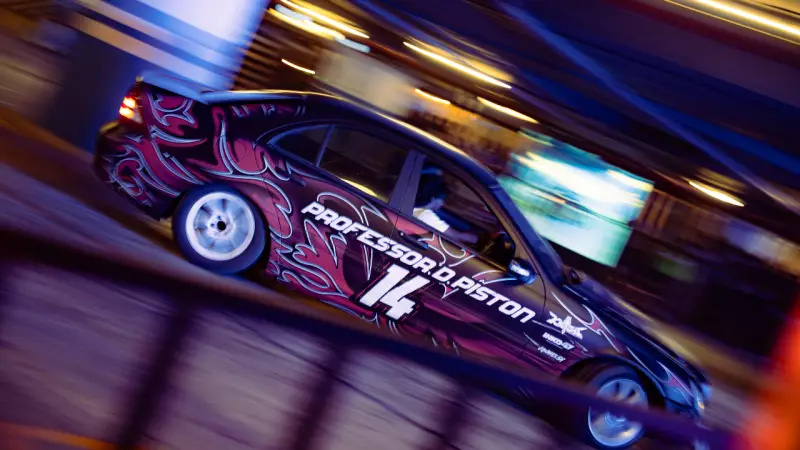
Midnight descends upon Phoenix Marketcity in Chennai. Shoppers have long departed, leaving the vast parking lot eerily quiet. Suddenly, the silence shatters. The sharp screech of tires tearing across tarmac echoes through the empty space. Thick smoke billows into the night air.
Spectators gather, their breaths held in anticipation. A car swerves sideways, its rear end sliding gracefully. It skims past temporary barriers with inches to spare. The deep thump of bass-heavy music pulses through the scene. This is Chennai's new nocturnal attraction: the art and sport of drifting.
A Sport Battling Misconceptions
Over the last year, Chennai has witnessed several drift showcases. Organizers designed these events to introduce audiences to what they call a misunderstood discipline. Many people mistakenly equate drifting with reckless street racing or dangerous public road stunts.

"These perceptions form one of the biggest hurdles for the sport's growth in Tamil Nadu," explains Suriyah Pillai. He founded Madras Driven, a car community that has organized drift shows for two years. The group aims to change public opinion through controlled, professional demonstrations.
Global Roots, Local Challenges
Drifting originated on Japan's mountain roads during the 1970s. Drivers there mastered the technique of sliding cars through extreme hairpin turns, known as 'touge', while maintaining high speed and precise control. From those beginnings, drifting evolved into a recognized global motorsport.
Interest in Tamil Nadu began growing steadily after a key event. In March 2025, Madras Driven hosted its first major drift show at Broadway Mall in Coimbatore. The success prompted the team to bring similar events to Chennai. They utilized large parking lots at venues like Mayajaal and Phoenix Marketcity as temporary drift pits.
However, practicing this sport in Chennai presents significant difficulties. The city lacks dedicated motorsports infrastructure and permanent tracks. Drifting also carries a hefty price tag. "For drifting, you need specific surfaces, either pavers or tarmac," Suriyah notes. The suitable locations are few and far between.
The High Cost of Sliding
Velan P C K, a drift racer based in Chennai, highlights another issue. He says only a handful of active drifters operate in the city. In contrast, metropolitan areas like Delhi, Pune, and Mumbai are much further ahead. Those cities already boast a couple of drifting academies.
Drift vehicles undergo extensive and expensive modifications. Teams install specialized components to ensure safety and performance:
- Lowered suspensions to prevent the car from toppling during sharp slides.
- Bucket seats that securely hold the driver in place during high-G maneuvers.
- Hydraulic handbrakes specifically designed to initiate and control slides.
- Special tyres engineered for a controlled loss of grip, allowing predictable drifting.
Enthusiasts typically prefer rear-wheel-drive cars. Older luxury sedans, such as Mercedes C-Class models, are popular choices because they are relatively easier to convert. "In other countries, these cars are widely available. Here it costs Rs 3 lakh to Rs 5 lakh for the car and another Rs 6 lakh to Rs 10 lakh to build and modify it," Suriyah explains, outlining the substantial financial investment required.
Drawing Crowds Despite Obstacles
Despite the limited infrastructure and high costs, drift shows consistently attract audiences in Chennai. Each event typically runs for about three hours. The program combines thrilling driving demonstrations with entertainment elements:
- Drifting demonstrations showcasing skill and car control.
- Spectacular maneuvers like doughnuts and figure eights.
- Exciting wall runs and tandem drifts where two cars slide in sync.
- Live music performances to amplify the atmosphere.
- Food stalls and auto-motor merchandise vendors.
"We will be organizing another large-scale drifting event in Chennai this March, with more drivers from across India," Suriyah announces, signaling continued growth.

The Practitioner's Struggle
Velan P C K has been involved in drifting for approximately seven months. He identifies practice as the single biggest challenge for Chennai-based drivers. "Parking lots are not ideal," he admits. The lack of proper facilities forces him to travel frequently.
Velan heads to Delhi almost every month to train. He stays for a week at a time to access better infrastructure. "I'm preparing to take part in the Generational Speed Festival, a drag racing tournament in Lonavala, in February," he shares, highlighting his competitive aspirations.
Ajay Marcus, another drift driver from Chennai, points to the absence of local competitions. This void makes it harder for drivers to justify the high costs of building and maintaining specialized drift cars. Without regular events, the return on investment seems limited.
Seeking Skills Beyond Chennai
Bad Boi Drifts, a prominent drifting academy based in Delhi, currently has no immediate plans to open a facility in Chennai. However, it actively attracts enthusiasts from South India to its locations in Gurugram and Bangkok. The academy offers comprehensive packages that include cars, tyres, fuel, instructors, and even accommodation.
"We train a lot of people from Tamil Nadu, from 14-year-olds to those in their late 40s," says Mugdha Grover, co-founder of Bad Boi Drifts. "We curate the course based on their intent: whether they want a one-time experience, a hobby, or to pursue motorsport seriously."
The barrier to entry is surprisingly low from a skill perspective. "All they need to know is how to drive a manual transmission. We take care of the rest," Mugdha assures. Courses typically run from one to three days. Notably, no formal racing license is required unless a driver plans to compete in officially recognized events under bodies like the Federation of Motor Sports Clubs of India (FMSCI).
Mugdha emphasizes the importance of safety. "Drifting is resource-heavy and unsafe on public roads, which is why safe facilities are crucial," she states. She also notes the persistent misconception in India: "Rear-wheel-drive cars are expensive here, and people still think drifting is street racing."
A Regulated Future on the Horizon?
Despite the challenges, there is optimism for the sport's future in India. "Drifting is still emerging in India, but more championships are on the way," states Sirish Visa, Chairman of the Four-Wheeler Circuit Racing Commission.
He confirms that the FMSCI has already established guidelines for the sport. These regulations cover technical modifications, safety standards, and official practice protocols. "With proper promotion and regulation, drifting has the potential to grow from a hobby into a recognized motorsport discipline," Visa concludes, envisioning a structured future for this thrilling automotive art form.
As the night deepens over Chennai, the screech of tires in a deserted parking lot is more than just noise. It is the sound of a nascent motorsport culture fighting for space, recognition, and a permanent home.