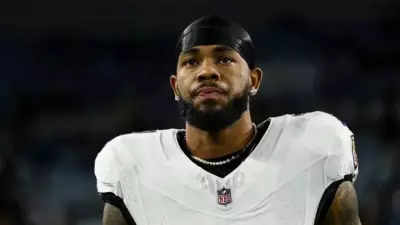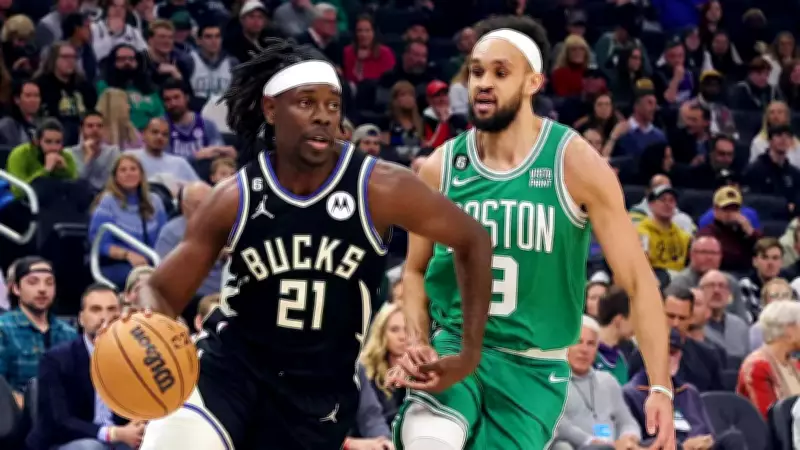
The highly anticipated Eastern Conference clash between the Milwaukee Bucks and Boston Celtics on February 1, 2026, at TD Garden promises to be a battle of depth and resilience rather than star power. Both franchises enter this critical matchup significantly hampered by injuries to their primary offensive engines, setting the stage for a contest where role players and strategic execution will take center stage.
Star Absences Reshape the Game Dynamics
The absence of two franchise cornerstones fundamentally alters the complexion of this encounter. The Milwaukee Bucks will be without the formidable Giannis Antetokounmpo, whose right calf strain sidelines him until at least mid-February, removing the gravitational center of their offensive system. Meanwhile, the Boston Celtics continue to navigate the extended recovery period of Jayson Tatum, who remains out following right Achilles repair surgery with no imminent return expected.
Milwaukee Bucks' Injury Challenges
The Bucks' injury report reveals multiple significant absences beyond their superstar. The perimeter depth has been particularly compromised with Kevin Porter Jr. (right oblique strain) and Taurean Prince (neck injury) both unavailable. Gary Harris enters as probable but requires game-time monitoring for left hamstring discomfort, while Alex Antetokounmpo remains out on a two-way contract.

This creates substantial pressure on Damian Lillard and Malik Beasley to shoulder increased offensive responsibilities. The frontcourt contributions from Brook Lopez and Bobby Portis become particularly crucial for rebounding and rim protection in Antetokounmpo's absence.
Boston Celtics' Roster Situation
Boston receives a significant boost with Jaylen Brown cleared to return after missing the previous game, providing essential scoring and defensive support. However, uncertainty surrounds veteran Al Horford, listed as questionable with limited recent action, potentially affecting interior defense and spacing. The Celtics' defensive structure and organized half-court offense remain their primary advantages heading into this matchup.
Historical Context and Current Standings
Boston maintains a narrow historical edge in the regular-season series with 121 wins to Milwaukee's 113 across 234 total meetings. This encounter represents the second of three scheduled meetings this season, with Milwaukee having secured victory in the first matchup to break a previous losing streak against their Eastern Conference rivals.
The teams enter with contrasting seasonal narratives. Boston has maintained its position near the conference summit with a record around 30-18, leading the Atlantic Division through defensive consistency and structured offense. Milwaukee, conversely, has struggled to stabilize a challenging season with a record around 18-28, relying heavily on offensive production to remain competitive.
Statistical Overview and Key Contributors
Milwaukee's offensive metrics demonstrate their scoring reliance, averaging approximately 122.7 points per game with a 51.3% field-goal percentage. Replacing Antetokounmpo's typical production of 36.0 points, 16.0 rebounds, and 7.0 assists represents their foremost challenge.
Boston counters with more modest offensive numbers (approximately 111.5 points per game, 44.8% shooting) but superior defensive organization. Key contributors include Jaylen Brown averaging around 29.4 points with exceptional three-point efficiency in crucial stretches, Derrick White facilitating with approximately 5.3 assists and 1.3 steals, and Neemias Queta providing consistent rim protection with around 8.0 rebounds.
Strategic Approaches and Game Predictions
With both teams missing their primary stars, the game's outcome likely hinges on supporting cast performances and in-game adjustments. Milwaukee's approach centers on three key elements:
- Pushing the pace whenever possible to create transition opportunities
- Maximizing shot creation from Lillard and Beasley
- Securing strong interior minutes from Lopez and Portis
Boston's advantages include:

- Versatile defensive capabilities across multiple positions
- Disciplined half-court offensive execution
- Superior rotational depth throughout the lineup
Boston enters as a double-digit favorite reflecting their superior record and roster stability, but Milwaukee possesses the potential to remain competitive through guard-controlled offense and opportunistic play.
Critical Factors to Monitor
Several specific elements could determine the game's trajectory:
- Gary Harris' hamstring status: Any limitation would further deplete Milwaukee's already compromised guard depth.
- Al Horford's availability: His potential absence would impact Boston's interior defense and floor spacing.
- Three-point shooting efficiency: Boston's modest perimeter numbers this season create opportunity for either team to gain separation through hot shooting.
This injury-shaped matchup serves as a crucial test of each team's capacity to perform without their leading player. Milwaukee seeks consistency amid a turbulent season, while Boston aims to maintain their conference standing through systematic execution and depth utilization.