Jalen Brunson's $113 Million Sacrifice: A Strategic Masterstroke for the New York Knicks
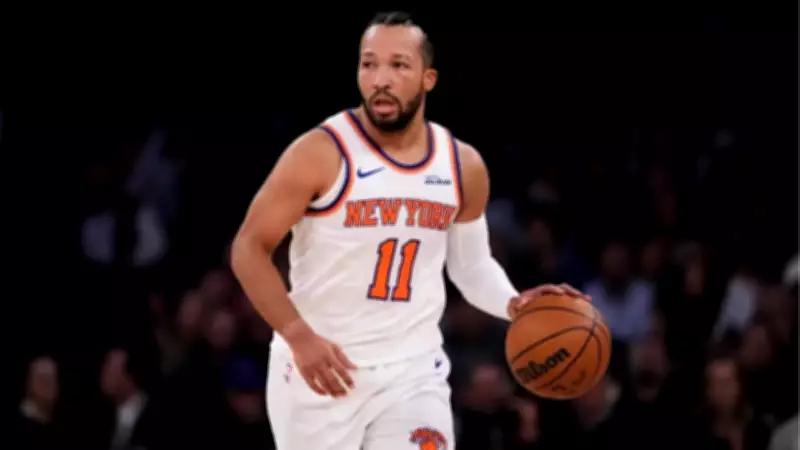
In a move that stunned the basketball world, New York Knicks superstar Jalen Brunson made a monumental financial decision in 2024, sacrificing a staggering $113 million in potential earnings. The All-NBA guard signed a four-year contract extension worth $156.5 million, a deal widely interpreted as an extraordinary act of loyalty and a strategic pivot for the franchise's championship aspirations.
The Team-Friendly Deal That Changed Everything
By opting for this extension rather than waiting for a maximum contract in 2025, Brunson provided the Knicks with crucial salary cap flexibility. This financial maneuver enabled the team to aggressively pursue high-impact players, most notably acquiring Karl-Anthony Towns and retaining the services of Mikal Bridges. The extension became active this season, with Brunson set to earn $34 million, while Towns commands $53 million, illustrating the balanced financial structure this sacrifice facilitated.
Brunson's Perspective: Sacrifice with Purpose
When questioned about his decision to forego $113 million, Brunson offered candid insights to Vanity Fair. "If I'm thinking about playing well to make sure I get paid, that could mess with me. I play best when I have a free mind, and that did that for me," he explained. "A lot of people say I sacrificed for the team. One hundred percent, I sacrificed for the team. But most importantly, I made sure my family and I are taken care of." He emphasized his trust in the organization, stating, "Obviously, we'd love for them to do right by me. I think anyone would. I feel like I sacrificed."

The Financial Mechanics and Future Implications
According to Spotrac, Brunson's 2024 extension guarantees him $156,549,124, with an average annual salary of $39.1 million. Had he delayed until 2025, he could have secured a maximum contract worth approximately $269 million. However, this deal is far from purely altruistic; it represents a meticulously calculated bet on both his career trajectory and the Knicks' success.
The contract includes a player option for the 2028-29 season, creating a pathway to even more lucrative opportunities. If Brunson opts out in 2028, he becomes eligible for a four-year extension worth $323 million. Should he wait until 2029, that figure could balloon to an astonishing $418 million, showcasing the long-term financial upside of his current sacrifice.
Navigating the Aging Curve and Future Risks
Despite the potential rewards, the 2028 and 2029 negotiation windows present significant challenges. By then, Brunson will be approaching his mid-30s, an age where athletic decline often impacts performance. Standing at 6'2", he relies heavily on elite footwork and physical drives, attributes that may diminish with time.
Currently, Brunson is posting dominant statistics, averaging 27.0 points, 6.1 assists, and 3.3 rebounds per game, with shooting efficiencies of 47.0% from the floor and 37.4% from three-point range. However, sustaining such numbers into his mid-30s is a rare feat in the NBA, especially as the league continues to evolve with younger, more athletic talents.
By 2029, the Knicks will face a critical dilemma: whether to commit over $80 million annually to a 32-year-old guard. For now, Brunson's sacrifice has successfully kept the team under the luxury tax threshold, proving that immediate competitive success can outweigh a nine-figure financial hit.
In summary, Jalen Brunson's $113 million sacrifice is a multifaceted strategy that balances team loyalty with personal financial planning. It provides the Knicks with the cap space to build a championship-caliber roster while positioning Brunson for potentially record-breaking future contracts, all while navigating the inherent risks of an athlete's aging curve.