Bill Belichick's Hall of Fame Snub Creates NFL Shockwaves
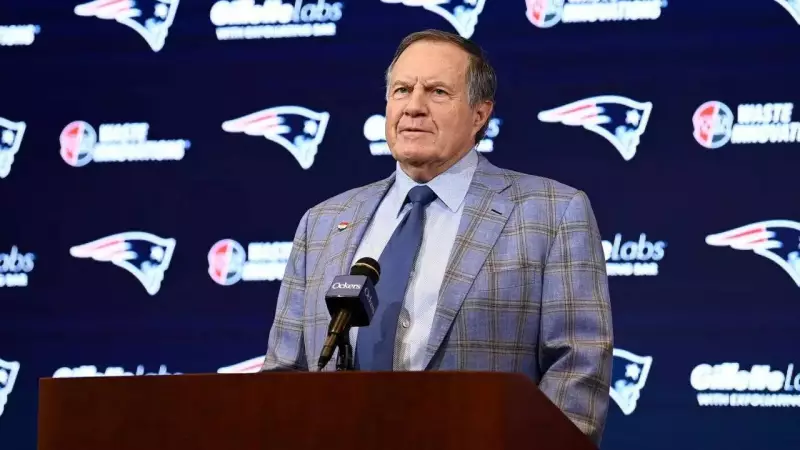
For more than twenty years, Bill Belichick represented the very definition of certainty and success in the National Football League. His teams consistently triumphed during critical moments, his meticulous preparation became the stuff of legend, and his professional résumé demonstrated remarkable consistency. Given this unparalleled track record, when the Pro Football Hall of Fame voting commenced for the Class of 2026, there was virtually no suspense surrounding his candidacy. Throughout the league, his first-ballot induction was widely viewed as an absolute inevitability.
Certainty Gives Way to Complete Disbelief
Instead of the expected celebration, certainty gave way to widespread disbelief. When the official votes were tallied earlier this month, Belichick's name surprisingly did not cross the final threshold required for induction. This unexpected decision instantly shifted the entire conversation from celebrating his monumental accomplishments to examining the standards and values of the Hall of Fame itself. It raised a significant, larger question about what the institution truly values when historical greatness intersects with past controversies.
The Quiet Response That Framed the Fallout
Earlier in January 2026, the Hall of Fame's 50-member selection committee convened to determine this year's inductees. To secure entry, a finalist needed to receive at least 40 affirmative votes. According to detailed reports from ESPN journalists Seth Wickersham and Don Van Natta Jr., Belichick fell just short of reaching that crucial number.
Consequently, on January 23, 2026, a representative from the Hall of Fame contacted Belichick directly to inform him that he would not be inducted during the upcoming summer ceremony in Canton, Ohio. Notably, there was no public rebuttal issued, no media interview granted, and no organized campaign launched in response. Instead, Belichick chose to react in a completely private manner.
Later that same day, during a personal conversation that was subsequently reported by ESPN, Belichick posed a simple, poignant question to a close associate: "Six Super Bowls isn't enough?" He followed this with another equally powerful inquiry: "What does a guy have to do?"
This private moment carried substantial weight precisely because of its setting. Belichick did not deliver these words at a formal press conference or a league function. He expressed them quietly, thereby underscoring his deep frustration without transforming it into a public spectacle. The context surrounding his career only served to deepen the surprise of this outcome.
A Coaching Legacy of Unmatched Dominance
Bill Belichick, now 73 years old, served as head coach of the New England Patriots from the year 2000 through 2023. During this extensive span, he compiled an extraordinary overall record of 333 wins and 178 losses, which includes postseason performances. In the entire history of the NFL, only the legendary Don Shula has secured more victories. Under his leadership, his teams captured an impressive 17 AFC East division titles, nine AFC championships, and six Super Bowl victories. This represents a level of sustained dominance that remains completely unmatched in the modern era of professional football.
Old Controversies Resurface in Voting Room
Yet, despite these staggering numbers and historic achievements, the voting room discussions reopened old debates that many believed were settled. According to multiple sources cited by ESPN, the conversations repeatedly returned to the past controversies of Spygate and Deflategate. One longtime voter explicitly stated that these incidents influenced several ballots. Another voter revealed that former Indianapolis Colts executive Bill Polian actively urged committee members to delay Belichick's induction as a form of accountability specifically for the Spygate scandal. This 2007 incident had previously resulted in significant fines and the loss of a valuable first-round draft pick for the Patriots.
League Reactions and the Path Forward
As the news spread rapidly across the sports world, reactions from within the league followed quickly. On Wednesday, Kansas City Chiefs superstar quarterback Patrick Mahomes expressed his utter disbelief on social media, calling the outcome "insane" and openly questioning how such a decision could have possibly occurred.
Belichick himself never joined that public debate. Instead, his message remained firmly rooted in tangible results: championships, wins, and longevity. He will remain eligible for induction again in 2027. While his eventual enshrinement still appears inevitable to most observers, this unexpected delay has already fundamentally reshaped the conversation about legacy and standards in professional sports. In the end, Bill Belichick did not directly challenge the Hall of Fame institution; he inadvertently challenged the very standard by which coaching greatness is measured.