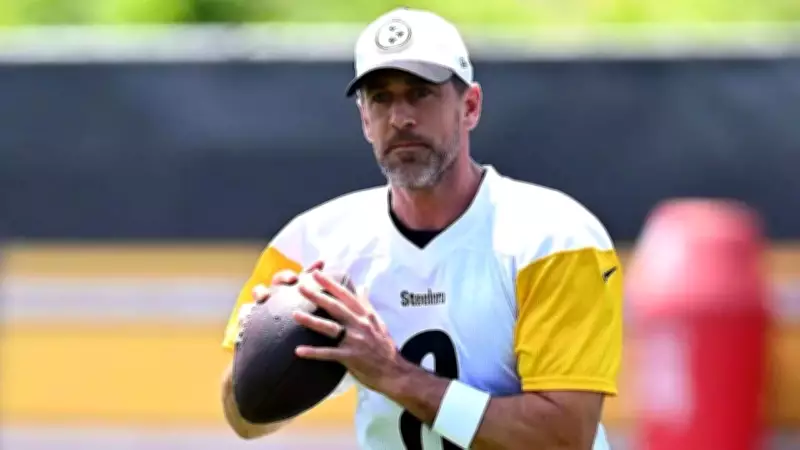
Aaron Rodgers Reveals Stalking Nightmare: Forced to Flee Malibu Home
Life in the spotlight often appears glamorous from the outside, but for veteran NFL quarterback Aaron Rodgers, fame has recently brought a deeply troubling reality. A viral social media post from NFL reporter Dov Kleiman has drawn widespread attention to Rodgers' personal struggles, after the quarterback revealed that constant stalking forced him to step away from his Malibu home permanently.
The Viral Post That Sparked Concern
The discussion ignited when Kleiman shared a post summarizing Rodgers' distressing situation. The tweet rapidly circulated across sports communities, sparking genuine concern among fans who rarely see the four-time MVP speak so openly about his personal safety and privacy. Kleiman wrote emphatically: "Heartbreaking: Aaron Rodgers revealed that he can no longer live in his Malibu home because he has stalkers. Aaron says that he was getting stalked at his local beach and coffee shop. Including Paparazzi flying drones over his house. Rodgers just wants to be left alone."
This post highlighted a harsh reality that many high-profile athletes quietly endure. While fans celebrate their monumental achievements on the field, personal privacy can become nearly impossible to maintain once fame reaches an extreme level. The invasion often extends far beyond public appearances, seeping into the most private aspects of daily life.

Rodgers' Candid Account on The Pat McAfee Show
Rodgers himself addressed the alarming situation during a recent appearance on The Pat McAfee Show. Speaking with raw candor, the quarterback described how the issue developed insidiously over time and why it eventually compelled him to completely rethink his living arrangements. "You know, at the beach anymore. Part of it is I have legitimate stalkers, and I don't say that lightly or flippantly. I've been getting stalked in my house for about a year and a half when I was living there," Rodgers disclosed.
He continued by explaining that the problem was not confined to his home. The same individuals began appearing in places that were once part of his simple, everyday routine, turning mundane activities into sources of anxiety.
"Not just that, but stalked at the coffee shop I would frequent, the gym that I would go to, which was really bizarre. Still is. And then the paparazzi was stalking me for a long time, flying drones over my house," Rodgers added, painting a vivid picture of the relentless intrusion.
The Blurred Line Between Curiosity and Intrusion
The quarterback's comments reveal how swiftly celebrity attention can cross the line from innocent curiosity to severe intrusion. Beaches, gyms, and coffee shops are ordinary places for most people, offering relaxation and routine. For Rodgers, they transformed into locations where his privacy completely vanished, replaced by constant surveillance and harassment.
While the NFL star remains intensely focused on his professional career, this experience has clearly reshaped how he approaches life away from football. The psychological toll of such persistent stalking is profound, affecting one's sense of security and normalcy.
A Simple Plea for Normalcy
In the end, Rodgers' message was strikingly simple. Even global sports icons, with all their accolades and fame, still yearn for something many ordinary fans take for granted: peace, quiet, and a normal place to call home. His story serves as a stark reminder of the hidden costs of celebrity, where the glare of the spotlight can sometimes cast very dark shadows.
The incident underscores a broader issue within sports and entertainment culture, where the boundaries of fan interaction and media coverage are continually tested. As Rodgers seeks solace away from the public eye, his experience prompts important conversations about respect, privacy, and the human need for sanctuary beyond the field.