Chhatrapati Sambhajinagar Zilla Parishad's New Green Building Faces Furniture Fund Crisis
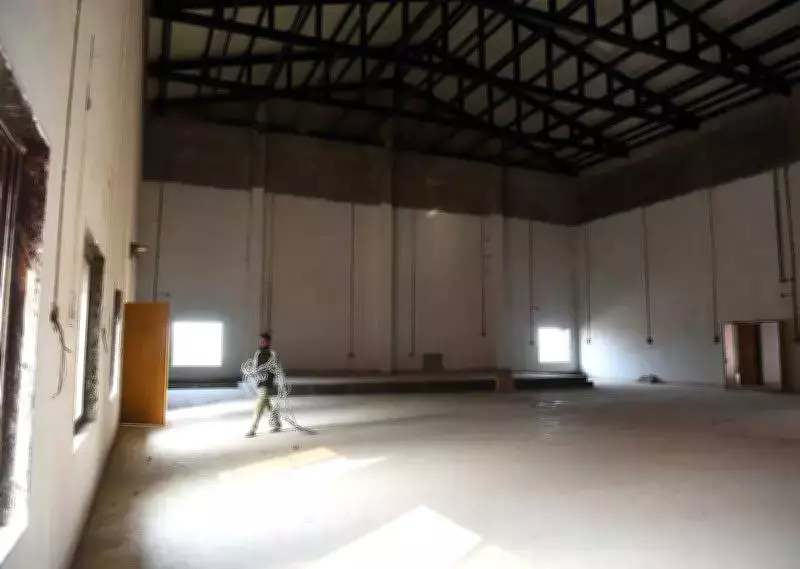
In a significant administrative setback, the newly elected body of the Chhatrapati Sambhajinagar zilla parishad is unlikely to have access to a general body hall, functional offices, or designated chambers for the president, vice-president, and sabhapatis. This situation arises because furniture work in the under-construction "green building" has not commenced due to a critical shortage of funds, according to official statements.
Pending Proposal and Election Timeline
A detailed proposal seeking Rs 10.4 crore specifically for furniture and essential basic amenities was formally submitted to the state government on July 9, 2025. However, this request has yet to receive the necessary approval, creating a major operational hurdle. With the Zilla Parishad elections scheduled for February 7 and the vote counting set for February 9, officials have confirmed that this delay has effectively eliminated any possibility of the new, state-of-the-art administrative building being ready for the incoming office-bearers.
"Without furniture, the building cannot be occupied. Even if funds are sanctioned immediately, it will take at least six months to complete the furniture work," emphasized a senior Zilla Parishad official. The official further noted that crucial fire safety systems and other fundamental facilities are integrally linked to this pending proposal, compounding the issue.

Project Evolution and Financial Revisions
The ambitious project initially received administrative approval of Rs 47.3 crore on January 14, 2021, followed by a technical approval of Rs 34.8 crore on March 26, 2021. A subsequent decision to relocate the construction site closer to the existing Zilla Parishad office necessitated major design alterations due to challenging soft soil conditions at the new location.
These changes led to a significant expansion in scope:
- The number of planned departments increased from 12 to 17.
- Lift installations were upgraded from two to four.
- Enhanced elevation treatments were incorporated into the design.
Consequently, a revised project estimate of Rs 97.4 crore was prepared. On September 5, 2024, the state government granted a revised administrative approval of Rs 59.4 crore. Importantly, this revised amount explicitly excluded costs for furniture, internal roads, parking facilities, solar power systems, and the compound wall.
Escalating Costs and Current Financial Status
Officials reported that electrification costs alone skyrocketed from an initial Rs 3.4 crore to Rs 9.3 crore due to the extensive structural modifications. The increased amount of Rs 6 crore was covered using cess funds. Of the total funds received to date, Rs 51.49 crore has been released, with Rs 51.45 crore already expended. A remaining amount of Rs 7.93 crore is still awaited by the authorities. Additionally, an allocation of Rs 8 crore was specifically made in the Zilla Parishad's budget for the 2025-26 fiscal year.
Contingency Plans and Future Steps
Zilla Parishad Chief Executive Officer Ankit outlined that the appointment of the president, vice-president, and five sabhapatis is anticipated by the end of February. "As a contingency plan, we have two viable options," he explained to media representatives. "The first involves holding general body meetings in the old building's hall, which has a capacity for approximately 110 members. The second option is to utilize available cess funds to complete at least the general body hall within the new building."
Ankit further clarified that around Rs 7 crore is currently accessible in cess funds. This reserve could potentially be deployed with the general body's formal consent if government approval for the furniture proposal continues to be delayed indefinitely. The situation highlights the ongoing challenges in public infrastructure projects amid bureaucratic and financial constraints.