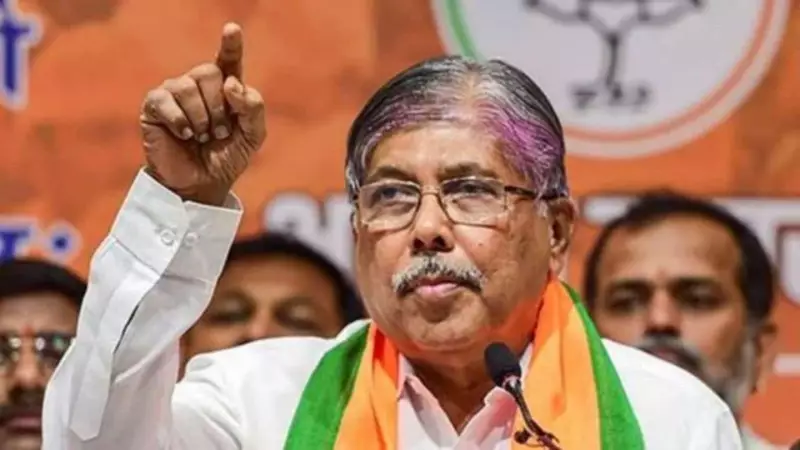
Maharashtra's Higher and Technical Education Minister, Chandrakant Patil, has publicly raised a significant political question that could shape the state's future. He expressed curiosity about whether the ruling Bharatiya Janata Party (BJP) government might eventually have to collaborate with a fully reunited Nationalist Congress Party (NCP).
A Potential Political Reunion and Its Implications
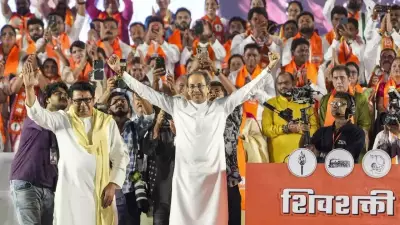
Patil's comments came during the Loksatta Loksamvad event on Thursday, January 9, 2026. He pointed to the current alliance between the two NCP factions in the ongoing Pune and Pimpri-Chinchwad Municipal Corporation elections as a trigger for his speculation. Ajit Pawar's NCP and the NCP (Sharadchandra Pawar) are contesting these local polls together, despite being in opposing alliances at the state level.
"Why have Sharad Pawar and Ajit Pawar come together in this municipal election?" Patil questioned. He further pondered, "They have come together today, but will they come together tomorrow as well? Will we have to run the government by taking along the Nationalist Congress Party that has both factions together? These questions are on my mind as well."
Strained Alliances and Public Criticism
The situation highlights the complex and often contradictory nature of Maharashtra's political alliances. At the state level, the BJP, Ajit Pawar's NCP, and Eknath Shinde's Shiv Sena form the ruling Mahayuti alliance. However, for the Pune Municipal Corporation (PMC) polls, they are fighting separately. The BJP's talks with the Shiv Sena for a PMC alliance failed, while Ajit Pawar's faction teamed up with Sharad Pawar's group.
This fragmentation has been accompanied by public spats. Patil noted that Ajit Pawar had recently broken an unspoken pact by criticising BJP leaders. "The idea was that we would fight separately for convenience. It was decided from the beginning that we would not comment on each other," Patil explained. He stated that while Chief Minister Eknath Shinde adhered to this, Ajit Pawar abandoned this understanding about eight days ago, forcing the BJP to respond publicly.
The New Centre of Maharashtra's Political Universe
In a notable observation, Minister Patil credited Deputy Chief Minister Devendra Fadnavis with fundamentally altering the state's political dynamics. He made a striking comparison, stating that while Maharashtra's politics once revolved entirely around veteran leader Sharad Pawar, Fadnavis has demonstrated such formidable capability that the axis has now shifted to him.
"He must have something in mind," Patil added, hinting at strategic foresight from Fadnavis regarding these evolving equations. This statement underscores the perceived strategic role Fadnavis plays within the state's BJP leadership and the broader Mahayuti coalition.
The minister's musings open a window into the strategic calculations within the ruling dispensation. They reflect the ongoing uncertainty and realignment in Maharashtra's political landscape, where local electoral partnerships do not always mirror state-level alliances, and the long-term unity of key rival parties remains a subject of intense speculation and planning.