Uttar Pradesh's Historic Financial Transformation: A Deep Dive into the Numbers
Uttar Pradesh is undergoing a monumental shift in its economic and financial landscape, with recent data painting a picture of unprecedented growth in credit distribution, industrial investment, and banking accessibility. This robust transformation signals a decisive move toward economic self-reliance and a manufacturing-driven growth model, marking a departure from decades of sluggish financial performance.
Credit-Deposit Ratio: A Surge in Financial Momentum and Efficiency
The Credit-Deposit (CD) Ratio, a critical metric indicating how effectively a state channels its bank deposits into local lending and development, has shown remarkable improvement in Uttar Pradesh. This key indicator has jumped to an impressive 60% in 2024, a significant rise from just 43% in 2017. This growth follows a long period of stagnation and represents a major leap in the state's financial health and credit utilization.
To fully appreciate this progress, it is essential to consider the historical context. The CD ratio was at a historic low of 32.8% back in 1990, highlighting the decades of underperformance that have now been reversed. This improvement is not just a statistical win; it reflects enhanced credit access for businesses and individuals, coupled with rising confidence in the state's economic prospects and stability.
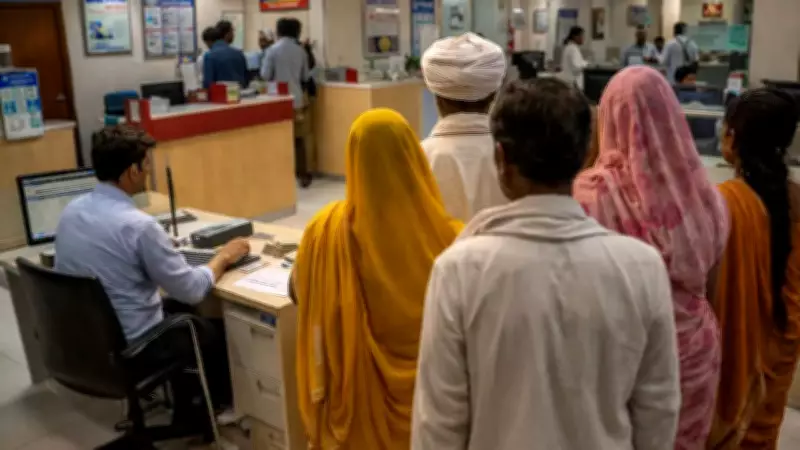
Supporting this credit surge is a vastly expanded banking infrastructure that has brought financial services to every corner of the state. Uttar Pradesh now boasts:
- 20,416 bank branches providing traditional banking services.
- 4,00,932 Bank Mitras and BC Sakhis acting as banking correspondents to reach remote areas.
- 18,747 ATMs ensuring cash availability and transaction convenience.
This totals to an astounding 4,40,095 banking touchpoints, creating a dense network that facilitates financial inclusion and supports the state's credit growth ambitions.
Industrial Credit: Fueling Manufacturing-Led Development and Investment
The state's commitment to becoming a manufacturing hub is vividly demonstrated by the dramatic increase in industrial credit. In a span of just seven years, Uttar Pradesh has successfully doubled its industrial credit, showcasing a focused strategy to attract and support industrial growth.
The numbers speak volumes: industrial credit has grown from Rs 82,800 crore in 2017 to a substantial Rs 1.68 lakh crore in 2024. This doubling of investment is attributed to strong and consistent policy interventions, significant infrastructure development, and proactive efforts to encourage and facilitate investors.
This consistent focus has yielded tangible results, not only attracting large-scale private investment but also boosting the confidence of financial institutions in the state's industrial sector. The growth in industrial credit is a clear indicator of Uttar Pradesh's rising prominence as a preferred destination for manufacturing and industrial ventures.
Total Credit Distribution: A Threefold Increase in Capital Availability
The overall availability of capital in Uttar Pradesh has experienced an exponential rise, empowering entrepreneurs and fueling rural development across the state. The total outstanding credit has seen a rapid and substantial allocation increase, rising from Rs 3.54 lakh crore in 2017 to an impressive Rs 9.24 lakh crore in 2024.
This represents a 2.6x increase in just seven years, a growth rate that underscores the state's enhanced credit absorption capacity and the effectiveness of its financial policies. The historical context further highlights the scale of this transformation: in 1990, the total credit was a mere Rs 7,200 crore, and by 2004, it had only reached Rs 39,600 crore. The recent spike is therefore not just incremental but revolutionary.
Several key drivers have enabled this remarkable growth in credit distribution:
- Expansion of digital financial services and banking infrastructure, making credit more accessible and efficient.
- Support for MSME financing and agricultural credit schemes, targeting key sectors of the economy.
- Financial Inclusion Initiatives such as universal Jan Dhan account coverage, the BC Sakhi Yojana for doorstep banking via female agents, and the ambitious 2025 Gram Panchayat Financial Saturation Campaign aimed at ensuring every village has full banking access.
Together, these factors have created a conducive environment for credit growth, positioning Uttar Pradesh on a path of sustained economic development and financial empowerment.