Tamil Nadu Governor Faces Criticism for Assembly Speech Controversy
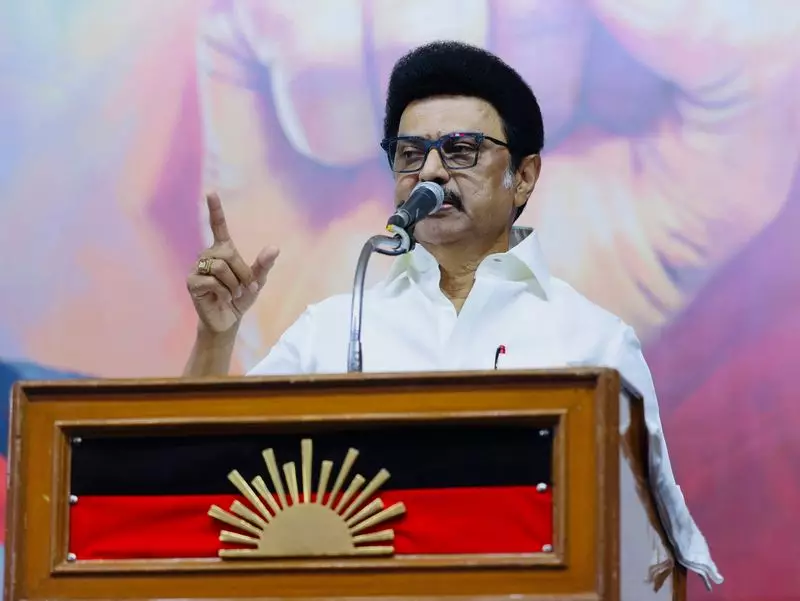
In a significant development in Tamil Nadu politics, Chief Minister M.K. Stalin has publicly criticized Governor R.N. Ravi for his actions during a recent assembly session. The controversy centers on Governor Ravi's decision not to read the prepared speech that was officially provided for the assembly proceedings. This move has ignited a heated debate about constitutional norms and the role of the governor in state governance.
CM Stalin's Strong Accusation Against Governor Ravi
Chief Minister M.K. Stalin did not mince words when addressing the issue, stating that Governor R.N. Ravi has insulted the high constitutional position he holds by refusing to read the designated speech in the assembly. Stalin emphasized that the governor's role is not merely ceremonial but carries significant responsibilities under the Indian Constitution. By deviating from the established protocol, Stalin argued, Ravi has undermined the dignity of the governor's office and shown disrespect to the legislative body of Tamil Nadu.
The prepared speech, which is typically a formal document outlining the government's policies and priorities, was reportedly set aside by Governor Ravi. Instead, he chose to speak extemporaneously or present alternative remarks, a departure from the customary practice observed in state assemblies across India. This action has been interpreted by the ruling Dravida Munnetra Kazhagam (DMK) government as a deliberate snub and a breach of parliamentary decorum.

Constitutional Implications and Political Reactions
The incident raises important questions about the constitutional framework governing the relationship between the governor and the state government. In India's federal structure, the governor is appointed by the President and acts as the constitutional head of the state, while the chief minister leads the elected government. The governor's speech in the assembly is traditionally a formal occasion that reflects the government's agenda, and any deviation can be seen as a political statement.
Political analysts suggest that this controversy is part of a broader pattern of tensions between governors and state governments in various parts of India, particularly where the ruling party at the state level differs from the one at the center. In Tamil Nadu, the DMK-led government and Governor Ravi, who is a former IPS officer and was appointed by the central government, have had previous disagreements on policy matters. This latest episode has further strained their relationship, with opposition parties in the state also weighing in on the issue.
Supporters of Governor Ravi might argue that he has the discretion to express his views, but critics, including CM Stalin, contend that such actions compromise the non-partisan nature of the governor's role. The controversy has sparked discussions on social media and in political circles, with many calling for a resolution that upholds constitutional propriety.
Broader Context and Future Implications
This is not the first time that Governor R.N. Ravi has been at the center of a political storm in Tamil Nadu. Since his appointment, there have been instances of friction with the state government over various administrative and policy issues. The current dispute over the assembly speech adds to a growing list of confrontations that highlight the delicate balance of power in India's democratic setup.
Looking ahead, the fallout from this incident could have several implications. It may lead to increased scrutiny of the governor's actions by constitutional experts and legal scholars. Additionally, it could influence the dynamics between the central and state governments, especially in matters of governance and legislative procedures. For the people of Tamil Nadu, this controversy underscores the ongoing political debates that shape their state's administration and future direction.
In conclusion, the accusation by Chief Minister M.K. Stalin against Governor R.N. Ravi for not reading the prepared assembly speech has become a focal point of political discourse in Tamil Nadu. As both sides stand their ground, the episode serves as a reminder of the importance of adhering to constitutional norms and respecting the institutions that form the backbone of India's democracy.