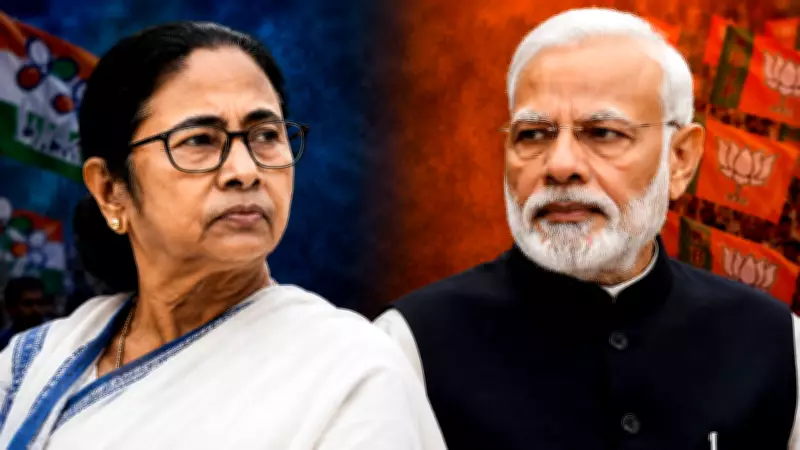
The Trinamool Congress (TMC), founded in 1998 as a grassroots movement, is facing an unprecedented internal crisis as rebels assert control in both the state assembly and Parliament. The party, which ended 34 years of Left Front rule in West Bengal in 2011 under Mamata Banerjee, suffered its first electoral defeat to the BJP in the 2026 assembly elections. In the aftermath, a wave of revolts swept through the party at local, state, and national levels.
Revolt and Leadership Challenge
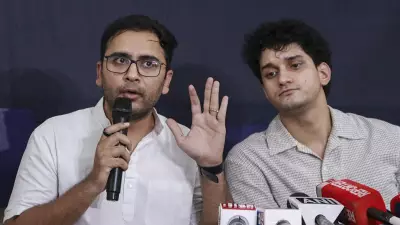
Roughly three-quarters of the TMC's legislators rebelled against Mamata Banerjee and her nephew Abhishek Banerjee, widely seen as her political heir. The dissidents seized control of the party's legislative wing, installed their own leader of the opposition, and openly challenged the leadership's authority. The unrest soon spread to Parliament, with Rajya Sabha MPs Sushmita Dev and Sukhendu Sekhar Ray resigning from both the Upper House and the party. Rebel Lok Sabha MP Kakoli Ghosh Dastidar claimed that nearly 20 TMC MPs are prepared to support the BJP-led National Democratic Alliance (NDA).
Potential Benefits for BJP
If the TMC splits, the BJP stands to gain numerically and politically. In Parliament, rebel MP Kakoli Ghosh Dastidar has claimed that around 20 of the party's 28 Lok Sabha MPs are ready to support the NDA. Even without formal defections, their backing would weaken one of the BJP's principal opponents and strengthen the ruling coalition. This could help the NDA secure the two-thirds majority needed for key constitutional amendments, such as the Delimitation Bill and the Women's Reservation Bill, which stalled earlier in 2026 due to insufficient support.

In West Bengal, the BJP's 2026 victory was emphatic—winning 207 seats to the TMC's 80—but the vote share gap was narrow: 46.24% for the BJP versus 41.16% for the TMC. A split could fragment the TMC's support base further, making it easier for the BJP to consolidate its dominance. Additionally, disgruntled TMC leaders and local organizers may defect to the BJP, strengthening its organizational reach. Political observers note parallels with Maharashtra and Bihar, where internal divisions in regional parties benefited the BJP.
The BJP may also benefit because there is little evidence that a weakened TMC would help the Congress or the Left. In recent years, much of the anti-TMC vote has shifted to the BJP rather than other opposition parties. Former Congress spokesperson Sanjay Jha argues that the TMC's strategy of absorbing the Congress's base left little space for a third force, and anti-incumbency sentiment against the TMC increasingly found expression through the BJP. He says, "A bipolar contest always helps the BJP significantly because it plays a more polarised game."
Comparisons with Other States
The turmoil within the TMC draws comparisons with Maharashtra, where rebellions in the Shiv Sena and NCP began among legislators and spread to Parliament, ultimately resulting in rival factions. In Bengal, the revolt started with dissident MLAs and has now reached Parliament. Veteran Rajya Sabha MP Sukhendu Sekhar Ray has suggested the unrest could deepen further. Similar trends have been seen in Odisha, where the BJP gradually displaced the Biju Janata Dal, and in Bihar, where regional parties like JD(U) and RJD have ceded space to the BJP. Whether Bengal follows the Maharashtra model of a formal split or the Odisha model of gradual replacement remains unclear, but internal divisions often accelerate the weakening of regional parties.
Impact on INDIA Bloc
The TMC's crisis has implications for the opposition INDIA bloc, where it is one of the largest constituents. A weakened or divided TMC would reduce the bloc's collective strength at a time when it faces internal strains. Mamata Banerjee's presence at a recent INDIA bloc meeting highlighted her need for a broader opposition platform. With the DMK also distancing itself, the weakening of another major regional player could complicate efforts to present a united challenge to the BJP. Sanjay Jha argues that neither the Congress nor the TMC is strong enough in Bengal to challenge the BJP alone, making coordination essential. He says, "They are planning this game to make sure that the TMC is not in a good position in the Lok Sabha of 2029... TMC and Congress have no alternative but to come together."

Opportunity for Left and Congress?
A split in the TMC could theoretically create space for the Congress and the Left, both of which have struggled in Bengal since the TMC's rise. The Congress could attract minority voters and anti-BJP voters if the TMC appears divided. However, Sanjay Jha cautions that the Congress's organizational structure in Bengal has weakened significantly after decades out of power and cannot be rebuilt overnight. He says, "The Congress has no organisational muscle in West Bengal... I don't think it is capable of leveraging it."
Electoral trends show a dramatic collapse of the Left-Congress space. The CPM's vote share fell from 30.08% in 2011 to 4.49% in 2026, while the Congress declined from 9.09% to 2.99%. The BJP's rise from 4.06% to 46.24% closely mirrors the decline of the Left Front, indicating that anti-TMC votes migrated to the BJP. The TMC still secured 41.16% of the vote in 2026, suggesting it retains a substantial base that may not be easily transferable. Sanjay Jha adds, "TMC still has more than 40% of the vote share. So, add Congress and together they become a viable alternative."
The future of Bengal politics remains uncertain. The state may move toward a bipolar BJP-TMC contest, or a TMC split could allow the Congress-Left to re-emerge. Alternatively, the TMC could find its way back to the Congress, the party it broke from in 1998. For now, electoral data points to BJP consolidation, but the outcome depends on where disgruntled TMC leaders, minority voters, and anti-BJP constituencies align in the months ahead.