Hindi Imposition Row: Tiruchirappalli Railway Office Sign Removed After DMK Protests
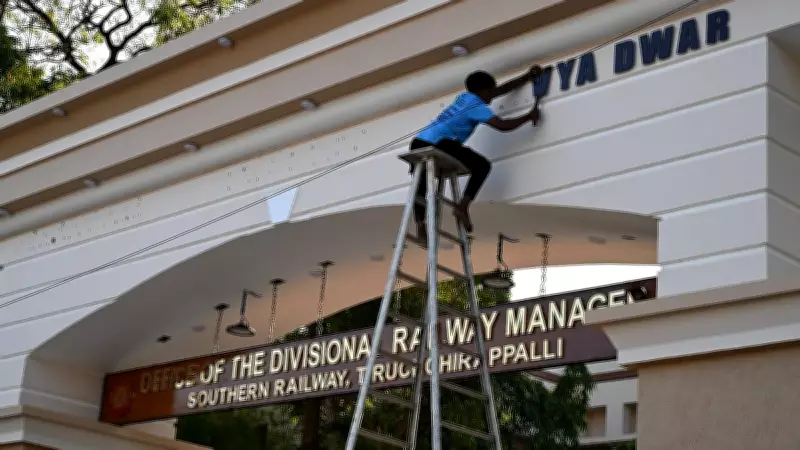
The divisional railway authorities in Tiruchirappalli have taken down a name board displayed outside their office, which featured text in Hindi, Tamil, and English. This action came after the issue gained significant media attention and sparked street protests by cadres of the Dravida Munnetra Kazhagam (DMK) party.
Escalation of the Controversy
As the controversy over alleged Hindi imposition in Tamil Nadu intensified, it quickly became a headline-grabbing story across regional and national news outlets. The DMK, a prominent political party in the state known for its strong stance against linguistic imposition, mobilized its supporters to demonstrate against the presence of Hindi on the railway office sign.
The protests were part of a broader political movement in Tamil Nadu opposing what many perceive as efforts to prioritize Hindi over regional languages. This incident highlights the ongoing linguistic tensions in the state, where language politics often intersect with cultural identity and regional autonomy.
Railway Authorities' Response
In response to the mounting pressure and public outcry, the Tiruchirappalli divisional railway management decided to remove the contentious name board. The sign had been displayed in a trilingual format, common in many government offices across India, but its Hindi component became a flashpoint in this sensitive political climate.
The removal signifies a swift administrative reaction to avoid further escalation of the situation. Railway officials have not issued an official statement regarding whether the sign will be replaced or modified, but the immediate action aimed to quell the protests and address the concerns raised by the DMK and its supporters.
Political Implications in Tamil Nadu
This event underscores the deep-seated linguistic issues in Tamil Nadu politics, where parties like the DMK have historically championed the cause of Tamil language and culture. The removal of the sign is seen as a victory for these groups, reinforcing their influence in shaping public policy and administrative decisions at the local level.
The timing of this incident, reported on March 4, 2026, adds to a series of similar controversies in recent years, reflecting the persistent debate over language rights and federalism in India. As such, it may have broader implications for how central and state governments navigate linguistic diversity in official communications.