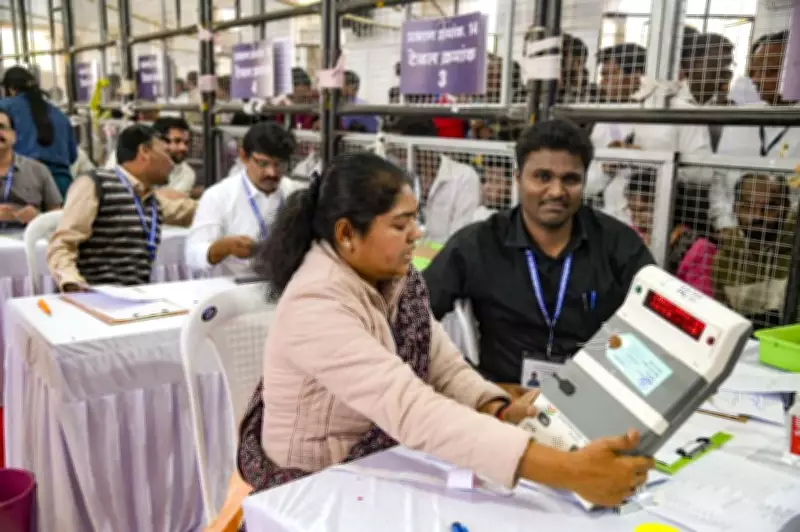
Thiruvananthapuram Assembly Election 2026: A Deep Dive into the Constituency Dynamics
The Thiruvananthapuram Assembly constituency in Kerala is gearing up for a pivotal electoral battle in the 2026 state elections. As a key urban seat in the capital district, this constituency has historically been a bellwether for political trends in the region. The upcoming election is expected to witness intense competition among the major political fronts: the Left Democratic Front (LDF), the United Democratic Front (UDF), and the Bharatiya Janata Party (BJP).
Historical Performance and Past Winners
Thiruvananthapuram has a rich electoral history, with past winners reflecting the shifting political landscape of Kerala. In recent decades, the constituency has seen victories from both the LDF and UDF, with the CPI(M) and Congress often leading the charge. For instance, in the 2021 Assembly elections, the seat was won by the LDF candidate, showcasing the front's stronghold in certain periods. Vote margins in past elections have varied, sometimes being narrow, indicating the competitive nature of this constituency. Historical data reveals that factors such as local issues, candidate popularity, and alliance strategies have significantly influenced outcomes.
Party-Wise Candidates and Strategies for 2026
As the 2026 election approaches, all major parties are expected to field strong candidates in Thiruvananthapuram. The LDF, led by the CPI(M), is likely to nominate a seasoned leader with a focus on governance and development agendas. The UDF, primarily represented by the Congress, may opt for a candidate with strong grassroots connect and emphasis on welfare schemes. The BJP, aiming to expand its footprint in Kerala, could put forward a high-profile contender, leveraging national issues and organizational strength. Each party's strategy will revolve around mobilizing their core voter bases while appealing to undecided segments through targeted campaigns.

- Local popularity and track record of the nominee
- Alignment with party ideologies and coalition dynamics
- Ability to address urban concerns like infrastructure and employment
Polling Dates and Electoral Process
The polling for the Thiruvananthapuram Assembly constituency is scheduled to coincide with the general Kerala Assembly elections in 2026, typically held in April or May. The Election Commission of India will announce the exact dates closer to the event, ensuring a fair and transparent process. Voters in this constituency will cast their ballots at designated polling stations, with arrangements made for smooth conduct, including security measures and voter facilitation. The result dates will follow shortly after polling, with counting expected to take place on a single day as per standard procedures.
Vote Margin Analysis and Competitive Edge
In past elections, vote margins in Thiruvananthapuram have often been slim, highlighting the constituency's status as a swing seat. For example, in some previous contests, the winning margin was less than 5,000 votes, underscoring the importance of every ballot. This trend suggests that in 2026, even minor shifts in voter sentiment or turnout could tip the scales. Parties are likely to focus on micro-level campaigning, addressing specific local issues to gain an edge. The urban demographic, comprising educated voters and diverse communities, adds complexity to the electoral calculus.
Factors that could impact vote margins include:- Voter turnout rates, especially among youth and women
- Effectiveness of party machinery in mobilizing supporters
- Influence of national political narratives on local choices
Overall, the Thiruvananthapuram Assembly election 2026 promises to be a closely watched contest, with implications for Kerala's political trajectory. As parties finalize their candidates and strategies, the constituency's profile as a battleground seat makes it a critical focus for analysts and voters alike.