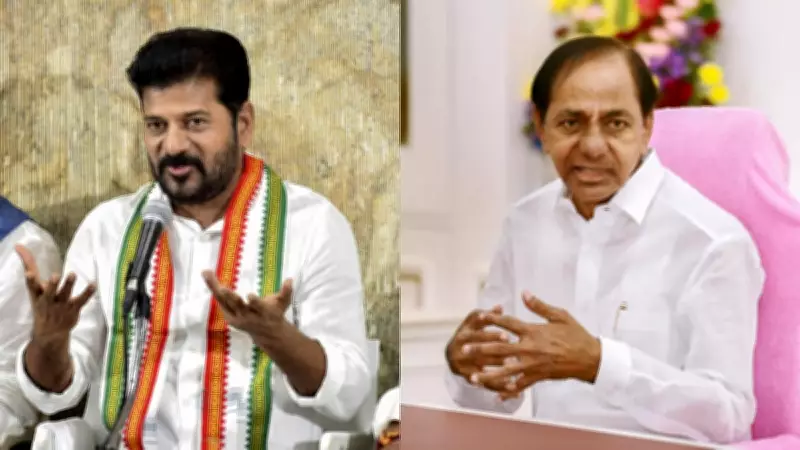
Telangana Chief Minister Issues Bold Challenge to BJP Over Kaleshwaram Scandal
In a dramatic escalation of political tensions, Telangana Chief Minister A. Revanth Reddy has issued a direct and public challenge to the Bharatiya Janata Party (BJP), demanding the immediate arrest of former Chief Minister K. Chandrasekhar Rao (KCR) and former Minister T. Harish Rao in connection with the multi-crore Kaleshwaram irrigation project scandal. The Chief Minister's bold statement, made on February 6, 2026, has intensified the ongoing political feud in the state, putting the spotlight on alleged corruption in one of Telangana's largest infrastructure projects.
Revanth Reddy Dares BJP to Take Action
Revanth Reddy specifically targeted Nizamabad MP Arvind Dharmapuri, a prominent BJP leader, daring him to convince Prime Minister Narendra Modi and the central government to initiate arrests of the Bharat Rashtra Samithi (BRS) leaders. "I challenge the BJP to prove its commitment to fighting corruption by arresting KCR and Harish Rao in the Kaleshwaram scam," Reddy declared, emphasizing that the ball is now in the BJP's court. This move is seen as a strategic political maneuver to corner both the opposition BRS and the BJP, which has been vocal about corruption allegations against the previous BRS government.
Background of the Kaleshwaram Project Controversy
The Kaleshwaram Lift Irrigation Project, a flagship initiative launched during KCR's tenure, has been mired in controversy over allegations of financial irregularities, cost escalations, and substandard construction. Estimated to cost over ₹1 lakh crore, the project aims to provide irrigation water to large parts of Telangana but has faced scrutiny from various quarters, including the Comptroller and Auditor General (CAG) and anti-corruption bodies. Critics allege that the project's costs were inflated, and contracts were awarded without proper transparency, leading to significant losses to the state exchequer.

Harish Rao, who served as the Irrigation Minister under KCR, has been a key figure in the project's implementation, making him a central target in the corruption allegations. The Telangana government, under Revanth Reddy's leadership, has initiated probes into the scandal, but no arrests have been made so far, fueling political accusations of inaction.
Political Implications and Reactions
Revanth Reddy's demand places the BJP in a delicate position. As the ruling party at the center, the BJP has often criticized the BRS for corruption, but taking direct action against high-profile leaders like KCR could have far-reaching political consequences. Analysts suggest that Reddy's challenge is designed to expose any hypocrisy in the BJP's anti-corruption stance, while also diverting attention from his own government's handling of the issue.
The BRS has dismissed the allegations as politically motivated, accusing Revanth Reddy of using the Kaleshwaram scam as a tool to undermine his opponents. Meanwhile, the BJP has yet to issue an official response, but sources indicate that the party is weighing its options carefully, considering the potential impact on its electoral prospects in Telangana and beyond.
What Happens Next?
With Revanth Reddy's public dare, the pressure is now on the BJP to either act on the arrest demands or face accusations of shielding corrupt leaders. The development could lead to:
- Increased scrutiny of the Kaleshwaram project by central agencies like the Enforcement Directorate (ED) or Central Bureau of Investigation (CBI).
- Heightened political rhetoric in the lead-up to future elections in Telangana.
- Potential legal battles if arrests are made, given the high-profile nature of the individuals involved.
As the situation unfolds, all eyes are on Prime Minister Narendra Modi and the BJP leadership to see how they respond to this direct challenge from the Telangana Chief Minister. The outcome could reshape the political landscape in the state and influence broader anti-corruption narratives in Indian politics.