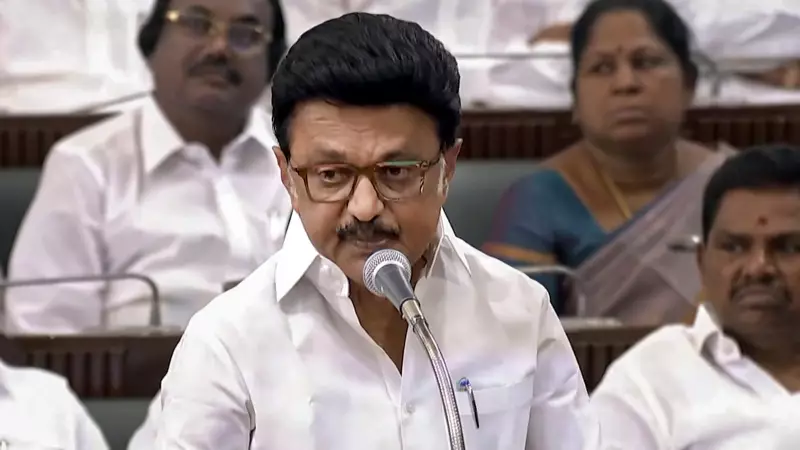
Stalin's Scathing Assembly Address: A Direct Indictment of Governor Ravi
In an unusually personal and politically charged address at the Tamil Nadu Assembly, Chief Minister M K Stalin launched one of his sharpest attacks yet on Governor R N Ravi. Speaking during the debate on the motion thanking the Governor for his customary address, Stalin transformed the occasion into a broader political indictment of Raj Bhavan, portraying the Governor not as a constitutional figurehead but as a significant impediment to governance and progress.
Accusations of Systematic Obstruction
Stalin accused Governor Ravi of repeatedly obstructing the will of the elected government and standing in the way of the state's development initiatives. "If someone opposes everything we do, if someone stands in the way of every welfare measure and development scheme, how can that be called cooperation?" Stalin questioned, with his remarks drawing loud desk-thumping approval from treasury benches.
Without naming specific files or incidents, the Chief Minister suggested that key welfare and administrative initiatives had faced deliberate delays and resistance from the Governor's office. He described Governor Ravi as someone who showed "no satisfaction" in Tamil Nadu's social justice-oriented policies and development achievements, and who appeared unwilling to align with the democratic mandate given by the people.

Democratic Legitimacy vs Unelected Authority
Stalin framed the ongoing conflict as a fundamental struggle between democratic legitimacy and unelected authority. "In a democracy, the government elected by the people must be allowed to function," he asserted, adding that those holding constitutional posts should "support, not obstruct" the state's efforts to implement its policies and programs.
The Chief Minister contrasted the Assembly's democratic character with what he suggested was the Governor's political posture, remarking pointedly that "people's representatives debate here, not those who sit outside the mandate." This statement underscored his view that elected representatives, rather than appointed officials, should drive governance decisions.
Redefining Patriotism and Federalism
Taking aim at critics who question Tamil Nadu's political approach, Stalin offered a powerful redefinition of patriotism. He argued that true patriotism was not about performative nationalism but about protecting people's rights, strengthening federalism, and delivering tangible welfare to the poor and marginalized.
"Patriotism lies not in empty slogans but in concrete actions that uplift people and respect India's federal structure," Stalin emphasized, pushing back against what he described as narrow definitions of nationalism that fail to acknowledge regional aspirations and governance models.
Highlighting Tamil Nadu's Development Record
The Chief Minister repeatedly invoked Tamil Nadu's impressive record on multiple fronts:
- Comprehensive welfare delivery systems
- Significant infrastructure expansion
- Educational advancements and reforms
- Social equity initiatives and programs
He argued that the state had achieved development standards comparable to developed regions, and these gains resulted from collective work by ministers, legislators, and officials. Stalin maintained that such progress should not be hindered by political friction with the Governor's office.
Electoral Confidence and Dravidian Model
Stalin struck an electoral note toward the end of his address, declaring that the ruling Dravidian model of governance had earned substantial public trust and would continue to guide the state's development. "We will return. We will win again," he proclaimed, to enthusiastic cheers from his party members, signaling confidence in both his government's performance and its political future.
The assembly address represents a significant escalation in the ongoing tensions between the Tamil Nadu government and Raj Bhavan, highlighting deepening concerns about gubernatorial overreach and its impact on state governance in India's federal structure.