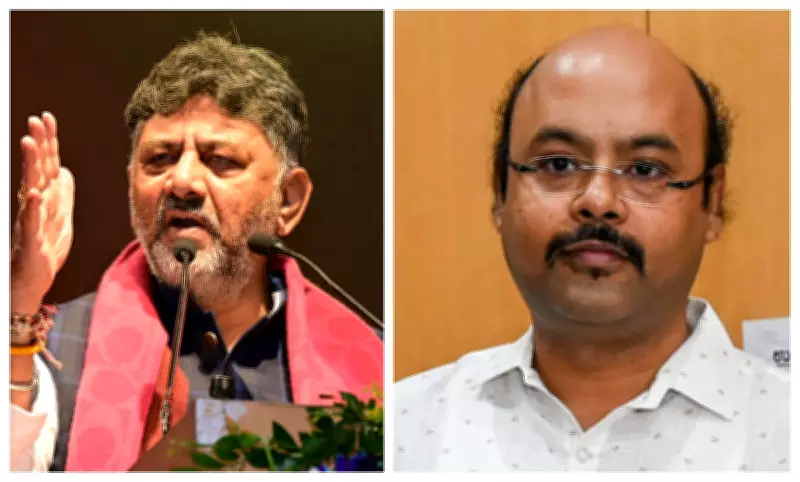
Shivakumar Reaffirms Congress High Command's Authority in Karnataka Leadership Debate
In a significant political development, Karnataka Deputy Chief Minister D K Shivakumar has firmly addressed recent statements regarding the tenure of Chief Minister Siddaramaiah, emphasizing the ultimate authority of the Congress party's high command. This response comes directly after remarks made by Yathindra, the son of Chief Minister Siddaramaiah, who publicly asserted that the Congress high command had granted approval for his father to continue serving as Chief Minister for a full five-year term.
Clarifying the Chain of Command in Karnataka's Political Landscape
D K Shivakumar, who also serves as the state Congress president, made it unequivocally clear that all major decisions concerning leadership positions within the Karnataka government are strictly under the purview of the party's central leadership. "He is our high command," Shivakumar stated, referring to the authoritative role played by the Congress central committee in determining the fate of the Chief Minister's office. This declaration underscores the structured hierarchy within the party and aims to quell any internal dissent or public speculation about unilateral decisions at the state level.
The controversy ignited when Yathindra, a Member of the Legislative Council (MLC), claimed that the Congress high command had given a "green signal" for Siddaramaiah to remain as Chief Minister throughout the current legislative term, which spans five years. This statement, made without official party endorsement, prompted Shivakumar's intervention to reinforce procedural norms and maintain party discipline.

Analyzing the Implications for Karnataka's Governance and Party Unity
This public exchange highlights the ongoing dynamics within the Karnataka Congress, where leadership roles and tenure are sensitive topics. Siddaramaiah, a veteran politician, currently holds the Chief Minister's position, while Shivakumar, a key figure in the party's state apparatus, serves as his deputy. The interaction between their families and public statements adds a layer of complexity to the state's political environment.
Shivakumar's response not only addresses the immediate issue but also serves as a reminder of the Congress party's internal protocols. By redirecting focus to the high command, he aims to:
- Prevent any premature assumptions about leadership changes
- Uphold the party's decision-making framework
- Ensure stability within the Karnataka government amidst external pressures
The timing of this clarification is crucial, as Karnataka navigates various governance challenges and prepares for future electoral battles. It reinforces that while individual opinions may surface, the final word on critical matters such as the Chief Minister's tenure rests with the party's central leadership, thereby maintaining a united front.
As this story develops, political observers will closely monitor how the Congress high command addresses these statements and whether further directives are issued to streamline communication within the Karnataka unit. For now, Shivakumar's firm stance has set a clear precedent: in matters of state leadership, the high command's authority is paramount and non-negotiable.