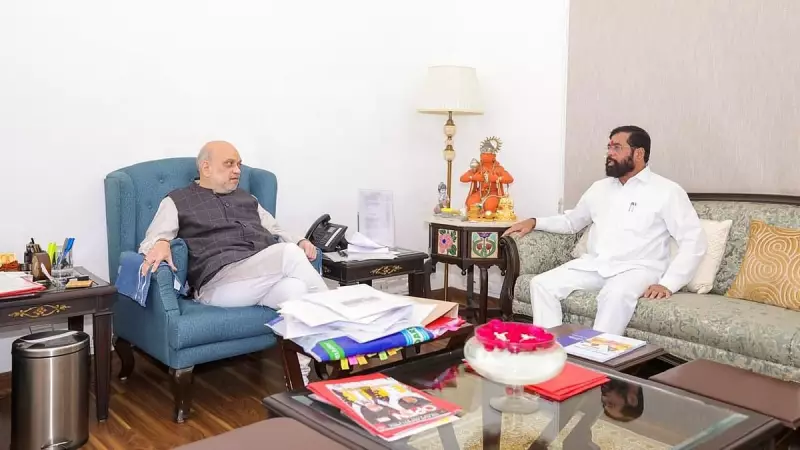
Maharashtra Political Crisis Deepens as Shinde Meets Shah
Maharashtra Chief Minister Eknath Shinde held a significant meeting with Union Home Minister Amit Shah in New Delhi on Thursday, amid growing tensions within the ruling Mahayuti alliance. The high-level discussion comes at a critical juncture for the state's political landscape.
Cabital Boycott Signals Growing Discontent
Several Shiv Sena ministers deliberately abstained from this week's cabinet meeting in a clear display of protest against their alliance partner BJP. The ministers expressed strong dissatisfaction with the BJP's decision to induct local-level leaders from Kalyan-Dombivli in Thane district without proper consultation.
The political maneuver by BJP has created visible friction within the coalition government. Sources indicate that the induction of grassroots workers from the Kalyan-Dombivli municipal area has been perceived as an attempt to strengthen BJP's foothold in regions traditionally considered Shiv Sena strongholds.
Timing and Implications of Delhi Meeting
The meeting between Shinde and Shah, which occurred on November 20, 2025, assumes greater significance given the ongoing internal conflicts. Political observers are closely watching the developments, as the outcome of this discussion could determine the stability of the Mahayuti government in Maharashtra.
Thane district, particularly the Kalyan-Dombivli belt, has emerged as a major flashpoint in the alliance dynamics. Both parties have substantial political interests in this region, making any unilateral moves potentially damaging to the coalition's harmony.
The current situation highlights the challenges facing the Mahayuti alliance as it navigates complex political equations. The absence of key ministers from cabinet meetings signals that the discontent runs deeper than surface-level disagreements.
Broader Political Ramifications
This development comes at a time when the opposition parties are closely monitoring any signs of instability within the ruling coalition. The meeting between Shinde and Shah is expected to address not only the immediate concerns but also long-term strategies for maintaining alliance cohesion.
Political analysts suggest that the resolution of this conflict will test the strength of the Mahayuti partnership and its ability to handle internal differences while maintaining a united front against political challenges.
The outcome of these discussions could have far-reaching implications for Maharashtra's political landscape and the future of coalition politics in the state.