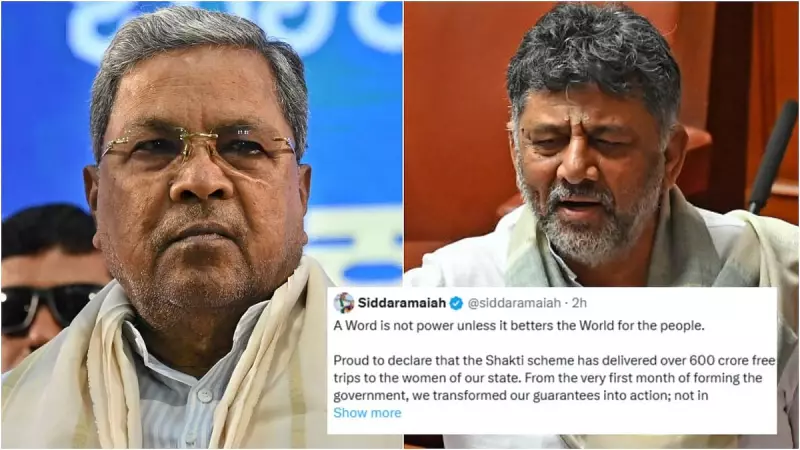
In a landmark achievement for women's mobility and empowerment, the Karnataka government's flagship Shakti scheme has crossed an extraordinary milestone. The initiative has provided over 600 crore free bus trips to women across the state since its implementation, transforming campaign promises into tangible benefits.
From Promise to Reality: The Shakti Scheme's Journey
The revolutionary program was launched during the very first month of the current government's term, demonstrating immediate commitment to fulfilling electoral guarantees. Chief Minister Siddaramaiah proudly announced this achievement on November 27, 2025, emphasizing that "a word is not power unless it betters the World for the people."
Deputy Chief Minister DK Shivakumar echoed this sentiment, reinforcing the government's dedication to keeping its promises to the people. The coordinated announcements from both senior leaders highlighted the political significance of this welfare initiative and its successful execution.
Transforming Women's Mobility and Economic Participation
The staggering number of 600 crore free trips represents one of the largest public transportation initiatives for women empowerment globally. This scheme has significantly reduced transportation costs for millions of women across Karnataka, enabling greater access to:
- Education institutions and workplaces
- Healthcare facilities and markets
- Social and economic opportunities
By removing financial barriers to public transportation, the government has effectively enhanced women's participation in various sectors of society and the economy.
Implementation and Impact Assessment
The seamless implementation of the Shakti scheme across Karnataka's extensive public bus network demonstrates the government's administrative capability. From urban centers to remote villages, women have benefited from this initiative, which has particularly helped those from economically disadvantaged backgrounds.
The scheme's success is reflected not just in the impressive numbers but in the real-life impact on women's daily lives. Many women have reported increased independence, better access to employment opportunities, and improved ability to manage household responsibilities without the burden of transportation costs.
As the program continues, it sets a benchmark for other states considering similar welfare measures. The Karnataka model demonstrates how well-planned public transportation subsidies can effectively address gender inequality in mobility while boosting overall economic productivity.