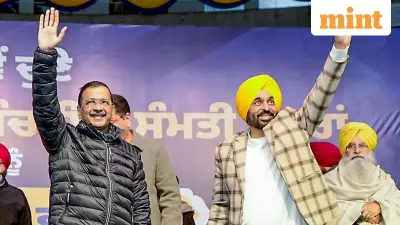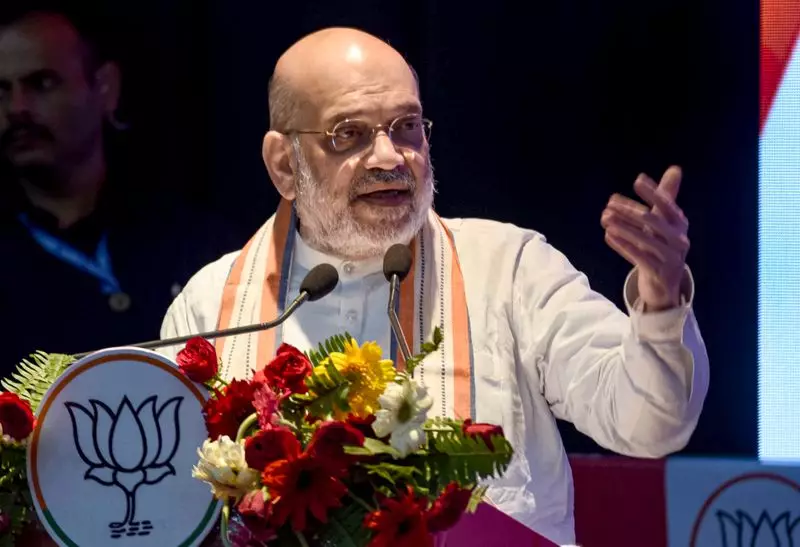
In a significant development aimed at diffusing interstate tensions, Union Home Minister Amit Shah has stepped in to mediate the long-standing water dispute between Haryana and Punjab. The high-level intervention came during a crucial meeting where Shah urged both states to resolve the Satluj Yamuna Link (SYL) canal issue through constructive dialogue rather than legal confrontations.
High-Stakes Meeting Addresses Critical Water Sharing Issue
The meeting, which brought together Haryana Chief Minister Manohar Lal Khattar and his Punjab counterpart Bhagwant Mann, represented a serious attempt by the central government to find an amicable solution to the decades-old water sharing conflict. The discussion focused specifically on the completion of the SYL canal, a project that has been a major point of contention between the two neighboring states for over four decades.
Sources familiar with the proceedings revealed that Home Minister Shah emphasized the importance of finding a mutually acceptable solution through discussion and negotiation. His intervention comes at a time when water scarcity has become an increasingly pressing issue across northern India, making the resolution of such interstate disputes particularly urgent.
Historical Context of the SYL Canal Dispute
The Satluj Yamuna Link canal project has been a source of conflict since it was initially conceptualized in 1981. The canal was designed to distribute water from the Ravi and Beas rivers between Haryana and Punjab, with Haryana supposed to receive its share through this channel. However, the project has remained incomplete due to persistent disagreements and legal battles between the two states.
Punjab has consistently argued that it lacks surplus water to share with Haryana, citing its own agricultural and drinking water needs. The state government has maintained that river waters have depleted significantly since the original agreement was signed, making the terms untenable. Meanwhile, Haryana has insisted on its rightful share as per the water distribution agreements and has pushed for the completion of the SYL canal to access the water it was promised.
The dispute has seen numerous legal battles, with the Supreme Court repeatedly directing Punjab to complete the canal construction in its territory. The political sensitivity of the issue has made it a challenging problem for successive governments at both state and central levels.
Political Implications and Future Prospects
The Home Minister's direct involvement signals the central government's serious intent to resolve this lingering dispute. Shah's intervention is particularly significant given the political dynamics involved, with different parties governing the two states - the BJP in Haryana and the Aam Aadmi Party in Punjab.
Political analysts suggest that a resolution to the SYL dispute could have far-reaching implications for interstate water sharing agreements across India. Success in mediating this conflict could establish a template for resolving similar disputes between other states. However, failure could further complicate an already delicate situation.
Both Chief Ministers have agreed to continue discussions following Shah's intervention, though neither side has revealed specific details about potential compromises. The coming weeks are likely to see increased diplomatic activity between the two state governments as they work toward finding common ground.
The outcome of these negotiations will be closely watched by farmers, political parties, and water management experts across both states. With agricultural sectors in both Punjab and Haryana heavily dependent on irrigation, and growing urban centers requiring more drinking water, the stakes couldn't be higher for millions of residents in both states.