Maharashtra Election Authority Halts Advance Ladki Bahin Transfers
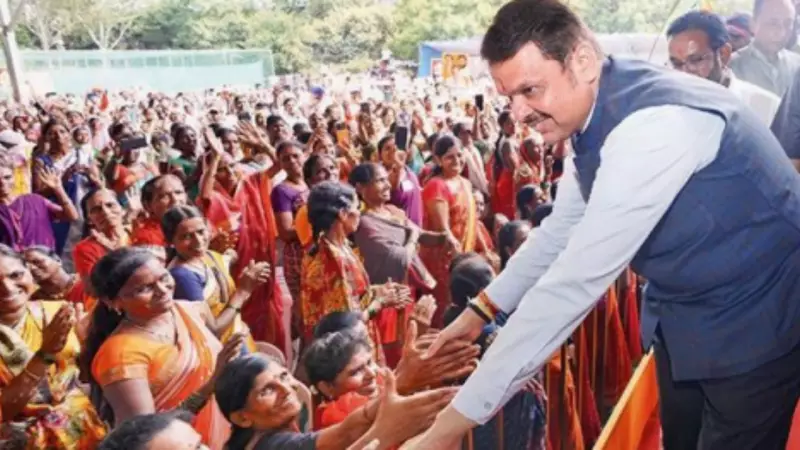
In a significant development, the Maharashtra State Election Commission has intervened to block an advance payment plan under the government's Ladki Bahin scheme. This move deals a blow to the ruling Mahayuti coalition's strategy just before crucial municipal elections.
Payment Restrictions Imposed Before Polls
State election commissioner Dinesh Waghmare issued a clear order this week. He barred the advance payment of Rs 1,500 for January under the Ladki Bahin scheme. However, he allowed the pending December 2025 installment to proceed.
This decision means approximately 2.5 crore eligible women across Maharashtra will receive only Rs 1,500 by January 14. The government had planned to transfer a double installment of Rs 3,000 covering both December and January before Makar Sankranti.

Waghmare explained his reasoning in the official order. "The regular benefits of the scheme can be given while the model code of conduct is in force. But benefits cannot be given in advance. And new beneficiaries are also not allowed to be selected," he stated firmly.
Political Context and Complaints
The timing of this decision carries substantial political weight. Elections for 29 municipal corporations, including the crucial Brihanmumbai Municipal Corporation, are scheduled for January 15. The Ladki Bahin scheme has been a flagship program credited with helping the Mahayuti secure a landslide victory in last year's assembly polls.
Congress party officials filed a formal complaint with the State Election Commission. They questioned the timing of the government's payment announcement. Opposition leaders alleged the planned advance transfer violated the model code of conduct. They claimed it aimed to influence voters ahead of the corporation elections.
In response to the complaint, the SEC asked state chief secretary Rajesh Aggarwal to submit a detailed report on the matter. Waghmare's order came after reviewing this report. Interestingly, Waghmare went beyond the chief secretary's recommendations in his final decision.
Contrasting Political Statements
Before the SEC's intervention, BJP rural development minister Girish Mahajan made a significant announcement on social media platform X. On January 7, he declared that eligible Ladki Bahin beneficiaries would receive a combined transfer of Rs 3,000 for December and January. He described this as a "special gift" from chief minister Devendra Fadnavis before the Makar Sankranti festival.
The chief secretary's report had taken a more permissive stance. It stated that "development work and schemes that were actually started before the announcement of the elections are allowed to continue during the code of conduct period." However, Waghmare applied stricter interpretation to prevent what he viewed as advance benefits.
Other Election Matters Addressed
During the same period, election commissioner Waghmare addressed additional concerns about the upcoming municipal polls. Regarding approximately 70 of 2,869 municipal corporation posts where Mahayuti candidates face no opposition, he downplayed concerns.
"This cannot be considered a threat to democracy. In fact, in the Lok Sabha elections last year, around 50 MPs were elected unopposed," noted a senior official familiar with the matter. The unopposed elections represent just 2.4% of total seats.
Waghmare also responded to questions about another potentially controversial statement. When asked about chief minister Devendra Fadnavis' comment that Mumbai would have a Marathi and Hindu mayor, he maintained a procedural stance. "If someone sends a complaint to SEC, we will issue notice on the statement," he stated, indicating the commission would act only upon receiving formal objections.
The election commissioner's decisions highlight the delicate balance between welfare distribution and electoral propriety during poll seasons. His rulings set important precedents for how benefit schemes interact with election regulations in India's largest state.