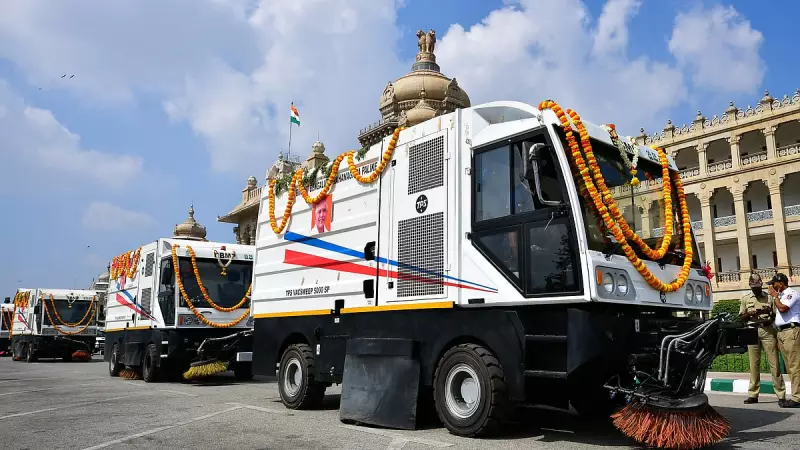
The Karnataka government has given its approval to a massive road sweeper rental project worth over Rs 613 crore, though the plan has raised questions due to the absence of specific details about the number of machines to be deployed.
Massive Budget Allocation for Urban Cleanliness
In a significant move to enhance urban cleanliness, the state government has sanctioned Rs 613.25 crore for renting specialized road sweeping machines. The approval came through recently, with the announcement made on November 19, 2025. This substantial investment underscores the government's commitment to improving municipal sanitation infrastructure across the state.
The Missing Machine Count
While the financial aspect of the project is clearly defined, the government documentation has notably omitted the exact number of sweeping machines to be procured under this rental scheme. This lack of specification has created uncertainty about the scale and distribution of the cleaning equipment.
According to officials familiar with the project, the number of machines likely to be hired is approximately 46 units. However, this remains an unofficial estimate rather than a confirmed figure in the government's formal announcement.
Implications for Bengaluru and Beyond
The road sweeper rental initiative represents one of the most substantial investments in urban cleaning equipment in recent years. The focus appears to be primarily on Bengaluru, which has been grappling with municipal solid waste management challenges and street cleanliness issues.
The substantial budget allocation suggests that the government is prioritizing mechanized cleaning solutions over traditional manual methods. This shift could potentially lead to more efficient and thorough cleaning of urban roads, though the effectiveness will depend on the actual number and quality of machines deployed.
Urban development experts are watching the implementation closely, as the success of this initiative could set a precedent for other Indian cities facing similar sanitation challenges. The absence of specific machine numbers in the official documentation, however, leaves room for questions about transparency and detailed planning.