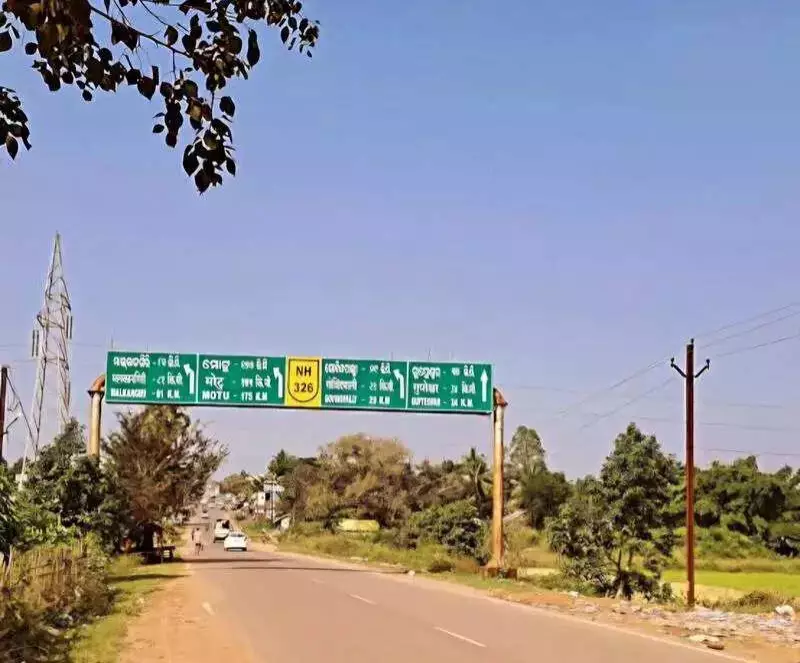
The Union Cabinet, in a significant decision on Wednesday, gave its green signal to a major highway project in Odisha. The government has cleared a plan to widen and strengthen a crucial 243.1-kilometer stretch of National Highway 326, connecting Mohana to Koraput. The project carries an estimated cost of Rs 1,526.2 crore and is poised to transform connectivity and road safety in the state's southern, tribal-dominated regions.
Project Details and Scope of Work
The approved work involves upgrading the existing two-lane highway into a two-lane configuration with paved shoulders. This enhancement is designed to address current geometric limitations, deficient curves, and steep gradients that hinder the safe and efficient movement of traffic, especially heavy vehicles. Key components of the upgrade include:
- Realignment of dangerous curves.
- Correction of steep gradients.
- Removal of accident-prone black spots.
- Strengthening of the pavement for all-weather durability.
The work will be executed under the Engineering, Procurement, and Construction (EPC) model, with a targeted completion timeline of 24 months.

Boosting Regional Connectivity and Economy
This infrastructure push is expected to yield substantial benefits for the districts of Gajapati, Rayagada, and Koraput. Officials state that the improved corridor will make commuting and freight movement faster and more reliable. A major gain will be better last-mile access to key economic nodes, including:
- Gopalpur port for smoother cargo movement.
- Jeypore airport and multiple railway stations.
- Important towns like Mohana, Rayagada, Laxmipur, and Koraput.
The highway also serves as a vital link to major corridors like NH-26, NH-59, NH-16, and the Raipur-Visakhapatnam corridor, enhancing both intra-state and inter-state linkage with Andhra Pradesh.
Focus on Tribal Development and Safety
Odisha Chief Minister Mohan Charan Majhi thanked Prime Minister Narendra Modi and Union Road Transport and Highways Minister Nitin Gadkari for the approval. He emphasized that the project would strengthen all-weather connectivity to remote, tribal areas, fostering inclusive development.
Beyond logistics, the upgrade aims to profoundly impact local communities. By reducing travel time and vehicle operating costs, it will improve access to markets, healthcare facilities, educational institutions, and employment opportunities. The project is also expected to support tourism and give a fillip to industrial activity in these aspirational districts, marking a step forward in regional equity and growth.