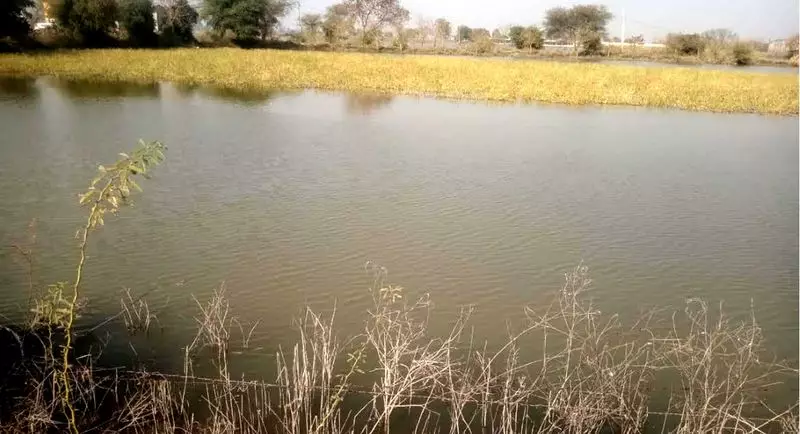
For years, the farmers of Rohtak district in Haryana have watched their hopes and crops drown in stagnant water. Despite the passage of time, vast tracts of agricultural land remain submerged, turning fertile fields into unproductive swamps. This persistent waterlogging crisis has led to significant financial losses and deep distress within the farming community.
A Legacy of Stagnant Water and Lost Harvests
The core of the problem lies in the inadequate drainage system, which fails to channel excess rainwater away from farmland. Farmers point to the choked and silted natural drains (choes) that are unable to handle the outflow, especially during the monsoon season. The situation is particularly severe in villages like Kheri Sadh, Kharak Jattan, and Kharak Kalan, where fields have been waterlogged for extended periods.
This isn't a new issue; it's a chronic problem that has plagued the region for over two decades. The financial toll is immense. Cultivation costs, including expenses for seeds, fertilizers, and labor, go to waste when crops fail. Many farmers are forced to leave their land fallow, unable to risk another season of loss. The emotional and economic strain on these agricultural families is a silent crisis unfolding in the heart of Haryana's grain belt.
A Glimmer of Hope: Massive Drainage Projects Announced
Amidst this bleak scenario, a ray of hope has emerged from the state government. Authorities have announced a series of major drainage projects aimed at providing a permanent solution to the waterlogging menace. The most significant among these is a comprehensive plan for the Ghaggar river basin.
The total estimated cost of these initiatives is a staggering ₹1,200 crore. The projects are designed to construct and rejuvenate a network of drains that will effectively divert excess water from agricultural fields. Key components include the construction of the Hansi-Butana drain and other critical channels to improve the overall drainage capacity of the region.
Officials from the Irrigation and Water Resources Department have stated that these projects are currently in the planning and tendering stages. The government's commitment to allocating such a substantial budget has been welcomed by farmer unions and local representatives, who have long advocated for large-scale intervention.
The Road Ahead: Implementation is Key
While the announcement has been met with optimism, farmers remain cautiously hopeful. Their experience has taught them that the gap between announcement and on-ground reality can be wide. The community's primary demand is for the swift and transparent execution of these projects.
The success of these drainage initiatives hinges on timely completion and proper maintenance. Experts emphasize the need for a holistic approach that includes regular desilting of drains and sustainable water management practices to prevent future clogging. The coming months will be critical as tenders are finalized and construction begins.
For the farmers of Rohtak, these projects represent more than just infrastructure; they symbolize the potential to reclaim their livelihoods and their land. The resolution of this decades-old problem could revitalize agriculture in the district, bringing stability and prosperity back to the fields. All eyes are now on the authorities to turn this promise of hope into a tangible reality.