RJD Vows Political Comeback Despite Bihar Election Setback
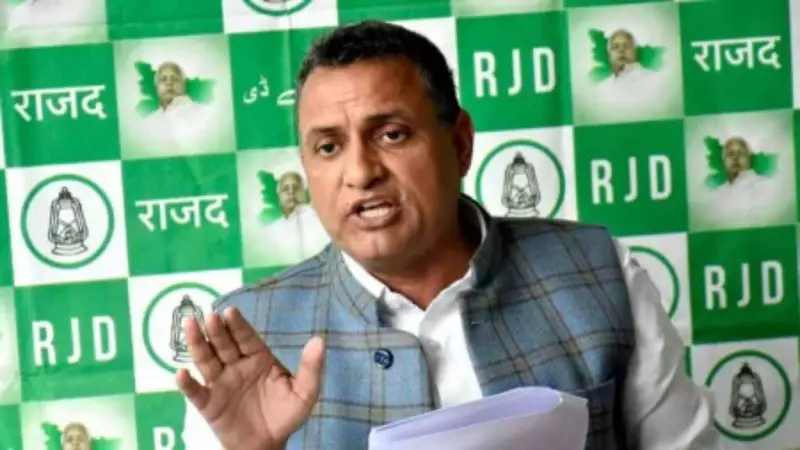
In an exclusive interview following the party's significant electoral defeat in Bihar, Rashtriya Janata Dal Lok Sabha MP and senior strategist Sudhakar Singh has declared that the party will stage a strong comeback, drawing parallels to their recovery after the 2010 rout when their tally fell to just 22 seats.
"We were in a worse situation in 2010, yet we came back strongly. We will bounce back again," Singh asserted while speaking to The Indian Express on November 18, 2025.
Allegations of Systematic Voter Manipulation
The RJD leader pointed to two critical factors that contributed to their defeat, distinguishing the current situation from their 2010 performance. He alleged that through the Special Intensive Revision process, a committed voter list was engineered with large numbers of poor voters removed from the rolls.
"The RJD and the Mahagathbandhan had to divert our entire energy to correcting these lists, leaving no time to campaign on the ruling alliance's failures," Singh explained, highlighting what he described as an uneven playing field.
Addressing RJD state president Jagdanand Singh's earlier claim that each EVM had 25,000 votes even before polling began, Sudhakar Singh clarified that voter roll manipulation effectively gave the ruling party a significant advantage.
Financial Benefits and Women Voters: The New Electoral Arithmetic
Singh identified what he termed as a "new challenge" in Bihar politics - the direct transfer of financial benefits to specific voter blocs, particularly women, using state funds.
"The government used state funds to transfer significant financial benefits directly to a big voter bloc, especially women. This created a new arithmetic that the results don't visibly reflect yet," the RJD strategist stated.
He argued that while his party also promised financial support to women, their approach was fundamentally different. "Our intention was to support those at the margins," Singh emphasized, adding that their proposal was budgeted, unlike what he characterized as the ruling alliance's "unchecked" distribution of benefits.
The MP noted that women voted 8 percentage points more than men in these elections, with the ruling side benefiting significantly from this increased participation.
Addressing the EBC Outreach and Coalition Strategy
When questioned about the party's failure to make inroads among Extremely Backward Classes despite aggressive outreach to groups like Mallahs and Taantis, Singh pointed to the gender divide in voting patterns.
"We should have secured 43-45% votes, but ended up with only 38%. Men voted for us, but women shifted towards them because they received government money," he analyzed, describing this as manipulation rather than genuine women's empowerment.
Singh defended the party's focus on allegations of "vote chori" during their campaign, stating that staying silent would have compromised their democratic principles. "We are protectors of the Constitution and democracy. We could not have stayed silent," he asserted.
Countering the 'Jungle Raj' Narrative and Law & Order Criticism
The RJD leader strongly rejected what he called the manufactured "Jungle Raj" narrative, attributing it to media outlets ideologically aligned with the BJP-RSS. He challenged critics to examine National Crime Records Bureau data to determine under whose tenure crime levels actually rose.
Singh also provided a historical perspective on law and order in Bihar, noting that the Naxal movement began in 1979 and the state witnessed major communal riots in Bhagalpur in 1989.
"It was under the RJD rule that both were neutralized. We controlled communal riots by 1995-96 and, by 2000, we finished Maoism in Bihar," he claimed, arguing that his party doesn't receive credit for these achievements due to media bias.
Defending Tejashwi Yadav's Leadership and Job Promise
When questioned about Tejashwi Yadav's campaign promise of providing one government job per family and whether this affected his credibility, Singh defended the party's manifesto which contained 100 announcements.
"Some voters may have disagreed with it. Acceptance levels vary. But to say it affected our votes is not correct," he stated, drawing comparisons to unfulfilled promises by Prime Minister Narendra Modi.
Regarding coordination issues within the Mahagathbandhan, Singh acknowledged that the ruling alliance benefits from enforcement agencies that help maintain discipline, while the Opposition follows democratic processes where opinions naturally differ.
Looking ahead, the RJD strategist vowed that over the next two years, the party will work to inform voters about what he characterized as the current government's failures, setting the stage for their political resurgence in Bihar.