Rajasthan's 2026 Homestay Scheme Faces Environmental Backlash Over Wildlife Sanctuary Protections
The Rajasthan state tourism department has unveiled its ambitious Homestay Paying Guest House Scheme 2026, but the initiative is already facing significant opposition from environmentalists and conservation experts. The primary concern revolves around what critics describe as a complete absence of safeguards for eco-sensitive zones (ESZs) located near protected wildlife sanctuaries throughout the state.
Environmental Lawyers Raise Alarm Over Buffer Zone Protections
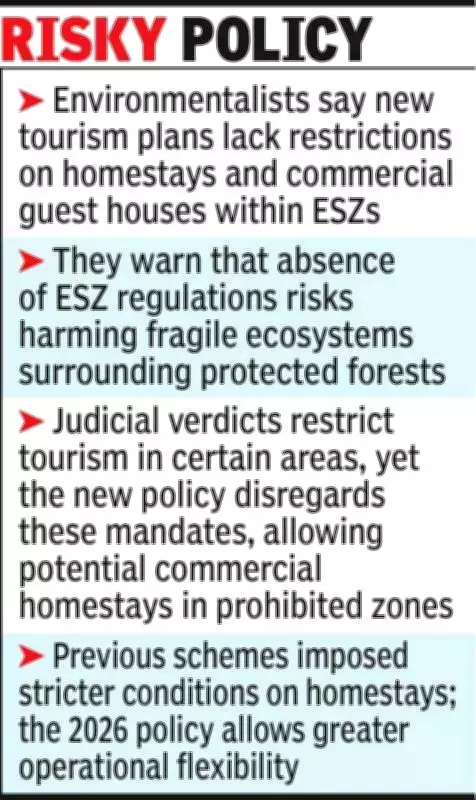
Prominent environmental lawyer Rituraj Singh has been particularly vocal about the scheme's potential consequences. "In the schemes introduced by the Rajasthan tourism department, no restriction has been imposed regarding commercial guest houses or homestays within ESZ or the one-kilometer prohibited area," Singh stated emphatically. "This regulatory gap will essentially allow homestays to mushroom uncontrollably within these environmentally sensitive zones."
Eco-sensitive zones are officially designated areas established by the Union Ministry of Environment, Forest and Climate Change that surround protected forests and wildlife sanctuaries. These buffer zones typically extend up to one kilometer from sanctuary boundaries and serve a crucial function in regulating development activities while protecting fragile ecosystems from human encroachment.
Legal Precedents and Judicial Mandates Being Overlooked
Environmental experts point to established judicial rulings that should inform any development policy affecting these protected areas. The Supreme Court's landmark decision in the TN Godavarman Thirumulpad versus Union of India case established a critical precedent: any area lacking a draft or final ESZ notification must be treated as a completely prohibited zone within a one-kilometer radius of protected forests and wildlife sanctuaries.
Similarly, the Rajasthan High Court ruling in Rituraj Singh versus State Government regarding Kumbhalgarh specifically upheld that commercial hotels and tourism activities remain strictly banned within the one-kilometer buffer zone. Despite these clear judicial mandates, the 2026 scheme remarkably omits any mention of restrictions on commercial guest houses or homestays within ESZs or the prohibited one-kilometer area.
Comparison with Previous Tourism Policies Reveals Regulatory Loosening
When compared with earlier tourism initiatives, the 2026 scheme appears to represent a significant departure from established conservation principles:
- Rajasthan Paying Guest House Scheme 2012: Limited commercial use to five rooms and mandated that the owner must reside on the premises
- Rajasthan Rural Tourism Scheme 2022: Included explicit provisions regarding eco-sensitive zones and environmental protections
- 2026 Homestay Scheme: Allows for up to eight rooms with a total of 24 beds and permits operations through a caretaker or manager without owner residence requirements
Tapeshwar Singh, another environmental lawyer, expressed grave concerns about the potential consequences: "If this homestay scheme is implemented without proper ESZ restrictions, established forest norms will be dangerously diluted. We're looking at the potential for commercial homestays that essentially function as small hotels to proliferate near our most sensitive environmental areas."
Tourism Department Response and Future Implications
A senior tourism official acknowledged the absence of ESZ restrictions in the 2026 scheme but declined to provide further elaboration on this significant omission. This lack of clarity has created uncertainty about how the state intends to balance tourism growth with environmental conservation responsibilities.
The controversy highlights the ongoing tension between economic development through tourism and the imperative to protect Rajasthan's unique biodiversity. Environmental advocates argue that without proper safeguards, the scheme could:
- Undermine decades of conservation efforts around wildlife sanctuaries
- Create precedents that weaken environmental protections across the state
- Potentially violate established judicial rulings regarding buffer zones
- Set a dangerous example for other states considering similar tourism initiatives
As the debate continues, stakeholders from both environmental and tourism sectors await further clarification from the Rajasthan government regarding how it intends to address these significant concerns while pursuing its tourism development objectives.