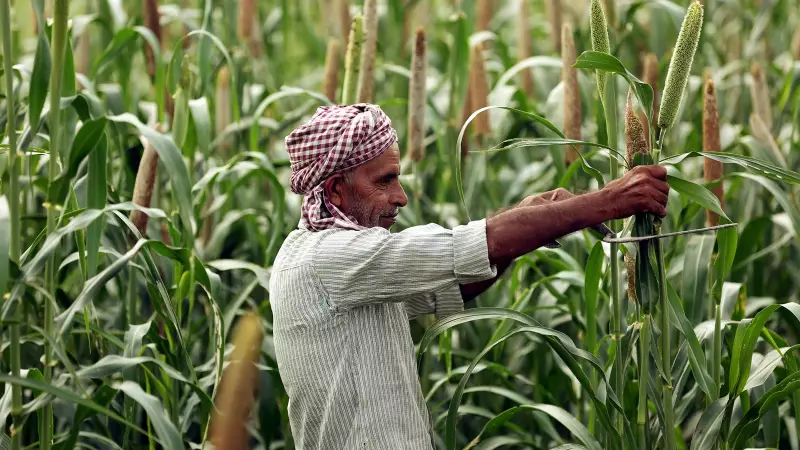
Senior agricultural officers across Punjab are sounding alarm bells over systematic delays in the supply of essential seeds under the National Food Security and Nutrition Mission (NFSNM), creating a complex dilemma for both farmers and district officials. The situation has reached a critical point where seeds meant for flood-affected villages and subsidized distribution are arriving months after their optimal sowing windows have closed.
The Missed Sowing Windows
The Punjab Agriculture and Farmers' Welfare Department recently began distributing seeds including Berseem (green fodder), lentil, gram, and wheat varieties procured under the central government scheme. However, these vital agricultural inputs are reaching farmers at completely inappropriate times, rendering them largely useless for the current cropping season.
According to agricultural timelines, Berseem sowing in Punjab typically concludes by the second week of October, while the ideal window for wheat, gram, and lentils begins at the end of October and extends until November 15. Most districts have already completed their wheat sowing, and farmers are currently harvesting their first Berseem crop of the season.
Massive Quantities, Wrong Timing
The scale of the delayed distribution is substantial. Punjab received 12,500 quintals of Berseem seed worth Rs 12.50 crores, intended to cover approximately 50,000 hectares. Additionally, the state obtained 5,000 quintals of lentil seed and several thousand quintals each of wheat and gram seeds across all districts.
Documents from Chandigarh reveal that the state government placed its formal demand for these seeds under NFSNM in the third week of October 2025 – significantly after the Berseem sowing window had already closed and dangerously close to the conclusion of other crop planting periods.
Officials Under Pressure
District-level agricultural officers find themselves in an impossible situation. Multiple Chief Agriculture Officers from different regions of Punjab have reported receiving persistent calls from senior officials at both the National Seeds Corporation and the state Agriculture Department, demanding they immediately sell the seeds and deposit the proceeds.
"We are being pressured to sell the seeds or face departmental inquiries," revealed a Chief Agriculture Officer from the Doaba region. "But how can we sell seeds when the sowing season is over, and farmers are already harvesting Berseem?"
Another officer from the Malwa region expressed frustration: "We requested wheat, lentil, and gram seeds in early October when farmers actually needed them. The department ignored our timing concerns. Now, when almost all wheat sowing is finished, they are sending us seeds and pressuring us to sell them."
The logistical challenges are equally daunting. A Chief Agriculture Officer from the Majha region explained, "We're stuck with these seeds with no storage space available. We can't even distribute the free seeds because there's no agricultural land left unsown at this point."
Systemic Failure in Agricultural Planning
This incident highlights a recurring problem in agricultural subsidy distribution. A senior officer from Ludhiana noted, "Every year, inputs under various schemes arrive two to three months late. Farmers cannot delay their sowing schedules just because the department is slow in distribution."
The delays fundamentally undermine the purpose of schemes like NFSNM, which are designed to promote high-yielding seed varieties and ensure food security. When seeds arrive after planting seasons, farmers lose the opportunity to multiply these improved varieties for future planting, defeating the mission's core objectives.
Another agriculture officer summarized the bureaucratic impasse: "We are caught between farmers who no longer need the seed and superiors who insist we sell it or face consequences. This isn't planning; it's wasteful and creates undue pressure on district officers."
Attempts to reach Punjab Agriculture Minister Gurmeet Singh Khuddian for comment were unsuccessful, as he was attending a program during the inquiry. The minister was expected to address the issue following his event, but no official statement has been released regarding the delayed seed distribution crisis.