Punjab Government Faces Fresh Allegations of Suppressing Dissent
The Punjab Police conducted surprising pre-dawn operations against newspaper distribution vans across several towns last week, reviving accusations that the Aam Aadmi Party government in the state is systematically crushing dissent. This controversial move occurred against the backdrop of BJP's allegations about AAP supremo Arvind Kejriwal occupying what they termed a 'Sheesh Mahal 2.0' in Chandigarh.
The police action on October 31 significantly disrupted newspaper distribution throughout all Chandigarh districts, with Mohali being the only exception. Major publications including The Indian Express failed to reach readers on time in the Punjab capital, creating widespread inconvenience.
Government Justification and Opposition Backlash
Special DGP (Law and Order) Arpit Shukla defended the police action, stating it was based on specific intelligence inputs suggesting that newspaper delivery vans could potentially be used for smuggling drugs and ammunition. He emphasized that Punjab, being a border state, needed to exercise extreme caution regarding such security threats.

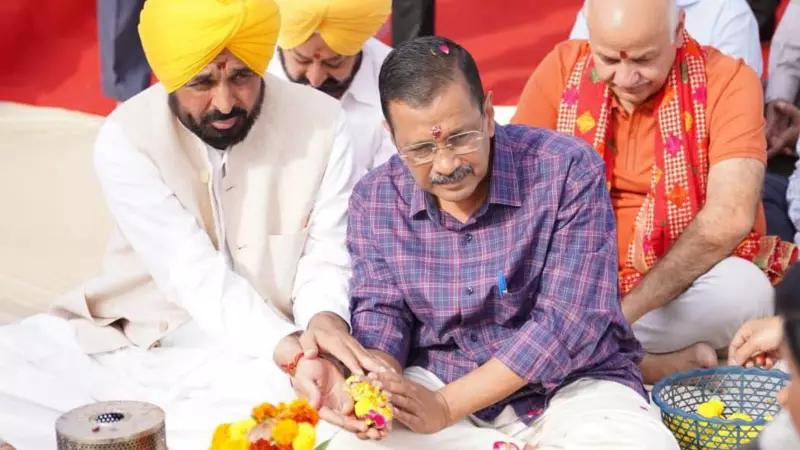
However, the opposition parties strongly condemned this explanation. AICC secretary Pargat Singh accused the Bhagwant Singh Mann government of deliberately trying to prevent news about Kejriwal's accommodation in a government bungalow in Chandigarh from reaching the public. Kejriwal has been spending considerable time in Punjab following his party's defeat in the Delhi Assembly elections earlier this year.
Congress Leader of the Opposition Partap Singh Bajwa described the raids on newspaper delivery vans as a chilling attack on press freedom. He sharply criticized both Kejriwal and Mann, asserting that they are following the same path as Prime Minister Narendra Modi while having no faith in democracy or the Indian Constitution.
Sheesh Mahal Controversy Resurfaces
The timing of the police action raised eyebrows as it came just after newspapers carried BJP's allegations about Kejriwal's accommodation. The BJP described the Sector 2 bungalow where Kejriwal stays during his Chandigarh visits as a seven-star facility and labeled it 'Sheesh Mahal 2.0' - referencing their successful campaign strategy during the Delhi elections where they accused Kejriwal of converting the Delhi Chief Minister's residence into a luxurious palace.
The AAP government firmly denied these allegations, clarifying that the bungalow serves merely as a camp office for administrative purposes. Nevertheless, the opposition linked the newspaper van raids directly to this ongoing controversy.
Pattern of Actions Against Officials and Party Members
This incident represents the latest in a series of actions taken by the Mann government against various officials and party leaders in recent months:
In a surprising move just days before the newspaper van controversy, the government transferred Ajoy Sinha, the Principal Secretary of Power, who also served as CMD of Punjab State Power Corporation Ltd and Punjab State Transmission Corporation Ltd. The 1996-batch IAS officer, known for his independent stance, remains without any posting since his transfer.
A senior bureaucrat who worked with Sinha described him as non-confrontational but firm about following due process and maintaining transparency. The transfer has created a palpable chilling effect within the bureaucracy, with one senior IAS officer anonymously stating that the message was clear: Fall in line or fall out.
The government has also taken action against its own party members who voiced criticism. In September, AAP Sanour MLA Harmit Singh Pathanmajra was booked by Punjab Police in a three-year-old case involving charges of rape, cheating, and criminal intimidation. His arrest came immediately after he publicly criticized the government's handling of flood relief in Punjab and accused the Delhi leadership of interfering in state affairs.
Similarly, AAP Jalandhar (Central) MLA Raman Arora faced arrest on May 23 for allegedly duping individuals in collaboration with government officials. Reports suggested he was developing close ties with the BJP around the time of his arrest.

In late June, Amritsar (North) MLA Kunwar Vijay Pratap Singh, a former IPS officer, received a five-year suspension from the AAP after questioning the Mann government's approach to a disproportionate assets case against senior Akali Dal leader Bikram Singh Majithia. He also criticized the government's lack of progress in the decade-old Bargari sacrilege case.
The bureaucratic reshuffle extended to senior officers as well. In March, 2001-batch IAS officer Gurkirat Kirpal Singh was removed as Home Secretary and continues without any official charge seven months later. His removal followed shortly after he attended the wedding ceremony of Akali Dal leader Sukhbir Singh Badal's daughter. Allegations emerged later about pressure being exerted on Gurkirat to clear certain sand mining files.
A month later, IPS officer Varinder Kumar was removed as Vigilance chief and remained without posting until his appointment as Special DGP (Human Rights) just before his retirement on July 31. As Vigilance chief, Kumar had handled several high-profile cases involving former Congress ministers.
Government's Defense
AAP spokesperson Neel Garg firmly rejected all charges that the party uses official machinery to curb dissent. He stated that the AAP remains a democratic party that follows democratic rules in both letter and spirit, and never engages in any questionable activities. Garg emphasized their commitment to democratic principles and transparency in governance.
Despite these assurances, the series of actions against officials, party members, and now newspaper distribution networks has created significant political turbulence in Punjab, with opposition parties uniting in their criticism of what they perceive as growing authoritarian tendencies in the state government.