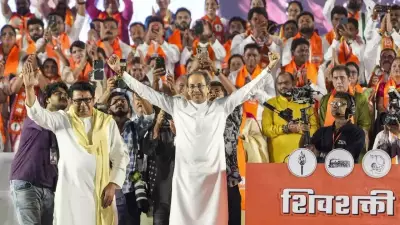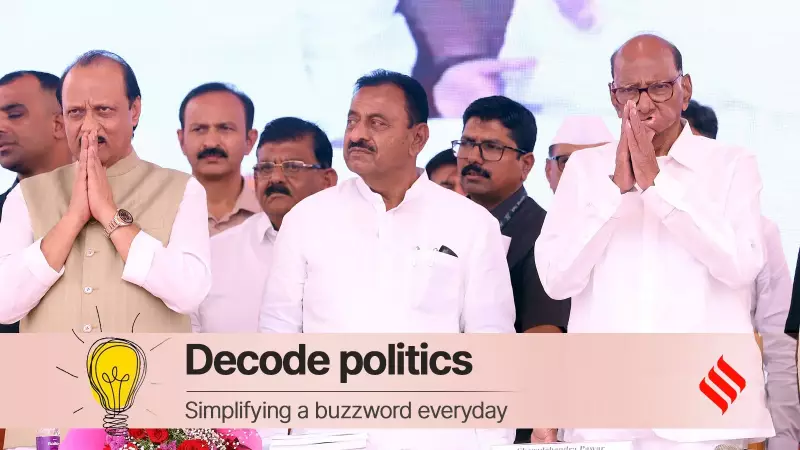
In a significant political development for Maharashtra's urban politics, the two factions of the Nationalist Congress Party (NCP) led by Deputy Chief Minister Ajit Pawar and his uncle Sharad Pawar have decided to join forces for the upcoming civic body elections in Pune and Pimpri-Chinchwad. This marks a tactical reunion almost two-and-a-half years after their acrimonious split in July 2023.
The Anatomy of an Unexpected Alliance
The alliance, carefully framed as a limited arrangement only for the municipal corporation polls scheduled for January 15, sees the Ajit Pawar-led NCP contesting 125 seats and the Sharad Pawar-led NCP (SP) fighting for 40 seats in Pune. This seat-sharing formula is a direct reflection of their assessed political strength on the ground. Both parties have explicitly stated there are no current plans to extend this partnership beyond these two civic bodies.
According to insiders, the primary catalyst for this coming together is the shared objective of halting the Bharatiya Janata Party's (BJP) expansion in the Pune region, which is considered the traditional stronghold of the Pawar family. With the BJP building on its statewide dominance and sweeping local polls, both NCP factions face an existential threat in their backyard.
Pressure from Below and a Common Foe
The alliance is not merely a top-down decision but is significantly driven by pressure from party workers. Grassroots workers from both factions, who claim an equal and emotional connection to both Ajit and Sharad Pawar, reportedly demanded unity to present a formidable front. For workers of the NCP(SP), which has faced a series of electoral setbacks, this tie-up offers a crucial respite and keeps their political relevance alive.
The political landscape made the move imperative. For the January polls, the BJP has already struck a pact with Chief Minister Eknath Shinde's Shiv Sena, leaving Ajit Pawar's NCP to fend for itself within the ruling 'Mahayuti' alliance. This isolation, coupled with the fear of a stronger BJP diminishing its own leverage, pushed the Ajit Pawar camp to reach out to the opposition NCP(SP). Their common goal: to stop the BJP from crashing through their traditional turf.
Local Impact and Future Possibilities
While the parties will use their own election symbols, the reunited NCP force is expected to be a stronger barrier against the BJP. A key hope for both sides is that this alliance will stem the recent tide of their local-level leaders and workers defecting to the BJP, a problem that has plagued them in recent weeks.
The big question looming over this local pact is whether it could be the first step towards a full-scale political merger. While many rank-and-file members hold that hope, NCP (SP) MLA Rohit Pawar, Sharad Pawar's grandnephew, swiftly ruled it out. He clarified that the alliance is strictly limited to the two civic bodies and was formed on the wish of local workers and leaders.
Significant hurdles remain for any reunification. The core issue of leadership—specifically, the acceptance of Ajit Pawar as the leader of a unified party—was a major reason for the original split and remains unresolved. Furthermore, civic polls often produce such odd combinations based on hyperlocal dynamics, as seen in other regions where rival Shiv Sena factions or even Shinde's Sena and the Congress have partnered temporarily.
The future of this political realignment at the state level will heavily depend on the outcome of the Pune and Pimpri-Chinchwad elections. A successful performance is likely to fuel demands for a similar arrangement in the upcoming Zilla Parishad and Panchayat Samiti elections in late January, keeping the door ajar for further collaboration.